 Skip to content
Leptin Resistance and Weight Loss: What It Is, Why It Happens, and How to Fix It Naturally
You are eating less than ever. You are exercising. You are doing everything the standard advice says. And yet the scale refuses to move and you are hungry every hour of the day, even after a full meal.
This is not a willpower problem. It is not a metabolism mystery. For a significant number of women struggling with weight loss that simply will not work, it is a hormonal problem with a specific name: leptin resistance.
Leptin resistance is one of the most underdiagnosed and least explained drivers of weight loss resistance in women and it is almost entirely absent from mainstream diet advice. Yet research shows that 90% of obesity cases share leptin resistance as a common factor. It is one of the most common hidden drivers of weight gain, and it is nearly impossible to turn around if you do not know what is going on.
This guide explains exactly what leptin resistance is, what causes it, how to recognise it in your own body, and the eight natural strategies that are most supported by evidence for restoring leptin sensitivity and getting weight loss moving again cincluding information from a landmark 2025 discovery that finally revealed the cellular mechanism behind why it happens.
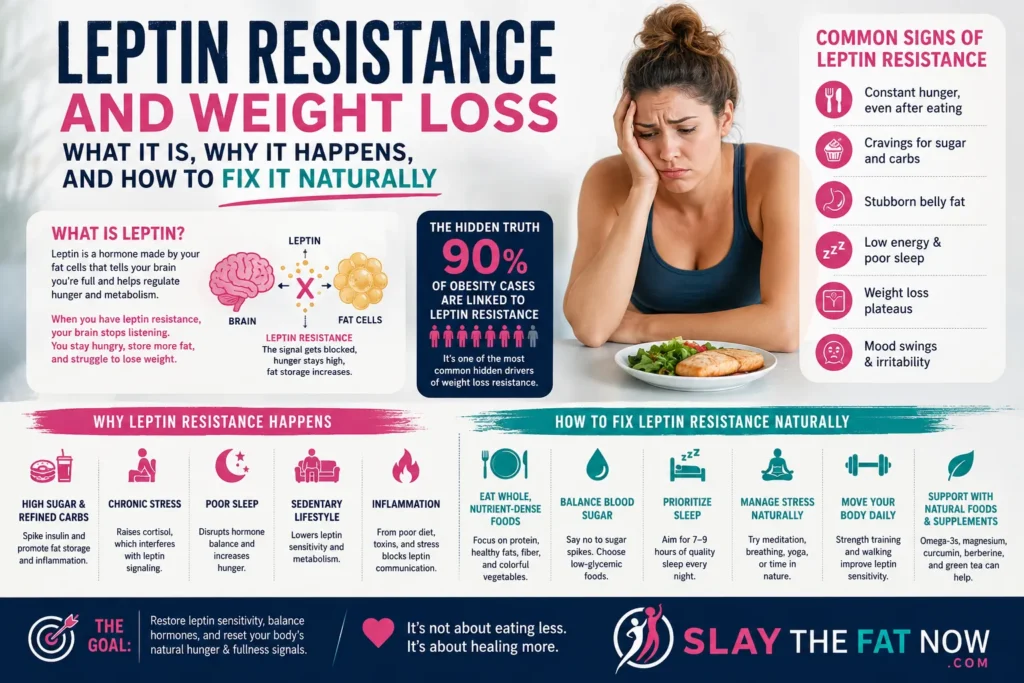
Leptin resistance occurs when your brain stops responding to leptin the hormone your fat cells produce to signal fullness. Despite having high levels of leptin in your blood, your brain registers starvation, keeps hunger elevated, slows metabolism, and stores more fat. It is extremely common in women, particularly after 40, and it is reversible. The eight most evidence-supported natural strategies to fix it are: prioritizing sleep, eliminating fructose and processed foods, reducing triglycerides, managing chronic inflammation, incorporating strength training and HIIT, managing cortisol, trying time-restricted eating, and adding targeted nutrients each explained in full below.
What Is Leptin? The Fullness Hormone Nobody Talks About
Most people have heard of insulin. Far fewer have heard of leptin despite the fact that leptin has an equally powerful and arguably more direct effect on body weight and fat accumulation.
Leptin is a hormone produced by your fat cells (adipocytes). Leptin sends signals to the brain specifically to the hypothalamus indicating that the body has sufficient energy stores, reducing the desire to eat. When you have eaten enough and your fat stores are adequate, leptin rises and tells your brain: stop eating, you have sufficient fuel, you can burn energy freely.
Leptin levels naturally rise after eating and fall during fasting or starvation. In a healthy individual, this feedback loop helps maintain stable body weight.
Here is the critical point: leptin is produced by fat cells. This means the more body fat you have, the more leptin your body produces. In theory, a larger body should have higher leptin and therefore less hunger. In practice, for millions of people, the opposite is true they have very high leptin levels and are hungry all the time.
That paradox is leptin resistance.
What Is Leptin Resistance? The Paradox Explained
Leptin resistance occurs when the brain no longer responds effectively to leptin signals. Despite having high levels of leptin in the blood common in people with more body fat the brain fails to recognise it, leading to continued hunger, decreased metabolism, and increased fat storage.
Think of it like a smoke detector with a dead battery. The smoke is real the alarm should be going off but the signal never gets through. Your fat cells are sending leptin into the bloodstream at high levels, telling the brain you are full and well-fed. The brain is not receiving that message. So it behaves as if you are starving.
When the brain thinks you are starving, it does what biology designed it to do:
- It intensifies hunger signals
- It reduces resting metabolic rate to conserve energy
- It signals the body to hold onto fat rather than burn it
- It increases cravings for high-calorie, high-carbohydrate foods the fastest energy sources available in a perceived famine
The tragic irony: the accumulation of fat leads to high leptin, which in a state of inflammation leads to resistance. The brain’s subsequent “starvation” response then lowers the metabolic rate and increases hunger, promoting further weight gain and a worsening of the resistance.
Leptin resistance is self-perpetuating. The more fat you accumulate, the more leptin resistance you develop. The more leptin resistance, the harder fat loss becomes. Without addressing the root cause, conventional diet and exercise advice runs directly into this wall.
The 2025 Breakthrough: What Scientists Just Discovered About Leptin Resistance
In March 2025, a landmark study from the Friedman Laboratory of Molecular Genetics at Rockefeller University the same lab that first identified the leptin gene in 1994 published a major advance in understanding leptin resistance.
Researchers Bowen Tan, Kristina Hedbacker, and colleagues discovered a neural mechanism involved in leptin resistance and, crucially, a way to reverse it in mice using a well-known drug. The study identified the specific cellular and molecular basis by which leptin resistance develops, showing how certain signalling pathways in the hypothalamus become blocked, preventing the leptin signal from reaching the brain’s energy centre.
Even more promising, researchers found that rapamycin a commonly used immunosuppressant drug could restore leptin sensitivity in mice.
This is not yet a clinical treatment for humans. But it is scientifically significant for two reasons. First, it confirms that leptin resistance has specific, reversible cellular mechanisms it is not simply an inevitable consequence of weight gain. Second, it validates the logic of lifestyle interventions that target the same pathways: reducing the hypothalamic inflammation and mTOR overactivation that the study identified as central to resistance.
The practical implication: the natural fixes described in this article target the same root mechanisms that the 2025 study identified. They are not workarounds they are direct interventions at the biological level where the resistance originates.
How Does Leptin Resistance Actually Happen? The 3 Key Mechanisms
Understanding the three pathways through which leptin resistance develops explains why the natural fixes work and why certain dietary and lifestyle patterns make it worse.
Mechanism 1: Hypothalamic Inflammation
Chronic inflammation in the hypothalamus is a major documented cause of leptin resistance. This inflammation can be driven by a diet high in processed sugars and fats, as well as a lack of consistent sleep and unmanaged psychological stress. The inflammation directly impairs leptin receptors, preventing them from recognising the hormone.
The hypothalamus is the region of the brain responsible for interpreting leptin’s fullness signal. When it is inflamed which occurs in response to a sustained diet of ultra-processed foods, chronic stress, and sleep deprivation leptin receptors lose their sensitivity. The signal arrives but the receiver is damaged.
A 2025 PubMed review (Leptin and leptin resistance in obesity: current evidence, mechanisms and future directions, PMC12486228) confirmed that the mechanisms underlying leptin resistance include hyperleptinemia, impaired JAK2-STAT3 signalling, reduced blood-brain barrier permeability, defective autophagy, endoplasmic reticulum stress, inflammation, decreased leptin receptor expression, leptin signalling pathway dysfunction, and increased mTOR activity.
The mTOR connection is particularly significant. mTOR (mechanistic target of rapamycin) is an enzyme involved in cellular growth and energy sensing. Chronic overactivation of mTOR driven by excessive calorie intake, high insulin, and lack of fasting periods is one of the primary ways leptin receptor sensitivity is reduced. This is precisely the mechanism the 2025 rapamycin study targeted.
Mechanism 2: Triglycerides Blocking Leptin at the Blood-Brain Barrier
This mechanism is less well known and critically important. Leptin is produced in the body’s fat cells and must travel through the bloodstream to the brain. To reach the hypothalamus, it must cross the blood-brain barrier (BBB). Research published in PubMed (Banks et al., 2004) found that elevated triglycerides inhibit leptin transport across the blood-brain barrier. Both starvation and diet-induced obesity elevated triglycerides and decreased the transport of leptin across the BBB.
Treatment with gemfibrozil, a drug that specifically reduces triglyceride levels, reversed both hypertriglyceridemia and impaired leptin transport.
In plain language: high triglycerides physically block leptin from entering the brain. Leptin can be present in the blood at high levels, but if triglycerides are elevated as they typically are on a diet high in sugar, refined carbohydrates, and processed foods leptin cannot complete the journey to where it needs to act.
This mechanism explains why reducing dietary sugar and fructose is specifically the most targeted single dietary change for leptin resistance not because of its calorie count, but because of its direct biochemical effect on triglyceride levels and leptin transport.
Mechanism 3: Overstimulation and Desensitisation
In many individuals with overweight or obesity, circulating leptin is already high. The problem is diminished central sensitivity. Chronically elevated leptin produced by large amounts of fat tissue eventually causes leptin receptors in the hypothalamus to downregulate, just as constant loud noise causes you to stop noticing it. The signal is always on, so the brain learns to ignore it.
This is why losing body fat even a modest amount tends to improve leptin sensitivity. As fat mass decreases, leptin production decreases, receptor sensitivity begins to recover, and the signal becomes meaningful again.
7 Signs You May Have Leptin Resistance
Leptin resistance does not appear on standard blood tests in most clinical settings, though a leptin blood test is available privately. Many women recognise its presence through a pattern of symptoms that no standard dietary advice has been able to resolve:
1. You are hungry within 1–2 hours of a full meal. This is the most direct symptom. If your brain is not receiving the leptin signal that indicates adequate energy stores, it perceives hunger regardless of what you have just eaten.
2. You cannot stop eating once you start. Normal leptin signalling produces a clear “I have had enough” signal during a meal. With leptin resistance, that signal does not arrive clearly, making portion control genuinely difficult not a character failure.
3. You crave carbohydrates, sugar, and high-calorie foods intensely. A brain that thinks it is starving craves the fastest available fuel source: glucose. Intense, persistent carbohydrate cravings despite eating adequately are a hallmark of disrupted leptin signalling.
4. Your weight loss has completely stopped despite sustained effort. If you are in a genuine calorie deficit but losing nothing or losing dramatically slowly a dysregulated leptin signal is reducing your metabolic rate to match your reduced intake, preventing the expected weight loss.
5. You are tired despite adequate sleep. The brain’s perceived starvation state, driven by leptin resistance, conserves energy in every possible way including reducing thyroid output and mitochondrial activity, leading to fatigue that is not resolved by sleep alone.
6. You store fat primarily in your abdomen. Leptin resistance and insulin resistance tend to co-occur and reinforce each other. The combination is specifically associated with visceral fat accumulation abdominal fat that persists regardless of diet changes.
7. You have a history of yo-yo dieting. Each cycle of severe calorie restriction raises leptin resistance further the body becomes better at defending its fat stores with each subsequent diet. Women with a long history of restrictive dieting tend to have more severe leptin resistance than those who have never dieted.
Why Women Over 40 Are Specifically Vulnerable to Leptin Resistance
Leptin resistance affects people of all ages and sexes, but women over 40 face a specific and compounding set of biological factors that make them significantly more vulnerable and that explains why weight loss becomes dramatically harder around perimenopause even for women who have never struggled with it before.
The Estrogen-Leptin Connection
Estrogen helps regulate appetite by binding to receptors in the hypothalamus, the area of the brain responsible for controlling hunger and fullness. As estrogen and progesterone decline, those signals become disrupted, leading to cravings for sugar and refined carbohydrates.
Normally, rising leptin levels signal the brain that you are full, helping maintain the body’s natural “set point” weight. But menopause can trigger leptin resistance, meaning the brain no longer responds properly to these signals, leaving you hungrier despite higher leptin levels.
Estrogen does not just support leptin sensitivity directly it also regulates the sleep quality, cortisol rhythm, and insulin sensitivity that are the upstream drivers of leptin resistance. As estrogen declines, all three deteriorate simultaneously, creating a compounding effect on leptin signalling.
The Sleep-Leptin Feedback Loop
Declining estrogen reduces leptin the hormone that tells you you’re full and when sleep is disrupted, increases ghrelin (the hunger hormone). This combination leads to increased appetite and slower metabolism.
For women in perimenopause, where night sweats and hot flashes are already disrupting sleep quality, this creates a self-reinforcing cycle: poor sleep raises cortisol, cortisol worsens leptin resistance, leptin resistance intensifies hunger and cravings, overeating worsens sleep quality, and deteriorating sleep drives the cycle further.
The Insulin-Leptin-Cortisol Triad
During perimenopause, a woman’s levels of estrogen and progesterone begin to decline, which affects the body’s ability to use insulin effectively. This can lead to insulin resistance, which can contribute to leptin resistance. Women may also experience increased hunger and reduced metabolism, leading to overeating and weight gain, particularly around the midsection.
Insulin resistance and leptin resistance are not independent they drive each other. Chronically elevated insulin downregulates leptin receptor sensitivity. Chronically elevated cortisol (which is elevated both by stress and by the HPA axis dysregulation of perimenopause) impairs leptin signalling. The three form a triad that conventional diet advice focused on calories in, calories out is structurally unable to address.
For more on how these hormonal shifts interact with metabolism, read our guide on why your metabolism slows after 40 and how to fix it.
8 Proven Natural Strategies to Fix Leptin Resistance
These eight strategies are listed in approximate order of evidence strength and impact. Each targets one or more of the three core mechanisms driving leptin resistance: hypothalamic inflammation, triglyceride-mediated BBB blockade, and receptor desensitisation through overactivation.
1. Fix Your Sleep First Everything Else Depends on It
Sleep is not one variable among many in the leptin resistance picture. It is the foundation. Without it, every other intervention produces a fraction of its potential effect.
Sleep restriction leads to imbalanced leptin levels and increased hunger and appetite. Those who sleep less eat more. A laboratory study published in Obesity (Liu & Gong, 2025) confirmed that acute sleep loss worsens leptin, ghrelin, and adiponectin levels in adults across all weight categories.
The mechanism is direct: sleep deprivation increases levels of ghrelin, the hunger hormone, while decreasing leptin, the hormone that signals fullness. This combination makes you hungrier and less satisfied after eating. Chronic sleep disruption also elevates cortisol, which promotes abdominal fat storage, increases appetite, and can trigger emotional eating patterns.
What to do:
Target 7–9 hours of sleep in a cool (around 18–19°C), completely dark room. Consistent sleep and wake times are as important as duration circadian rhythm regularity directly governs the overnight leptin and ghrelin cycle. Leptin naturally peaks during deep sleep between midnight and early morning; disrupting sleep architecture disrupts this peak.
For women in perimenopause where night sweats are actively breaking sleep: magnesium glycinate (300–400mg before bed) reduces the frequency of night sweats in some women, improves sleep architecture, and directly supports cortisol recovery overnight. It is the most evidence-supported natural sleep intervention with no dependency risk.
Avoid screens for 60 minutes before bed. The blue light suppression of melatonin delays sleep onset and reduces deep sleep quality the phase during which leptin peaks.
2. Eliminate Fructose and Ultra-Processed Foods The Triglyceride-BBB Connection
This is the most targeted single dietary change for leptin resistance, and the science behind why is more specific than general “eat less sugar” advice.
In rats, removal of fructose from high-fat diets was shown to reverse leptin resistance and hyperleptinemia, suggesting a causal relationship. Dietary sugar and saturated fats elevate plasma triglycerides, which may induce resistance to leptin transport across the blood-brain barrier.
As established above, elevated triglycerides physically block leptin from crossing the blood-brain barrier. Fructose is the dietary compound most directly responsible for elevating triglycerides more so than any other carbohydrate. The liver converts excess fructose directly to triglycerides through de novo lipogenesis. This is why high-fructose corn syrup, table sugar (50% fructose), agave nectar, sweet drinks, and processed snacks drive leptin resistance through a specific biochemical pathway that has nothing to do with their calorie count.
Inflammatory compounds in highly processed foods can disrupt leptin receptors. A 2021 observational assessment linked greater intake of ultra-processed foods to higher leptin yet reduced sensitivity.
What to do:
Eliminate or dramatically reduce: table sugar, high-fructose corn syrup, sugary drinks (including fruit juice), flavoured yogurts, sweetened cereals, processed snack foods, and fast food. These are the primary drivers of both elevated triglycerides and hypothalamic inflammation.
Replace with: whole foods high in soluble fibre (oats, legumes, chia seeds, apples), quality protein (eggs, fish, chicken, Greek yogurt), and healthy fats (avocado, olive oil, nuts). Incorporating foods rich in soluble fibre can support better leptin function by improving gut health and lowering triglyceride levels.
The goal is not a specific calorie target it is reducing triglycerides and hypothalamic inflammation. These two outcomes restore the biological conditions in which leptin can function.
3. Increase Protein at Every Meal
Higher-protein diets elevate post-meal satiety hormones, including leptin. Position papers recommend 1.2–2.0g of protein per kilogram of body weight for weight management.
Protein is uniquely effective for leptin sensitivity because it works through multiple pathways simultaneously. It stimulates the release of gut satiety hormones (GLP-1, PYY, CCK) that signal fullness to the hypothalamus, reducing the demand on the leptin pathway. It preserves muscle mass and muscle is metabolically active tissue that improves insulin sensitivity, which in turn reduces leptin resistance. It also has the highest thermic effect of any macronutrient, meaning the body burns significantly more calories digesting protein than fat or carbohydrates.
Adequate protein intake of 1.2–1.6g/kg body weight, combined with reliable sources of soluble fibre, supports satiety and stabilises hormone release.
What to do:
Aim for 25–35g of protein at every main meal. Sources with the most evidence for satiety and muscle preservation: eggs, Greek yogurt, cottage cheese, chicken breast, salmon and other fatty fish, legumes, and tofu. Include protein at breakfast specifically women who eat a high-protein breakfast report fewer cravings and lower calorie intake across the rest of the day. For women over 40 where muscle loss is accelerating, this target becomes more critical, not less.
4. Reduce Triglycerides with Omega-3 Fatty Acids
Beyond removing the foods that raise triglycerides, actively adding the nutrients that lower them supports leptin transport at the blood-brain barrier.
Omega-3 fatty acids found in fatty fish (salmon, mackerel, sardines, anchovies), flaxseeds, chia seeds, and walnuts have among the strongest evidence of any dietary factor for reducing circulating triglycerides. A 2024 meta-analysis in ScienceDirect found that high-dose omega-3 supplementation (greater than 2g daily) led to significant decreases in serum leptin levels consistent with improved leptin sensitivity reducing the compensatory overproduction of leptin that characterises resistance.
Increasing the intake of lean protein and sources of omega-3 fatty acids provides anti-inflammatory benefits that help the brain respond more accurately to the hormone.
What to do:
Eat fatty fish 2–3 times per week. If dietary intake is insufficient, a quality omega-3 supplement providing 2–3g of combined EPA and DHA daily is supported by the evidence for triglyceride reduction. Choose molecularly distilled fish oil or algae-based omega-3 (for non-fish eaters). Algae-based omega-3 provides direct EPA and DHA without the need for conversion from ALA (the plant form), making it the most bioavailable plant option.
5. Incorporate Strength Training and High-Intensity Interval Training (HIIT)
At least 150 minutes of moderate aerobic activity or 75 minutes of vigorous activity weekly, plus two days of resistance training, supports improvements in leptin sensitivity.
Exercise improves leptin sensitivity through several simultaneous mechanisms. It reduces hypothalamic inflammation the primary site of leptin resistance. It reduces circulating triglycerides removing the BBB blockade. It builds muscle mass improving insulin sensitivity which reduces the insulin resistance that compounds leptin resistance. It reduces body fat over time lowering total leptin production and allowing receptors to recover sensitivity.
Research has also shown that high-intensity interval training (HIIT) specifically reduces the mTOR overactivation implicated in the 2025 Friedman lab study on leptin resistance mechanisms. HIIT creates short periods of cellular energy stress that activate AMPK the enzyme that directly antagonises mTOR restoring the energy-sensing balance that leptin resistance disrupts.
What to do:
Strength training 2–3 times per week is the highest-priority exercise type for leptin resistance. Building and preserving lean muscle mass addresses insulin resistance and metabolic rate simultaneously. Add 1–2 sessions of HIIT per week (20–30 minutes each: 30 seconds of high effort, 90 seconds of recovery, repeated 8–10 times). Walking after meals is also documented to reduce post-meal triglycerides a direct intervention on the BBB mechanism. Aim for a 10–15 minute walk after each main meal.
6. Manage Cortisol as a Primary Target
High cortisol levels from chronic stress can promote fat storage and leptin resistance. Research has found that high cortisol from chronic stress impairs leptin signalling, increasing appetite and body fat even when calorie intake is controlled.
Cortisol and leptin have a direct antagonistic relationship. When cortisol is chronically elevated, it suppresses leptin receptor sensitivity in the hypothalamus, increases hunger (particularly for high-calorie foods), promotes abdominal fat storage, and worsens insulin resistance. For women over 40, where the estrogen decline removes one of the primary buffers against cortisol overactivation, this becomes a primary driver of weight loss resistance.
This is not a soft wellness observation it is hard endocrinology. Cortisol management is not optional for women with leptin resistance; it is a core medical strategy.
What to do:
Morning sunlight exposure 10–15 minutes of natural light within 30 minutes of waking regulates the cortisol awakening response, setting the cortisol rhythm for the entire day. This is one of the most evidence-supported circadian interventions available and it costs nothing.
Delay coffee to 60–90 minutes after waking as explained in our guide on what to drink first thing in the morning, consuming caffeine during the cortisol awakening response amplifies the morning cortisol spike. For women with leptin resistance, this directly worsens the hormonal environment.
Magnesium glycinate (300–400mg before bed) supports overnight adrenal recovery and reduces the next-day cortisol baseline. Magnesium deficiency is widespread and directly worsens cortisol regulation.
Breathing or slow movement practice (10 minutes daily) slow diaphragmatic breathing activates the parasympathetic nervous system and measurably reduces cortisol within minutes. This is not an alternative to medical treatment; it is a documented physiological intervention.
Reduce or eliminate alcohol alcohol disrupts cortisol rhythm, disrupts sleep architecture, raises triglycerides, and worsens every pathway involved in leptin resistance simultaneously.
7. Try Time-Restricted Eating (TRE)
Various forms of intermittent fasting, including alternate day cycling and time-restricted eating, have been associated with improvements in leptin sensitivity. Fasting may help control local inflammation in the hypothalamic nuclei the area of the brain that controls energy intake and expenditure contributing to sustained energy balance and protection against obesity.
Time-restricted eating improves leptin sensitivity through several documented mechanisms. It reduces circulating triglycerides (fasting periods lower VLDL production in the liver). It reduces hypothalamic inflammation. It creates periods of mTOR inhibition directly targeting the overactivation identified in the 2025 Friedman research. It improves insulin sensitivity by reducing the constant insulin stimulation of modern eating patterns.
Limiting food intake to an earlier window for example, 8–10 hours ending by 6 pm may reduce inflammation and triglycerides, supporting better leptin function.
What to do:
A 12–16 hour overnight fast is the most accessible starting point. For practical purposes: finish dinner by 7–8 pm and eat breakfast at 7–8 am the next morning a 12-hour window that most people can sustain without difficulty. This is not aggressive calorie restriction. It is a timing intervention that gives the liver and hypothalamus a fasting period during which triglyceride clearance, mTOR inhibition, and inflammatory downregulation can occur.
Important note for women: aggressive fasting (OMAD, extended fasting beyond 18 hours) has shown evidence of worsening cortisol and HPA axis stress in some women, particularly those who are already stressed or in perimenopause. Start with 12 hours and assess before extending. The goal is metabolic rest, not physiological stress.
8. Add Targeted Nutrients That Support Leptin Signalling
Several specific nutrients have evidence for reducing the inflammation and insulin resistance that drive leptin resistance:
Soluble fibre (25–35g daily from food, or psyllium husk to supplement): Supports leptin function by improving gut microbiome diversity, reducing inflammation, and lowering triglycerides. The gut microbiome directly influences hypothalamic leptin sensitivity through the gut-brain axis. A diverse, fibre-fed microbiome produces more short-chain fatty acids (SCFAs) that reduce hypothalamic inflammation and support leptin receptor function.
Zinc: Required for proper leptin receptor function. Research has found that zinc deficiency is associated with leptin resistance and that zinc supplementation can improve leptin sensitivity. Food sources highest in zinc: pumpkin seeds, beef, oysters, chickpeas, cashews. If supplementing: zinc picolinate or zinc glycinate at 15–30mg daily with food.
Berberine (500mg 2–3 times daily with meals): The most evidence-supported natural supplement for combined insulin and leptin sensitivity. Berberine activates AMPK directly antagonising the mTOR overactivation identified in the 2025 leptin resistance research. By improving insulin sensitivity, berberine reduces the insulin resistance that compounds leptin resistance. As noted in our guide on natural GLP-1 alternatives, berberine is not magic, but its metabolic effects are among the most consistent of any plant compound. Note: do not combine with prescription medications without medical supervision.
Green tea (2–3 cups daily or EGCG supplement): EGCG in green tea reduces hypothalamic inflammation, improves insulin sensitivity, and has shown modest improvements in leptin sensitivity in human studies. It also reduces triglycerides. Drink it 20–30 minutes after warm water in the morning, not on a completely empty stomach.
Turmeric with black pepper: As detailed in our guide on turmeric and ginger drinks, curcumin reduces the hypothalamic NF-κB inflammation that is a primary driver of leptin receptor impairment. Always paired with piperine from black pepper for absorption.
The Leptin Resistance Fix Protocol: Daily Structure
This is how all eight strategies integrate into a practical daily habit structure:
On waking: 300–500ml warm water. 10–15 minutes of morning sunlight exposure. Delay coffee 60–90 minutes.
Breakfast (within 60 minutes of waking): High-protein (30–35g), include soluble fibre (oats, chia, berries), healthy fat (avocado, eggs). No fruit juice. No sweetened cereals. This meal sets insulin for the morning it must not be skipped or replaced with a carbohydrate-dominant option.
Mid-morning (with breakfast or after): Green tea or turmeric ginger drink. Berberine 500mg if using. Omega-3 supplement if not getting fatty fish that day.
Lunch and dinner: Whole food based lean protein first, non-starchy vegetables, legumes, small amount of whole grains. No ultra-processed foods. No sugary drinks including juice. Finish eating by 7–8 pm.
Post-meal: 10–15 minute walk after each main meal. This reduces post-meal triglycerides directly addressing the BBB blockade mechanism.
Exercise: Strength training 2–3 times weekly. HIIT 1–2 times weekly. These are not optional accessories they are the primary metabolic interventions.
Evening: Magnesium glycinate 300–400mg with dinner or before bed. No screens 60 minutes before bed. Aim for a room temperature of 18–19°C for optimal deep sleep and the overnight leptin peak.
Fasting window: Target 12 hours minimum between last meal and breakfast. No late-night eating or snacking.
How Long Does It Take to Fix Leptin Resistance?
This is the honest answer based on the research:
2–4 weeks: Sleep quality improves, cortisol rhythm begins to normalise, hunger becomes noticeably more manageable. These are the fastest-responding variables.
4–8 weeks: Triglycerides begin to fall with consistent dietary changes. Hypothalamic inflammation starts to reduce. Cravings for sugar and processed foods decrease as blood sugar stabilises. Many women report this as the point at which hunger “normalises” for the first time in years.
8–16 weeks: Leptin receptor sensitivity meaningfully recovers as triglycerides fall, inflammation reduces, and body fat decreases modestly. Weight loss typically becomes noticeable at this timeframe.
6+ months for full restoration: For women with long-standing leptin resistance particularly those with a long history of yo-yo dieting, significant weight, or extended perimenopause full restoration of leptin sensitivity is a multi-month process. Progress is often not linear. The plateau-to-breakthrough pattern described in our guide on how long a weight loss plateau lasts frequently reflects leptin resistance cycling through partial recovery.
The most important message: do not stop at week three because the scale has not moved dramatically. The biological repairs being made during weeks two through eight are the foundation on which sustainable weight loss is built. Moving the scale is the lagging indicator not the leading one.
Frequently Asked Questions
1. What is leptin resistance and how does it cause weight gain?
Leptin resistance occurs when the brain’s hypothalamus stops responding to leptin the hormone produced by fat cells to signal that sufficient energy is stored. Despite high blood levels of leptin, the brain perceives starvation, driving constant hunger, reducing metabolic rate, increasing fat storage, and intensifying cravings for high-calorie foods. The result is a self-perpetuating cycle: more fat produces more leptin, more leptin causes deeper resistance, and deeper resistance makes fat loss increasingly difficult without addressing the root cause.
2. How do I know if I have leptin resistance?
There is no definitive home test. The most reliable indicators are: constant hunger despite eating enough, inability to feel full after meals, intense persistent sugar and carbohydrate cravings, weight that will not shift despite genuine effort, fat stored predominantly in the abdomen, and severe fatigue disproportionate to activity level. A private leptin blood test can confirm elevated circulating leptin high blood leptin combined with persistent hunger is the clearest clinical indicator. Standard NHS and Medicare labs do not routinely test leptin; it must be requested specifically.
3. Is leptin resistance reversible?
Yes. The research evidence, including the 2025 Friedman lab discovery, confirms that leptin resistance has specific biological mechanisms that are reversible through targeted interventions. The strategies in this guide target those mechanisms directly reducing hypothalamic inflammation, lowering triglycerides to clear the blood-brain barrier, and reducing mTOR overactivation. The timeline for reversal varies based on severity and duration of resistance, but meaningful improvement in hunger regulation and metabolic function is typically achievable within 8–16 weeks of consistent implementation.
4. Why am I always hungry even after eating a full meal?
Persistent hunger after adequate eating is the signature symptom of leptin resistance. When the brain does not receive the leptin fullness signal, it continues sending hunger signals regardless of what is in the stomach. This is biological, not psychological. It is not a sign of weak willpower it is a sign that the hormonal feedback loop between your fat cells and brain is broken. The fix requires addressing the root causes: sleep, inflammation, triglycerides, and cortisol not eating less, which typically worsens the condition.
5. Does leptin resistance cause belly fat specifically?
Yes. Leptin resistance and its common companion, insulin resistance, are specifically associated with visceral fat accumulation the deep abdominal fat surrounding the organs. This is because elevated cortisol and insulin together direct fat storage preferentially to the abdominal region. Belly fat that persists despite diet and exercise, or that appeared suddenly during perimenopause, is frequently driven by this hormonal combination rather than by calorie excess alone.
6. What is the fastest way to reduce leptin resistance?
The fastest single change is sleep. Restoring consistent 7–9 hours of quality sleep produces measurable improvements in leptin and ghrelin balance within days. The second-fastest is eliminating fructose and ultra-processed foods within 1–2 weeks, triglycerides begin to fall and the blood-brain barrier blockade starts to clear. These two changes together address the two most immediate mechanisms driving resistance. Everything else builds on this foundation.
7. Does intermittent fasting help with leptin resistance?
Yes, with caveats specific to women. Time-restricted eating with a 12–16 hour overnight fasting window reduces circulating triglycerides, reduces hypothalamic inflammation, and creates periods of mTOR inhibition all three of which directly address the mechanisms of leptin resistance. However, aggressive fasting protocols (OMAD, extended 18+ hour fasts) can elevate cortisol in women, particularly those in perimenopause, which worsens leptin signalling. A conservative 12-hour overnight window is the best starting point for women effective without the cortisol cost.
8. Can stress cause leptin resistance?
Yes, directly. Chronic cortisol elevation impairs leptin receptor sensitivity in the hypothalamus and worsens the insulin resistance that compounds leptin resistance. Research has confirmed that high cortisol from chronic stress increases appetite and body fat even when calorie intake is controlled. For women over 40, where declining estrogen removes the natural cortisol buffer, stress management is not optional it is a core metabolic strategy.
9. What foods help improve leptin sensitivity?
Foods that help: high-quality protein (eggs, fatty fish, Greek yogurt, chicken, legumes), soluble fibre (oats, chia seeds, flaxseeds, legumes, apples), omega-3 fatty acids (salmon, mackerel, sardines, walnuts), and anti-inflammatory compounds from whole plant foods (leafy greens, berries, cruciferous vegetables, olive oil, turmeric, ginger). Foods that worsen leptin resistance: table sugar, high-fructose corn syrup, sweet drinks including juice, refined white flour products, seed oils high in omega-6 (soybean, sunflower, corn oil), and all ultra-processed foods.
10. Does exercise help with leptin resistance?
Yes strength training and HIIT are the most effective exercise types for improving leptin sensitivity. Strength training builds and preserves muscle, improving insulin sensitivity which in turn reduces leptin resistance. HIIT activates AMPK, directly antagonising the mTOR overactivation associated with leptin resistance. Both reduce hypothalamic inflammation over time. Walking after meals is a specifically targeted intervention for reducing post-meal triglycerides directly addressing the blood-brain barrier blockade mechanism.
11. Is leptin resistance worse during menopause?
Yes. Declining estrogen in perimenopause disrupts leptin signalling through multiple pathways: estrogen directly supports leptin receptor sensitivity in the hypothalamus; estrogen decline worsens insulin resistance which compounds leptin resistance; estrogen decline disrupts sleep which drives the ghrelin-leptin imbalance; and estrogen decline increases cortisol reactivity which impairs leptin signalling. The convergence of these factors is why many women in their 40s and 50s experience sudden dramatic changes in hunger, body composition, and weight loss responsiveness that have nothing to do with their behaviour.
12. What supplements help with leptin resistance?
The most evidence-supported supplements are: omega-3 fatty acids at 2–3g EPA+DHA daily (reduces triglycerides, clearing the BBB blockade); berberine at 500mg 2–3 times daily with meals (activates AMPK, improves insulin sensitivity, reduces mTOR overactivation); magnesium glycinate at 300–400mg before bed (improves sleep quality and cortisol recovery); zinc at 15–30mg daily (required for leptin receptor function); and soluble fibre supplements like psyllium husk (reduces triglycerides and supports gut microbiome). None of these is a pharmaceutical replacement they are targeted nutritional supports for the biological pathways driving resistance.
13. Can leptin resistance be tested?
A leptin blood test can be ordered privately and measures circulating leptin levels. High serum leptin in the presence of persistent hunger, difficulty losing weight, and central fat accumulation strongly suggests leptin resistance. However, there is no clinical cutoff that definitively diagnoses leptin resistance as there is for, say, high blood glucose. The test provides supporting evidence, not a definitive diagnosis. Some functional medicine practitioners use fasting leptin levels alongside insulin, cortisol, and thyroid panels to build a complete hormonal picture of weight loss resistance.
14. How does leptin resistance relate to insulin resistance?
The two conditions are closely linked and mutually reinforcing. Chronic insulin elevation from a diet high in processed carbohydrates and sugar downregulates leptin receptor sensitivity. And leptin resistance, by keeping the brain in a perceived starvation state, drives increased food intake and fat storage that worsens insulin resistance. Addressing both simultaneously through the dietary, sleep, and exercise strategies in this guide produces faster results than addressing either alone. This is why the approach to leptin resistance and the approach to insulin resistance look nearly identical.
15. When should I see a doctor about potential leptin resistance?
See a doctor if: your weight has been unresponsive to genuine diet and exercise effort for 3 or more months, your hunger is severe and persistent enough to significantly affect quality of life, you have other symptoms suggesting hormonal disruption (fatigue, cold intolerance, hair thinning, mood changes), or if you are in perimenopause and experiencing sudden significant changes in body composition, appetite, or weight. Request a full hormonal panel including thyroid (TSH, Free T3, Free T4), fasting insulin, HbA1c, and if possible, a fasting leptin level. These tests frequently identify treatable conditions that explain weight loss resistance that lifestyle changes alone cannot resolve.
The Bottom Line
Leptin resistance is not a rare or exotic condition. 90% of obesity cases share it as a common factor, and the overwhelming majority of women who struggle with weight loss that “should be working” have some degree of disrupted leptin signalling.
The honest summary: it is reversible, but it requires addressing root causes sleep, inflammation, triglycerides, cortisol rather than applying more of the same calorie restriction that does not account for the hormonal environment those calories land in.
Start with the two highest-leverage changes: fix your sleep, and eliminate fructose and ultra-processed foods. These address the two fastest-responding mechanisms simultaneously. Add protein at every meal, walk after eating, and begin strength training. These alone will produce measurable improvement in hunger regulation, cravings, and body composition within 4–8 weeks for most women.
Leptin resistance is the reason “eat less, move more” stops working for so many women not because it is bad advice, but because it does not address the biological environment that determines how effective that advice can be. Fix the environment, and the advice works again.
References
- Tan B, Hedbacker K, et al. A cellular and molecular basis of leptin resistance. Cell. 2025. Referenced via Friedman Lab, Rockefeller University. Published March 2025.
- Banks WA, et al. Triglycerides induce leptin resistance at the blood-brain barrier. Diabetes. 2004.
- Zhao S, et al. Leptin Reduction as a Required Component for Weight Loss. Diabetes. 2024.
- Impact of omega-3 supplementation on serum leptin levels: A systematic review and meta-analysis. ScienceDirect. 2024.
