 Skip to content
Metabolism After 40: Why It Slows Down (And How to Fix It) | SlayTheFatNow
Metabolism After 40: Why It Slows Down
(And How to Fix It)
By Benjamin Sley, Certified Weight Loss Coach
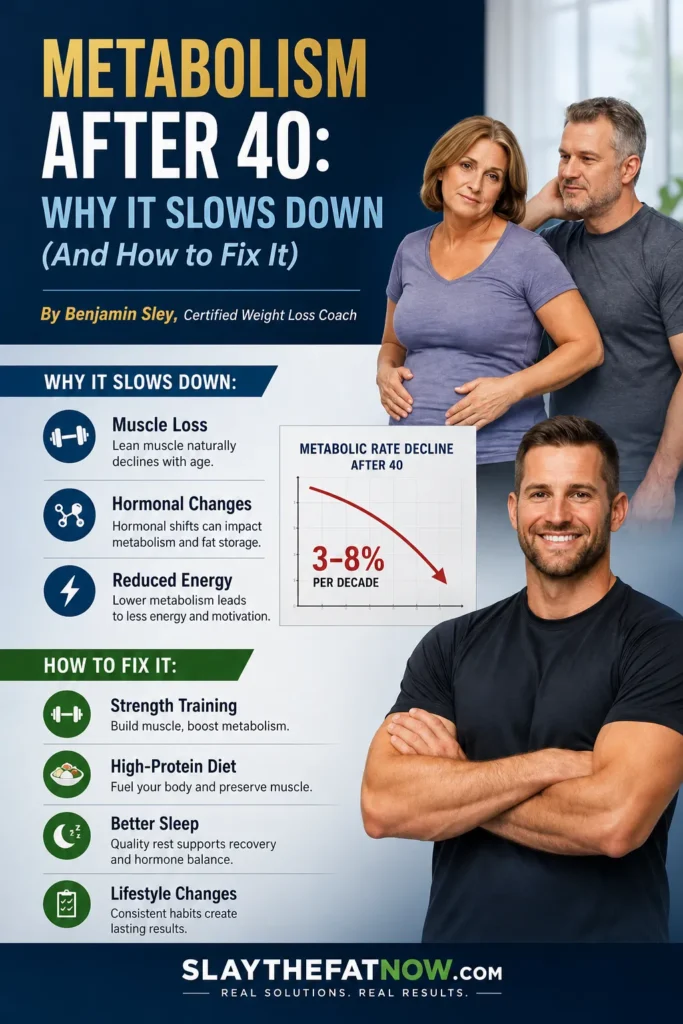
After age 40, metabolism slows primarily due to muscle loss (sarcopenia), hormonal shifts, and reduced cellular energy production. Most adults lose 3–8% of metabolic rate per decade. The fix: resistance training, high-protein eating, quality sleep, and targeted lifestyle changes can meaningfully reverse this decline at any age.
Benjamin Sley
Certified Weight Loss Coach · SlayTheFatNow.com
Benjamin has coached hundreds of Americans over 40 through sustainable fat loss. He specializes in metabolic health, behavioral change, and real-world nutrition without crash diets or gimmicks.
You’re Eating the Same. Exercising the Same. But the Scale Won’t Move.
If that sounds familiar, you’re not imagining it and you’re absolutely not alone.
Millions of Americans hit their 40s and notice something deeply frustrating: the habits that kept them lean in their 20s and 30s simply stop working. They’re not eating more junk food. They’re not skipping the gym. But somehow, the fat is accumulating especially around the belly and it won’t budge no matter what they try.
Here’s the hard truth most people don’t hear: your body has changed at the biological level. The game has different rules now. And if you keep playing by the old ones, you’ll keep losing.
But here’s the good news that most people also don’t hear: a slow metabolism after 40 is not a life sentence. It’s a solvable problem if you understand what’s actually happening and take the right action steps.

What Is Metabolism After 40, Really?
Your metabolism is the engine that converts food into energy. It includes every biochemical process your cells perform breathing, digesting, repairing tissue, pumping blood, and yes, burning fat.
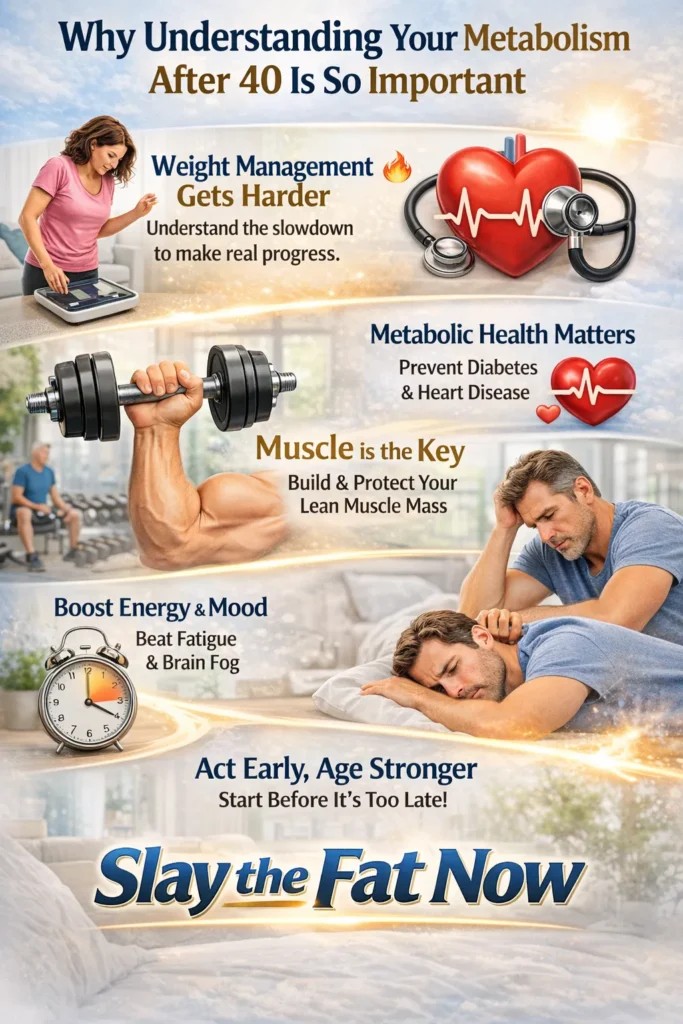
When people say “my metabolism is slow,” they typically mean their Basal Metabolic Rate (BMR) has dropped the number of calories your body burns at rest just to keep you alive. A slower BMR means your body requires fewer calories, so the same diet that once maintained your weight now creates a caloric surplus. That surplus becomes stored fat.
In this article, we’re going to break down exactly why metabolism after 40 slows down, what the science says, and what you can realistically do to rev it back up. No fluff, no miracle pills just what actually works.
Why Understanding Your Metabolism After 40 Is So Important
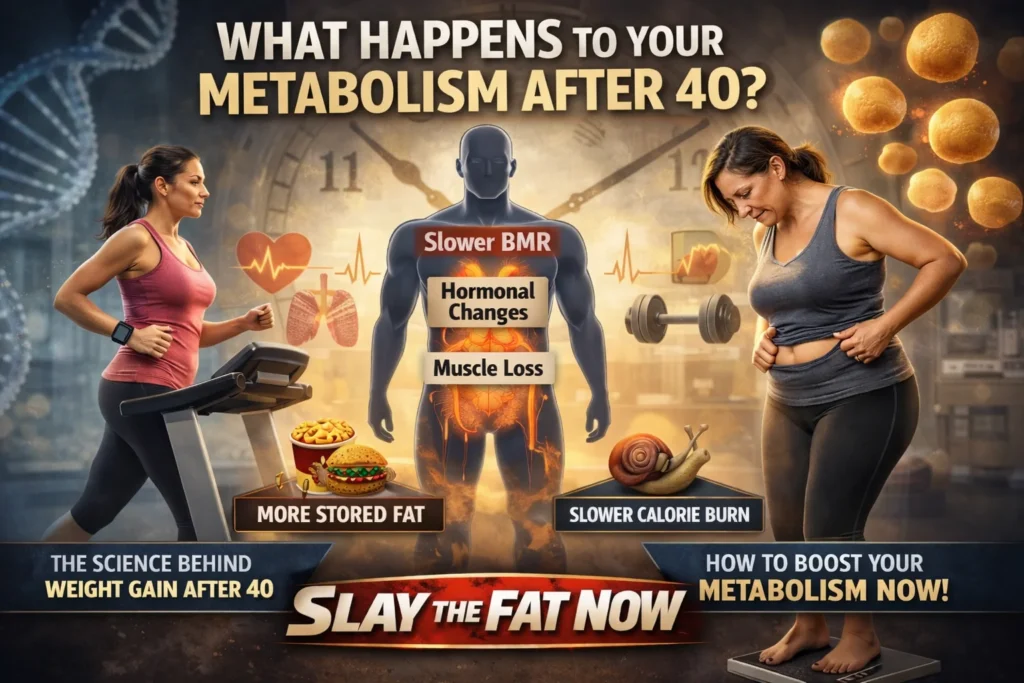
- 🔥 Weight management gets harder but not impossibleUnderstanding the “why” behind the slowdown gives you real tools instead of false hope from fad diets.
- 💪 Muscle is the key variableMetabolic rate is closely tied to lean muscle mass. Protecting and rebuilding muscle after 40 is the single most powerful lever you have.
- ❤️ Metabolic health affects more than weightSlow metabolism is linked to insulin resistance, type 2 diabetes, cardiovascular disease, and cognitive decline. Fixing it protects your long-term health.
- 🧠 Energy and mood depend on itA sluggish metabolism often shows up as fatigue, brain fog, and low motivation not just weight gain. Addressing it improves quality of life in every dimension.
- ⏰ The earlier you act, the easier it isMetabolic decline compounds over time. Starting in your early 40s gives you a massive advantage over waiting until 55 or 60.
The Science and Data Behind Metabolic Slowdown After 40
3–8% Metabolic rate decline per decade after age 20, per NIH research
3–5% Muscle mass lost per decade after 30 due to sarcopenia
200–400 Fewer calories the average 40-year-old burns daily vs. their 20s
41.9% Adult obesity rate in the U.S. in 2020 (CDC), up from 30.5% in 2000
What the Research Actually Says
A landmark 2021 study published in Science magazine involving 6,421 people across 29 countries shattered the conventional belief that metabolism nosedives in your 40s. The researchers found that metabolic rate actually remains relatively stable between ages 20 and 60. The real acceleration of decline happens after age 60.
So if your 40s aren’t the catastrophic metabolic cliff most people assume, what is actually happening?
The answer lies in body composition, hormones, and lifestyle behaviors all of which shift significantly in your 40s, creating what feels like a metabolic slowdown, even if the raw decline is more gradual.
The Four Real Reasons Metabolism Suffers After 40
1. Sarcopenia (muscle loss): Muscle is metabolically expensive tissue it burns about 6 calories per pound per day at rest, compared to fat’s 2 calories. After 30, most adults lose 3–8% of muscle mass per decade unless they actively prevent it through resistance training. Less muscle = lower BMR, full stop.
2. Hormonal changes: Testosterone drops in men at about 1% per year after 30. In women, estrogen and progesterone fluctuate dramatically heading into perimenopause (often beginning in the mid-40s). These hormonal shifts affect how the body stores fat (increasingly in the abdomen), how it builds muscle, and how it regulates appetite.
3. Reduced NEAT (Non-Exercise Activity Thermogenesis): This is the energy burned through everyday movement walking, fidgeting, climbing stairs. Research shows NEAT can account for 2,000+ calories per day in highly active individuals. As careers intensify and sedentary work habits deepen in your 40s, NEAT often falls sharply without people noticing.
4. Mitochondrial decline: Your mitochondria are the “power plants” of your cells. Aging reduces both their number and efficiency. This means cells process energy less effectively, contributing to fatigue and slower calorie burning at the cellular level.
External Reference: The CDC’s National Center for Health Statistics confirms a steady rise in metabolic disorders among adults ages 40–59. Explore their data at cdc.gov/nchs.

A Real-World Example: Tom’s 18-Month Metabolic Reset
Tom, a 46-year-old project manager from Chicago, came to me after gaining 22 pounds over three years despite eating “the same as always.” He was running 3 miles twice a week and skipping breakfast to cut calories. Sound familiar?
When we ran a metabolic assessment, his resting calorie burn was about 280 calories below what it should have been for his height and age. The culprit? He had lost nearly 14 pounds of lean muscle over the previous decade partly from chronic cardio without resistance training, partly from inadequate protein intake, and partly from accumulated sleep debt (he averaged 5.5 hours a night).
Here’s what we changed over 18 months:
- Protein to 180g per day (up from ~70g) to support muscle rebuilding
- Resistance training 3x per week (replaced one cardio session)
- Sleep to 7.5 hours through consistent bedtime and screen-limiting
- 10,000+ steps daily through structured walking breaks
- Caloric deficit of 300 (not 800+) to preserve muscle during fat loss
Result? Tom lost 26 pounds of fat over 18 months, gained back approximately 8 pounds of muscle, and his resting metabolic rate increased by ~190 calories per day. He didn’t need surgery, supplements, or a radical diet overhaul. He needed a plan designed for his biology at 46 not his biology at 26.
In my years of coaching people through metabolic challenges, the biggest mistake I see isn’t eating too much it’s eating too little. When someone in their 40s cuts calories aggressively (below 1,200 calories for women or 1,500 for men), their body responds by breaking down muscle for fuel. That muscle loss further slows the metabolism. It’s a trap that leads to the dreaded “yo-yo” cycle.
The second most common mistake? Treating every calorie the same. 150 calories of grilled chicken and 150 calories of crackers are metabolically very different. Protein has a higher thermic effect your body burns about 25–30% of its calories just digesting it, versus 6–8% for carbs and just 2–3% for fat. That difference adds up to hundreds of calories per day.
The third mistake: ignoring sleep. I’ve seen clients follow a perfect diet and training plan for months with minimal results and then start sleeping 7–8 hours a night and suddenly drop 2 pounds in two weeks. Sleep is when your body releases growth hormone, repairs muscle, and regulates ghrelin (hunger) and leptin (satiety). Skimp on sleep and every other effort suffers.

Benjamin SleyCertified Weight Loss Coach · SlayTheFatNow.com
The Reality: What Won’t Fix Your Metabolism After 40
Let’s cut through the noise. The wellness industry makes billions selling “metabolic boosters” to people over 40. Most of it is marketing. Here’s an honest breakdown:
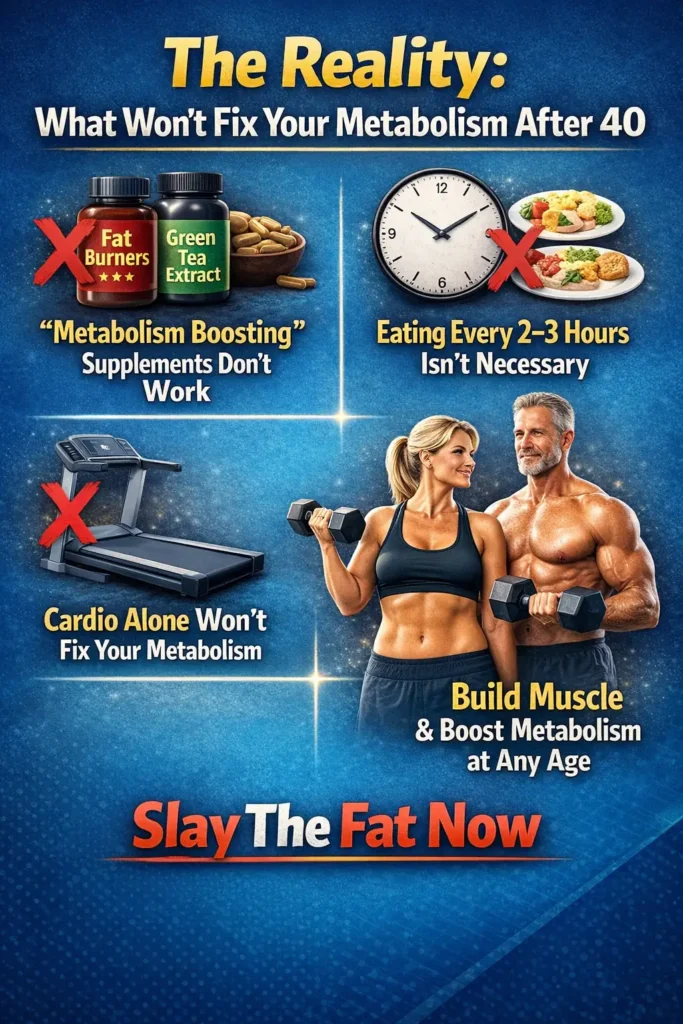
✗ Myth: “Metabolism boosting” supplements work
Green tea extract, cayenne pepper, and most “fat burner” pills produce negligible metabolic increases typically less than 5% at best, and often with cardiovascular side effects. No supplement replaces the foundational work of resistance training and quality nutrition.
✗ Myth: Eating every 2–3 hours “stokes” the metabolic fire
Total daily calorie intake is what matters most. Meal frequency has a minor effect on metabolism for most people. What matters is the quality and total quantity of food you consume not how often you eat it.
✗ Myth: Cardio is the best way to fix a slow metabolism
Cardio burns calories during the session but has limited impact on resting metabolic rate. Worse, excessive cardio without sufficient protein intake can accelerate muscle loss. Resistance training is far superior for long-term metabolic improvement.
✗ Myth: You have to accept a slow metabolism as part of aging
This is perhaps the most damaging myth. Research consistently shows that adults in their 40s, 50s, and even 60s who engage in progressive resistance training can significantly increase their metabolic rate and rebuild lean muscle even from scratch.
How to Actually Fix Your Metabolism After 40: Proven Strategies
Strategy 1: Prioritize Resistance Training
This is non-negotiable. Lifting weights (or using body weight/bands) 2–4 times per week is the most powerful intervention available for metabolic health after 40. Focus on compound movements: squats, deadlifts, rows, presses. Progressive overload gradually increasing weight or reps is what stimulates muscle growth and metabolic improvement over time.
Strategy 2: Eat More Protein Than You Think You Need
Current research supports 0.7–1.0 grams of protein per pound of body weight for adults over 40 who are active. For a 180-pound person, that’s 126–180 grams per day. Most Americans over 40 consume roughly half that. Prioritize lean meats, fish, eggs, Greek yogurt, and legumes at every meal. Check our high-protein meal plan designed for people over 40 →
Strategy 3: Protect and Optimize Your Sleep
Aim for 7–9 hours of quality sleep per night. A 2022 study in Cell Reports found that just four nights of short sleep (4.5 hours) caused a 2.6-pound increase in fat mass and muscle loss in just one week. Create a consistent sleep schedule, limit alcohol (which fragments sleep architecture), and consider magnesium glycinate to support deep sleep.
Strategy 4: Increase Daily Non-Exercise Movement
The gap between sedentary and active people’s NEAT can be 1,500–2,000 calories per day. Add a 20-minute walk after meals, use a standing desk, take stairs, pace during phone calls. These small habits stack into a massive caloric advantage over time. Learn how NEAT works for weight loss over 40 →
Strategy 5: Manage Stress Actively
Chronic stress elevates cortisol, which drives fat storage (especially visceral/belly fat) and degrades muscle tissue. Meditation, breathwork, nature walks, and social connection are not “soft” wellness practices they’re metabolic interventions backed by solid research.
Strategy 6: Don’t Eat in an Extreme Deficit
Cutting calories below your maintenance by more than 500 per day consistently triggers muscle-sparing adaptations that slow your metabolism further. A 300–500 calorie deficit combined with high protein and resistance training gives you fat loss without the metabolic cost.
✓ DO THESE
- Lift weights 3–4x per week
- Hit your daily protein target
- Sleep 7–9 hours consistently
- Walk 8,000–10,000 steps daily
- Eat in a modest caloric deficit
- Manage stress with intentional practices
- Stay hydrated (water supports metabolism)
- Track your food at least temporarily
✗ AVOID THESE
- Crash dieting below 1,200–1,500 calories
- Relying on cardio alone
- Buying “metabolism booster” supplements
- Skipping breakfast and skimping on protein
- Chronic sleep deprivation
- Ignoring stress as “just life”
- Comparing yourself to your 25-year-old body
- Expecting fast results from 40-year-old habits

Comparison: Cardio vs. Strength Training for Metabolism After 40
This is one of the most common decisions people face when trying to boost their metabolism after 40. Here’s a direct, honest comparison based on science:
| Factor | Cardio (Running, Cycling) | Resistance Training | Best for Metabolism? |
|---|---|---|---|
| Calories burned during session | High (300–600/hour) | Moderate (200–400/hour) | Cardio wins short-term |
| Resting metabolic rate impact | Minimal long-term boost | Significant builds calorie-burning muscle | Strength wins |
| Muscle preservation after 40 | Neutral to negative (if excessive) | Strong positive effect | Strength wins |
| Afterburn effect (EPOC) | Low to moderate | Moderate to high (burns calories 24–48 hrs after) | Strength wins |
| Bone density improvement | Low (except impact activities) | High critical after 40 | Strength wins |
| Hormonal benefits | Moderate (cortisol risk if overtraining) | Strong (testosterone and growth hormone boost) | Strength wins |
| Heart health | Excellent | Good (when combined with cardio) | Cardio wins |
The verdict: The ideal approach after 40 is a combination 3 resistance training sessions plus 2–3 cardio sessions per week but if you have to prioritize one, the research strongly favors resistance training for metabolic health.

Frequently Asked Questions: Metabolism After 40
1. Why does metabolism slow down after 40? ▾
The primary reasons include muscle loss (sarcopenia), hormonal changes (declining testosterone and estrogen), reduced mitochondrial efficiency, and lower daily non-exercise activity. Together, these changes reduce the number of calories your body burns at rest making it easier to gain fat even without eating more.
2. How much does metabolism slow after 40? ▾
Research suggests adults experience a 3–8% metabolic rate decline per decade. However, the decline is driven heavily by muscle loss and lifestyle changes rather than age itself. With the right habits, most of this slowdown is preventable or reversible.
3. Can you actually boost your metabolism after 40? ▾
Yes, absolutely. Multiple studies show that resistance training, increased protein intake, improved sleep, and reduced chronic stress can meaningfully increase resting metabolic rate in adults over 40 often within 8–16 weeks of consistent effort.
4. What foods boost metabolism after 40? ▾
Protein-rich foods have the highest thermic effect, burning 25–30% of their calories during digestion. Lean meats, fish, eggs, and legumes are top choices. Green tea provides a modest metabolic boost. Spicy foods (capsaicin) have a very small short-term effect. No food magically “boosts” metabolism significantly it’s your overall diet pattern that matters.
5. Does sleep affect metabolism after 40? ▾
Profoundly. Sleep deprivation increases ghrelin (hunger hormone), decreases leptin (satiety hormone), elevates cortisol, and impairs glucose metabolism all of which directly promote weight gain. Just 4–5 nights of poor sleep can increase fat storage by measurable amounts, per research in Cell Reports.
6. How much protein should I eat to boost metabolism over 40? ▾
Aim for 0.7–1.0 grams per pound of body weight daily. For a 160-pound person, that’s 112–160 grams. This level of intake supports muscle maintenance and growth, leverages protein’s high thermic effect, and reduces hunger more effectively than carb-heavy eating.
7. Is intermittent fasting good for metabolism over 40? ▾
Intermittent fasting can be a useful tool for some people over 40, but it’s not magic. It works primarily by reducing overall calorie intake and may help with insulin sensitivity. However, it can make it harder to hit daily protein targets and may not suit those with high physical activity levels. Individual response varies it works great for some and poorly for others.
8. Does menopause cause a slow metabolism? ▾
Menopause changes where fat is stored (shifting toward the abdomen) due to declining estrogen, and may reduce muscle mass if activity levels drop. However, research suggests the direct metabolic rate decline from menopause itself is smaller than commonly believed. Lifestyle factors are still the primary drivers and the primary levers for change.
9. How many calories should I eat to lose weight after 40? ▾
A deficit of 300–500 calories below your Total Daily Energy Expenditure (TDEE) is the sweet spot for fat loss without triggering significant muscle loss or metabolic adaptation. Anything more aggressive puts you at risk of muscle breakdown, which will slow your metabolism further. Use a TDEE calculator to find your baseline, then subtract conservatively.
10. Does stress cause weight gain after 40? ▾
Yes. Chronic stress elevates cortisol, which promotes visceral fat storage, increases cravings for calorie-dense foods, degrades muscle tissue, and disrupts sleep. Managing stress is not optional it’s a core pillar of metabolic health, especially after 40 when cortisol sensitivity tends to increase.
11. What exercises are best for boosting metabolism after 40? ▾
Progressive resistance training (compound lifts like squats, deadlifts, rows, and presses) is the gold standard for metabolic improvement after 40. High-Intensity Interval Training (HIIT) is a solid second for cardiovascular and metabolic benefits in shorter sessions. Long steady-state cardio has its place for heart health but limited metabolic impact on its own.
12. Are metabolism-boosting supplements worth it after 40? ▾
For the vast majority, no. Most commercially sold metabolism boosters produce effects too small to matter under 100 additional calories burned per day and come with cardiovascular side effects at higher doses. Creatine monohydrate (supports muscle building) and vitamin D3 (often deficient in adults over 40 and linked to metabolic function) have more legitimate evidence behind them.
13. How long does it take to fix a slow metabolism after 40? ▾
Meaningful improvement in resting metabolic rate is typically measurable within 8–16 weeks of consistent resistance training and adequate protein intake. Significant body composition changes visible fat loss with muscle gain typically take 6–18 months depending on starting point and adherence. There are no shortcuts, but results are absolutely achievable.
14. Does drinking water boost metabolism after 40? ▾
Hydration supports all metabolic processes, and drinking cold water may cause a small temporary metabolic boost (as the body warms it to body temperature). More practically: many adults over 40 are chronically mildly dehydrated, which reduces energy and physical performance. Aiming for 2.5–3.5 liters of water daily is a solid baseline.
15. Can I lose weight after 40 even with a slow metabolism? ▾
Absolutely and you can do it while also improving your metabolism. The key is working with your biology: adequate protein to preserve muscle, resistance training to rebuild it, a modest caloric deficit, good sleep, and active stress management. Hundreds of my coaching clients over 40 have achieved this, and so can you.
Ready to Slay the Fat On Your Terms?
You now know exactly why your metabolism slowed and exactly how to fix it. But knowing is only half the battle. Having a coach who holds you accountable and customizes the plan to your body, lifestyle, and goals? That’s the difference between another year of frustration and real results.
No pressure. No gimmicks. Just a real conversation about what’s possible for you.
Sources & References
- Pontzer, H. et al. (2021). Daily Energy Expenditure Through the Human Life Course. Science. science.org
- National Institutes of Health Metabolic Rate & Aging. nih.gov
- Saner, N.J. et al. (2022). Short sleep duration causes acute metabolic dysregulation. Cell Reports Medicine.
