 Skip to content
Turmeric and Ginger Drink for Weight Loss: 5 Recipes, the Real Science, and How to Make It Actually Work
You have probably seen the turmeric latte trend on social media, or the viral golden milk recipes, or the ten-second clips of someone grating fresh ginger into hot water with a sprinkle of turmeric. It looks simple. It looks healthy.
What most of those posts never tell you is that the way most people make their turmeric drink renders the most active and beneficial compound curcumin almost completely unabsorbable by the human body.
Turmeric alone has a bioavailability problem. Without one specific addition, your body absorbs almost none of the curcumin that makes turmeric medicinally useful. And most recipes, most social media posts, and most health blogs skip this critical detail.
This guide covers the real science behind what turmeric and ginger actually do for weight loss, how to make your drink in a way that maximises the active compounds you absorb, five different recipe variations for different goals, the best time to drink it, and the honest answer to how much weight loss you can actually expect.
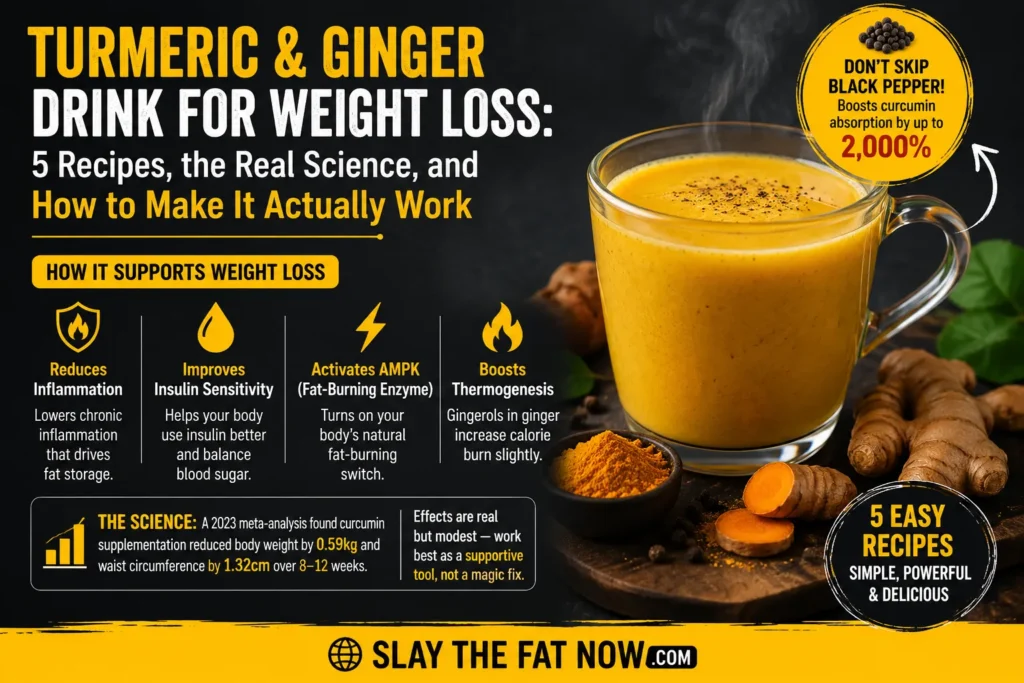
A turmeric and ginger drink supports weight loss through four mechanisms: reducing chronic inflammation that drives fat storage, improving insulin sensitivity, activating AMPK (a fat-burning enzyme), and mild thermogenesis from gingerols in ginger. A 2023 meta-analysis found curcumin supplementation reduced body weight by an average of 0.59kg and waist circumference by 1.32cm over 8–12 weeks. Effects are real but modest they work best as a supportive tool alongside a calorie deficit, not as a replacement for one. The critical key: always add a pinch of black pepper. Piperine in black pepper increases curcumin bioavailability by up to 2,000%.
Why Turmeric and Ginger Together The Science Behind the Combination
Turmeric and ginger are both members of the Zingiberaceae (ginger family) and share structural similarities between their active compounds curcumin and gingerol that create synergistic effects when consumed together. A review published in the International Journal of Preventive Medicine concluded that both turmeric and ginger have anti-obesity effects and can aid in weight loss by enhancing metabolism, reducing inflammation, and regulating adipokine levels the hormones secreted by fat cells that control appetite and metabolic rate.
Understanding what each compound does separately makes the combination more meaningful.
What Curcumin (Turmeric’s Active Compound) Does for Weight Loss
Curcumin is the polyphenol that gives turmeric its vivid golden colour and is responsible for the majority of its health effects. Research has identified four specific mechanisms through which curcumin supports fat loss:
1. AMPK activation the metabolic switch. Curcumin activates AMP-activated protein kinase (AMPK), an enzyme described by researchers as a cellular “energy sensor.” When AMPK is activated, it essentially switches cells from energy-storage mode to energy-utilisation mode increasing fat oxidation, reducing fat synthesis, improving glucose uptake into muscle cells, and reducing hepatic glucose production. Research from PLOS One (Ejaz et al., 2009) confirmed that curcumin significantly prevents high-fat-diet-induced obesity and insulin resistance through AMPK pathway activation.
2. Inhibition of fat cell formation (adipogenesis). Curcumin has been shown to inhibit the differentiation of preadipocytes into mature fat cells essentially blocking the formation of new fat cells. Research published in Targeting Inflammation-Induced Obesity and Metabolic Diseases (Aggarwal, 2010, PMC3144156) confirmed that curcumin stimulates AMPK in fat cells, which downregulates PPAR-γ and thus inhibits adipocyte differentiation. Fewer new fat cells formed means less fat storage capacity over time.
3. Reduction of chronic inflammation. Chronic low-grade inflammation is one of the most significant and least discussed drivers of weight loss resistance, particularly in women over 40. Inflammatory cytokines specifically TNF-α and IL-6 directly impair insulin signalling, promote fat storage, and increase cravings for high-calorie foods. Curcumin suppresses NF-κB, the primary signalling molecule that triggers inflammatory cytokine production. Research in Scientific Reports (2018) confirmed curcumin alleviates post-meal blood sugar response and reduces the inflammation that drives insulin resistance.
4. Insulin sensitivity improvement. A comprehensive review in PMC (Anti-Hyperglycemic and Insulin Sensitizer Effects of Turmeric) confirmed that curcumin activates multiple pathways that improve insulin receptor sensitivity increasing glucose uptake in muscle, reducing hepatic glucose production, and decreasing insulin resistance markers (HOMA-IR). A 2024 randomised controlled trial with 272 participants found that 1,500mg daily curcumin supplementation significantly improved beta-cell function and reduced insulin resistance over 12 months, with the curcumin group experiencing meaningful weight loss compared to placebo.
What the meta-analysis says: A 2023 meta-analysis of randomised controlled trials found that curcumin supplementation significantly reduced BMI by 0.24 kg/m², body weight by 0.59kg, and waist circumference by 1.32cm over 8–12 weeks. These are modest effects which is the honest assessment. Curcumin is a metabolic supporter, not a fat-burning drug. It creates better hormonal and cellular conditions for fat loss to occur it does not replace the calorie deficit that fat loss requires.
What Gingerols (Ginger’s Active Compound) Do for Weight Loss
Ginger’s primary active compounds gingerols (in fresh ginger) and shogaols (in dried or cooked ginger, which are more potent) work through complementary mechanisms that enhance the overall effect when combined with turmeric.
1. Thermogenesis increasing calorie burn. Gingerols have well-documented thermogenic properties, meaning they increase the body’s core temperature slightly, raising the rate at which calories are burned. Research published in Metabolism (Mansour et al., 2012) confirmed that hot ginger consumption significantly enhanced the thermic effect of food and increased feelings of satiety in overweight men. A PubMed review on the Effects of Red Pepper, Ginger, and Turmeric on Energy Metabolism (2021) confirmed that ginger affects energy metabolism through mechanisms related to thermal effect, basal metabolic rate, total energy expenditure, oxygen consumption, and lipid oxidation.
2. AMPK activation in adipose tissue. Research published in Nutrients (Kim et al., 2018, PMC6266584) found that ginger extract ameliorates obesity and inflammation via AMPK activation in white adipose tissue the same pathway curcumin activates, meaning the two compounds work synergistically on the same fat-burning mechanism.
3. Appetite suppression and satiety. Ginger has consistent evidence for reducing appetite and increasing feelings of fullness. A comprehensive systematic review of 109 randomised controlled trials (Nikkhah Bodagh et al., 2019, Nutrients) found that ginger was beneficial in lowering body fat mass, body fat percentage, waist circumference, waist-to-hip ratio, and insulin resistance.
4. Blood sugar and insulin resistance. A meta-analysis by Maharlouei et al. (2019, Critical Reviews in Food Science and Nutrition) based on 14 RCTs with 473 subjects found that ginger supplementation significantly decreased body weight, waist-to-hip ratio, fasting glucose, and insulin resistance index (HOMA-IR), and increased HDL cholesterol. A 2025 meta-analysis published in ScienceDirect specifically found that ginger supplementation reduces waist circumference and body fat, with benefits most evident in interventions lasting over 8 weeks.
The Critical Problem: Why Most Turmeric Drinks Don’t Work
Before getting to the recipes, this is the most important piece of information in this entire guide and almost no recipe article mentions it.
Curcumin on its own has extremely poor bioavailability.
When you consume turmeric powder or fresh turmeric root in a drink, the curcumin it contains is rapidly metabolised by the liver and excreted. Research consistently shows that the concentration of curcumin that reaches the bloodstream after consuming plain turmeric is negligible. Most of the curcumin you consume is essentially wasted.
The fix: black pepper.
Piperine the active compound in black pepper, the same molecule responsible for its spicy heat is a potent inhibitor of hepatic drug metabolism. It works by blocking the liver enzymes that break down curcumin before it can reach systemic circulation. The result is dramatic.
A landmark human study by Shoba et al., published in Planta Medica (1998), found that adding just 20mg of piperine to a curcumin dose increased curcumin bioavailability by 2,000%. Research published in NutritionFacts.org confirms that even a tiny pinch of black pepper as little as 1/20th of a teaspoon is enough to produce this effect. You do not need much. You cannot taste it in a drink. You need it in every recipe.
The second fix: fat.
Curcumin is fat-soluble, not water-soluble. When consumed with a source of dietary fat coconut milk, a small amount of coconut oil, whole milk, nut milk with fat content curcumin is absorbed directly into the bloodstream through the lymphatic system, partially bypassing the liver’s first-pass metabolism. Research from the University of Massachusetts Medical School confirms that consuming turmeric with 15 or more grams of fat improves bioavailability by a further seven to eight times beyond the baseline.
The triple approach for maximum absorption:
- Black pepper (even a pinch non-negotiable)
- Consumed with a fat source (coconut milk, full-fat milk, coconut oil)
- Heated briefly warming turmeric increases solubility of curcuminoids
Traditional Indian cuisine has always used this exact combination turmeric with fat (ghee or coconut) and black pepper and Western science has now confirmed why.
5 Turmeric and Ginger Drink Recipes for Weight Loss
Each recipe serves one person. Every recipe includes black pepper and a fat source because without them, you are getting very little of the active compounds that make this drink worthwhile.
Recipe 1: Classic Turmeric Ginger Morning Drink (The Base Recipe)
The simplest, most effective version. Best for daily use as a morning metabolic primer.
Ingredients:
- 300ml hot water (just off the boil, around 80–85°C boiling water destroys some active compounds)
- 1 teaspoon fresh turmeric, grated (or ½ teaspoon turmeric powder)
- 1 teaspoon fresh ginger, grated (or ½ teaspoon ginger powder)
- ¼ teaspoon black pepper (this is non-negotiable do not skip it)
- Juice of half a lemon
- Optional: 1 teaspoon coconut oil or ¼ teaspoon MCT oil for fat-based absorption
How to make it:
- Grate fresh turmeric and ginger directly into a mug or heatproof glass
- Add black pepper
- Pour hot (not boiling) water over the ingredients
- Steep for 5 minutes
- Strain through a fine mesh strainer or drink as-is if you prefer the texture
- Add lemon juice and stir
- If using coconut oil, add it while the drink is still hot and stir well until it emulsifies
Best time to drink: 10–20 minutes after your initial warm water upon waking, before breakfast. This timing allows the active compounds to reach the bloodstream before food intake, maximising their effect on morning insulin response and inflammation.
What it does: Activates AMPK through both curcumin and gingerol, reduces overnight-accumulated inflammation, supports morning insulin sensitivity, mild thermogenic effect from gingerols, and vitamin C from lemon supports carnitine synthesis for fat metabolism.
Calories: Approximately 15–20 calories without coconut oil; 55–60 with 1 teaspoon of coconut oil.
Recipe 2: Golden Milk (Turmeric Ginger Latte) Best for Evening Use
A warmer, creamier version that works particularly well as an evening drink. The fat content in the milk significantly enhances curcumin absorption. This version is also effective before bed because curcumin has strong anti-inflammatory effects during sleep recovery.
Ingredients:
- 250ml unsweetened coconut milk or full-fat oat milk (the fat content is the absorption key)
- 1 teaspoon turmeric powder
- ½ teaspoon fresh ginger, grated (or ¼ teaspoon ground ginger)
- ¼ teaspoon black pepper
- ¼ teaspoon cinnamon (Ceylon, not Cassia supports blood sugar regulation overnight)
- Small pinch of sea salt (enhances flavour and electrolyte balance)
- Optional: ½ teaspoon raw honey if desired (adds 10 calories)
How to make it:
- Warm the coconut milk in a small saucepan over medium heat do not boil
- Add turmeric, ginger, black pepper, and cinnamon
- Whisk continuously for 3–4 minutes until everything is fully combined and the drink is steaming
- Pour into a mug
- Add sea salt and honey if using
- Stir once more and drink warm
Best time to drink: 1–2 hours before bed. The anti-inflammatory effects of curcumin work during sleep recovery. The cinnamon supports overnight blood sugar stability, reducing the morning insulin spike that drives cravings. The fat in coconut milk maximises curcumin absorption through the lymphatic pathway.
What it does: Maximum curcumin absorption due to fat carrier; anti-inflammatory effect during overnight recovery; blood sugar support from cinnamon; gentle thermogenic effect from ginger and black pepper.
Calories: Approximately 80–100 calories depending on milk type and whether honey is added.
Note for women over 40: The combination of turmeric’s anti-inflammatory effects and cinnamon’s insulin-sensitising properties makes this version particularly relevant for the perimenopause-related insulin resistance and cortisol-driven inflammation that drives abdominal weight gain.
Recipe 3: Turmeric Ginger ACV Drink Best for Blood Sugar and Belly Fat
The most metabolically targeted version, combining three evidence-backed blood sugar and fat loss ingredients. Best consumed 15–20 minutes before breakfast when blood sugar management is most critical.
Ingredients:
- 300ml warm water
- ½ teaspoon turmeric powder
- ½ teaspoon fresh ginger, grated
- 1–2 teaspoons raw, unfiltered apple cider vinegar (with “the mother”)
- ¼ teaspoon black pepper
- Juice of half a lemon
- 1 teaspoon extra virgin olive oil (fat source for curcumin absorption)
How to make it:
- Warm the water hot but not boiling
- Add turmeric, ginger, and black pepper
- Stir well for 30 seconds
- Add apple cider vinegar and lemon juice
- Add olive oil and stir to combine
- Drink through a straw to protect tooth enamel from ACV and lemon citric acid
Best time to drink: 15–20 minutes before breakfast. This timing combines: ACV’s effect on pre-meal blood sugar (slows gastric emptying, reduces insulin spike from breakfast), ginger’s thermogenic primer, and curcumin’s AMPK activation.
What it does: Targets the three primary drivers of belly fat insulin resistance (ACV), chronic inflammation (curcumin), and morning blood sugar spike (combined ACV + ginger). This is the highest-impact version for women specifically dealing with abdominal weight that is not responding to diet alone.
Calories: Approximately 50 calories.
Important warnings: Always dilute ACV never drink it undiluted. Not recommended for people with acid reflux, GERD, or gastritis. If you are on diabetes medication, consult your doctor before adding ACV daily as it has measurable blood-sugar-lowering effects.
Recipe 4: Turmeric Ginger Green Tea Best for Fat Oxidation and Energy
Combines the EGCG catechins in green tea the most comprehensively studied fat oxidation compound with turmeric and ginger. Best consumed 60 minutes after waking, not immediately on an empty stomach (tannins in green tea can cause nausea on a completely empty stomach).
Ingredients:
- 200ml brewed green tea, cooled slightly to 75–80°C (not boiling high heat destroys EGCG)
- ½ teaspoon turmeric powder
- ½ teaspoon fresh ginger, grated
- ¼ teaspoon black pepper
- Small squeeze of lemon (vitamin C increases EGCG absorption by up to 13-fold in the gut)
- Optional: 1 teaspoon coconut oil for fat-based curcumin absorption
How to make it:
- Brew green tea at 75–80°C for 2–3 minutes (this temperature preserves EGCG)
- While hot, add turmeric, ginger, and black pepper
- Stir well for 30 seconds
- Add lemon juice
- If adding coconut oil, stir vigorously to combine while still hot
Best time to drink: 20–30 minutes after your morning warm water, or 60 minutes after waking once your cortisol peak has begun to decline.
What it does: Triple fat oxidation support EGCG from green tea (proven to increase fat oxidation by 16% per meta-analysis), gingerols from ginger (thermogenesis and AMPK), curcumin from turmeric (AMPK activation and inflammation reduction). This is the best pre-exercise version drink it 30–45 minutes before a morning workout for enhanced fat burning during the session.
Calories: Approximately 10–15 calories without coconut oil; 50 with.
Recipe 5: Turmeric Ginger Detox Broth Best for Bloating and Digestion
A savoury version that works particularly well for women dealing with bloating, slow digestion, or constipation alongside weight loss goals. The bone broth or vegetable broth base provides collagen, amino acids, and a fat carrier simultaneously.
Ingredients:
- 300ml warm bone broth or vegetable broth (low-sodium)
- 1 teaspoon fresh turmeric, grated (or ½ teaspoon turmeric powder)
- 1 teaspoon fresh ginger, grated
- ¼ teaspoon black pepper
- ¼ teaspoon ground cumin (supports digestive enzyme activity)
- Small pinch of cayenne pepper (optional adds thermogenic capsaicin)
- Squeeze of lemon
How to make it:
- Warm the broth gently in a small saucepan do not boil
- Add turmeric, ginger, black pepper, cumin, and cayenne if using
- Simmer on low for 3–5 minutes to allow the compounds to infuse
- Strain if desired and add lemon juice
- Drink warm as a morning savoury alternative or as an afternoon drink
Best time to drink: Morning before breakfast, or mid-afternoon as a satisfying, low-calorie alternative to snacking.
What it does: Bone broth provides glycine and glutamine for gut lining repair; ginger reduces bloating and stimulates digestive enzymes; turmeric reduces gut inflammation; cayenne adds thermogenic capsaicin. For women dealing with gut permeability issues or inflammatory bowel symptoms that are contributing to weight loss resistance, this is the most targeted version.
Calories: Approximately 30–40 calories depending on broth.
The 90-Minute Morning Protocol: Where This Drink Fits
If you have read our guide on what to drink first thing in the morning to lose weight, you already know the sequence. Here is exactly where turmeric ginger fits into that protocol:
| Time After Waking | What to Drink | Why |
|---|---|---|
| 0–5 minutes | 300–500ml plain warm water | Rehydrate, blunt cortisol and ghrelin spike |
| 10–20 minutes | Turmeric ginger drink (Recipe 1 or 3) | AMPK activation, inflammation reduction, blood sugar priming |
| 60–90 minutes | Green tea or black coffee | Caffeine after cortisol peak has declined |
The turmeric ginger drink is your 10–20 minute drink not your first drink. Plain warm water always comes first to rehydrate and gently blunt the morning cortisol surge. Turmeric ginger follows as the targeted metabolic drink before breakfast.
The Best Time to Drink Turmeric and Ginger for Weight Loss
Different times of day serve different purposes. Here is the evidence-based guide:
Morning (10–20 minutes after warm water, before breakfast): Best for: AMPK activation, morning insulin sensitivity, blood sugar priming before breakfast. Use: Recipe 1 (Classic) or Recipe 3 (ACV version). Avoid: Drinking it on a completely empty stomach without the preceding warm water some people experience mild nausea from ginger on a fully empty stomach.
Pre-workout (30–45 minutes before exercise): Best for: Thermogenic boost, enhanced fat oxidation during the session. Use: Recipe 4 (Green Tea version) the combination of EGCG and gingerols produces measurably enhanced fat burning during moderate-intensity cardio.
Evening (1–2 hours before bed): Best for: Overnight anti-inflammatory recovery, blood sugar stability during sleep, hormonal reset. Use: Recipe 2 (Golden Milk) the fat in coconut milk maximises curcumin absorption during the overnight recovery period when the body does its primary repair work.
What to avoid: Do not drink turmeric ginger tea within 30 minutes of taking medications that rely on liver metabolism (including blood thinners, some antidepressants, and certain blood pressure medications) piperine from black pepper inhibits the same liver enzymes that metabolise these drugs, potentially increasing their effective dose. Speak to your doctor if you are on regular medication.
How Much Weight Loss to Expect The Honest Answer
This is the question most recipe articles refuse to answer directly. Here is what the clinical evidence actually shows.
From curcumin (turmeric): A 2023 meta-analysis of randomised controlled trials found curcumin supplementation reduced body weight by an average of 0.59kg and waist circumference by 1.32cm over 8–12 weeks. Separate research finding reported an average reduction of about 1.3 pounds and 1.3 cm off the waist over the same period. Note: most studies used concentrated curcumin supplements at 1,000–1,500mg daily significantly more than a daily turmeric drink provides. The drink is a dietary contribution, not a pharmaceutical dose.
From ginger: A 2024 GRADE-assessed meta-analysis (Rafieipour et al., Nutrition Reviews, 2024, based on 27 RCTs) found ginger supplementation reduces waist circumference and body fat, with benefits most evident in interventions lasting over 8 weeks. The 2019 Maharlouei meta-analysis (14 RCTs, 473 subjects) found significant reductions in body weight, waist-to-hip ratio, fasting glucose, and HOMA-IR.
The honest synthesis: A daily turmeric ginger drink, made correctly with black pepper and a fat source, provides a genuine but modest contribution to weight loss through inflammation reduction, insulin sensitisation, and metabolic support. Combined with a calorie deficit and regular movement, consistent daily consumption for 8–12 weeks produces measurable reductions in waist circumference and body fat, particularly abdominal fat. It is not a shortcut. It does not produce dramatic scale results on its own. It is a powerful supporting tool that works best alongside a complete fat loss approach.
For women specifically with chronic inflammation, insulin resistance, or perimenopause-related hormonal belly fat, the anti-inflammatory and insulin-sensitising effects of turmeric and ginger are particularly relevant these are the exact mechanisms driving weight loss resistance in this group.
Who Should Be Cautious with Turmeric and Ginger Drinks
Turmeric and ginger are generally safe for healthy adults in food quantities. However, certain groups should exercise caution or consult a doctor before consuming them daily:
Blood thinners (warfarin, aspirin, clopidogrel): Both turmeric and ginger have mild blood-thinning properties. High daily doses alongside anticoagulant medication can increase bleeding risk. Discuss with your doctor before making this a daily habit.
Gallstones or bile duct problems: Turmeric stimulates bile production, which is beneficial for fat digestion but can trigger discomfort or complications in people with existing gallstones.
Pregnancy: Ginger in moderate food quantities is generally considered safe and is well-researched for morning sickness relief. High supplemental doses are not recommended. If you are pregnant, use culinary quantities only and consult your midwife.
Before surgery: Both turmeric and ginger should be discontinued 2 weeks before any scheduled surgery due to their anti-coagulant and blood pressure effects.
Acid reflux or GERD: Ginger in the amounts in these recipes is usually well tolerated, but some people with reflux find ginger worsens symptoms. Start with a smaller amount (¼ teaspoon) and assess tolerance.
Iron-deficiency anaemia: Turmeric has been shown in some research to impair non-haeme iron absorption. If you have iron-deficiency anaemia, avoid drinking turmeric drinks with iron-rich meals or iron supplements.
Making It a Sustainable Daily Habit: Practical Tips
The metabolic benefits of turmeric and ginger are cumulative they build over 8–12 weeks of consistent daily use, not after a single cup. The most important thing is consistency, which requires the habit to be easy.
Prep your ginger and turmeric in bulk. Grate a full week’s worth of fresh turmeric and ginger, mix them together in a small jar, and refrigerate. Each morning, simply scoop out 1–2 teaspoons per drink. This takes the friction out of the daily preparation.
Make a turmeric ginger paste. Combine equal parts fresh grated turmeric and ginger with a tablespoon of black pepper, a tablespoon of coconut oil, and enough water to form a smooth paste. Store in the fridge for up to two weeks. Add half a teaspoon to any drink for the complete active compound package.
Fresh versus powder. Fresh ginger and turmeric root provide higher concentrations of active compounds compared to dried powder particularly fresh ginger, which contains more gingerols (the most potent form; drying converts some gingerols to shogaols, which are more potent thermogenic ally but in different ratios). Both are effective. Use fresh when available, powder when convenient. Never skip the drink because you only have powder.
Travel hack. Pre-measure individual servings of turmeric powder, ginger powder, black pepper, and cinnamon into small zip bags or a weekly pill organiser. Add to hot water wherever you are.
Signs it is working: After 1–2 weeks, most women report less morning bloating, more stable mid-morning energy (fewer crashes), and reduced sugar cravings the blood sugar and inflammation effects manifest before any scale changes. Waist measurement changes typically become noticeable at 6–8 weeks with consistent daily use.
Frequently Asked Questions
1. Can I drink turmeric and ginger tea every day?
Yes. Both turmeric and ginger are safe for daily use in culinary quantities for most healthy adults. The evidence supports consistent daily consumption for at least 8 weeks to see metabolic benefits particularly the waist circumference and blood sugar improvements documented in clinical research. The key is to always include black pepper (for curcumin absorption) and a fat source (coconut milk, olive oil, or coconut oil) to maximise bioavailability.
2. What does black pepper do in turmeric drinks?
Black pepper contains piperine, a compound that inhibits the liver enzymes responsible for breaking down curcumin before it can reach the bloodstream. Research by Shoba et al. found that adding piperine to curcumin increases its bioavailability by up to 2,000%. Without black pepper, the curcumin in your turmeric drink is largely excreted without being absorbed. Even a tiny pinch 1/20th of a teaspoon is sufficient to produce this effect. You cannot taste it in a warm drink.
3. When is the best time to drink turmeric and ginger for weight loss?
The best time depends on your goal. For blood sugar priming and morning metabolic activation: 10–20 minutes after waking, before breakfast. For fat oxidation enhancement: 30–45 minutes before a morning workout. For overnight anti-inflammatory recovery and blood sugar stability: 1–2 hours before bed, using the Golden Milk version with coconut milk. Many women find that morning consumption provides the most noticeable day-to-day benefits particularly reduced bloating and more stable mid-morning energy.
4. How long before I see results from turmeric and ginger drinks?
Results in clinical studies typically appear over 8–12 weeks. Short-term effects that many users notice within the first 1–2 weeks include reduced bloating, improved digestion, more stable blood sugar between meals, and reduced sugar cravings. Measurable changes in waist circumference and body fat typically appear after 6–8 weeks of consistent daily use alongside a calorie deficit. The drink is a metabolic support tool it works with a fat loss approach, not instead of one.
5. Can I add honey to my turmeric ginger drink?
Yes, but in small amounts and only if needed for palatability. Raw honey provides some antioxidant compounds and is preferable to refined sugar. However, adding honey converts a near-zero-calorie drink into a blood-sugar-stimulating one which partially counteracts the blood sugar stabilisation benefits of the ACV and ginger. If you are using the morning drink to improve insulin sensitivity and reduce cravings, skip the honey. If you prefer the Golden Milk version in the evening and the taste without honey is unpleasant, half a teaspoon is a reasonable addition.
6. Is fresh turmeric better than powder?
Fresh turmeric root contains more volatile oils alongside the curcuminoids, which can slightly improve absorption compared to dry powder. However, the difference is modest and both are effective when paired with black pepper and fat. The practical advantage of fresh turmeric is flavour it has a brighter, less bitter taste than the powder. The practical advantage of powder is convenience and longer shelf life. Either works; consistency matters more than form.
7. Does turmeric and ginger help with belly fat specifically?
Yes and this is where the research is most consistent. Curcumin’s AMPK activation pathway specifically inhibits visceral fat formation (the deep abdominal fat associated with metabolic disease). Ginger’s insulin-sensitising effects reduce the primary hormonal driver of abdominal fat accumulation insulin resistance. Chronic inflammation, which both turmeric and ginger reduce, is another direct driver of visceral fat storage in women, particularly during perimenopause. Waist circumference reduction is one of the most consistently reported outcomes in clinical studies on both compounds.
8. Can I use turmeric and ginger powder instead of fresh?
Yes. A reliable conversion is 1 teaspoon of fresh grated turmeric or ginger equals approximately ½ teaspoon of the dried powder. Powder is completely acceptable and in the case of ginger, dried powder actually contains more shogaols compounds that form during the drying process and are potently anti-inflammatory. For turmeric specifically, fresh root contains small amounts of additional volatile oils that support absorption, but the curcumin content is comparable between fresh and dried when measured by weight.
9. Will this drink break my intermittent fast?
The plain versions (Recipe 1 and Recipe 4 without coconut oil) contain very few calories approximately 10–20 calories and are generally considered fasting-compatible by most intermittent fasting practitioners. The addition of coconut oil or full-fat coconut milk (Recipe 2 or 5) adds 50–100 calories and technically breaks a strict fast. If you are following strict fasting protocols, use the low-calorie Recipe 1 version without oil. The metabolic benefits of the drink AMPK activation, blood sugar support, anti-inflammatory effect are compatible with and potentially enhance the fasting window.
10. What are the side effects of drinking turmeric and ginger daily?
At culinary doses (the amounts in these recipes), side effects are uncommon. Some people experience mild GI discomfort or heartburn when starting, particularly with ginger reduce the amount and increase gradually. Turmeric can cause an orange-yellow staining on teeth with long-term use at high concentrations; rinse your mouth after drinking. In high supplemental doses (above 8g of curcumin daily), turmeric can cause nausea and diarrhoea the amounts in these recipes are well below this threshold. The most important safety consideration is for people on blood-thinning medications, for whom daily high-dose consumption warrants medical supervision.
11. Can I make a big batch and store it?
Yes, with some caveats. You can make a 3–4 day supply of the base drink (Recipe 1) and store it in an airtight glass jar in the refrigerator. The ginger and turmeric compounds remain stable for 3–4 days when refrigerated. Add lemon juice and black pepper fresh each day rather than storing them in the batch lemon loses vitamin C potency quickly and the pepper compounds are best added just before consumption. Do not store the Golden Milk version for more than 24 hours as the milk component degrades quickly.
12. Does turmeric and ginger tea work without a calorie deficit?
No not for meaningful fat loss. The metabolic effects of turmeric and ginger AMPK activation, inflammation reduction, insulin sensitization create better conditions for fat loss, but they cannot overcome a calorie surplus. In the clinical studies showing weight loss from these compounds, participants were either already at a caloric deficit, or the metabolic improvements naturally reduced their calorie intake by improving satiety and reducing cravings. Think of this drink as a precision tool that makes your fat loss approach more effective, not as a replacement for the approach itself.
The Bottom Line
Turmeric and ginger drinks are genuinely evidence-backed supports for weight loss but only if you make them in a way that allows the active compounds to actually reach your body. Without black pepper, you are getting almost none of the curcumin. Without a fat source, absorption is severely limited.
Make it correctly black pepper every time, a fat source in at least one daily version, consistent daily use for 8–12 weeks and the research supports real reductions in waist circumference, belly fat, blood sugar, and insulin resistance. For women with chronic inflammation, hormonal belly fat, or perimenopause-related metabolic resistance, the anti-inflammatory and insulin-sensitising effects are particularly targeted at the root causes of their weight loss challenges.
Use the morning version 10–20 minutes after warm water to prime your insulin response for the day. Use the Golden Milk version in the evening to maximise overnight anti-inflammatory recovery. Add the ACV version before breakfast two to three times per week if blood sugar and belly fat are your primary concerns.
Combine this daily drink habit with adequate protein, strength training, quality sleep, and stress management, and you have built the natural metabolic environment in which fat loss becomes the path of least resistance not a daily battle.
For the complete morning drink protocol that this drink fits into, read our guide on what to drink first thing in the morning to lose weight. For the full picture on how hormones affect fat loss in women, see our guide on why your metabolism slows after 40 and how to fix it.
References
- Shoba G, et al. Influence of piperine on the pharmacokinetics of curcumin in animals and human volunteers. Planta Medica. 1998.
- Maharlouei N, et al. The effects of ginger intake on weight loss and metabolic profiles among overweight and obese subjects: A systematic review and meta-analysis of 14 RCTs. Critical Reviews in Food Science and Nutrition. 2019.
- Rafieipour N, et al. Ginger intervention on body weight and body composition in adults: a GRADE-assessed systematic review and dose-response meta-analysis of 27 randomized controlled trials. Nutrition Reviews. 2024.
- Mansour MS, et al. Ginger consumption enhances the thermic effect of food and promotes feelings of satiety. Metabolism. 2012.
- Kim S, et al. Ginger Extract Ameliorates Obesity and Inflammation via AMPK Activation in White Adipose Tissue. Nutrients. 2018.
Written by Benjamin Sley, weight loss coach and author of the 10-Day Metabolism Reset. Benjamin helps women over 40 achieve lasting fat loss through science-backed natural strategies.
