
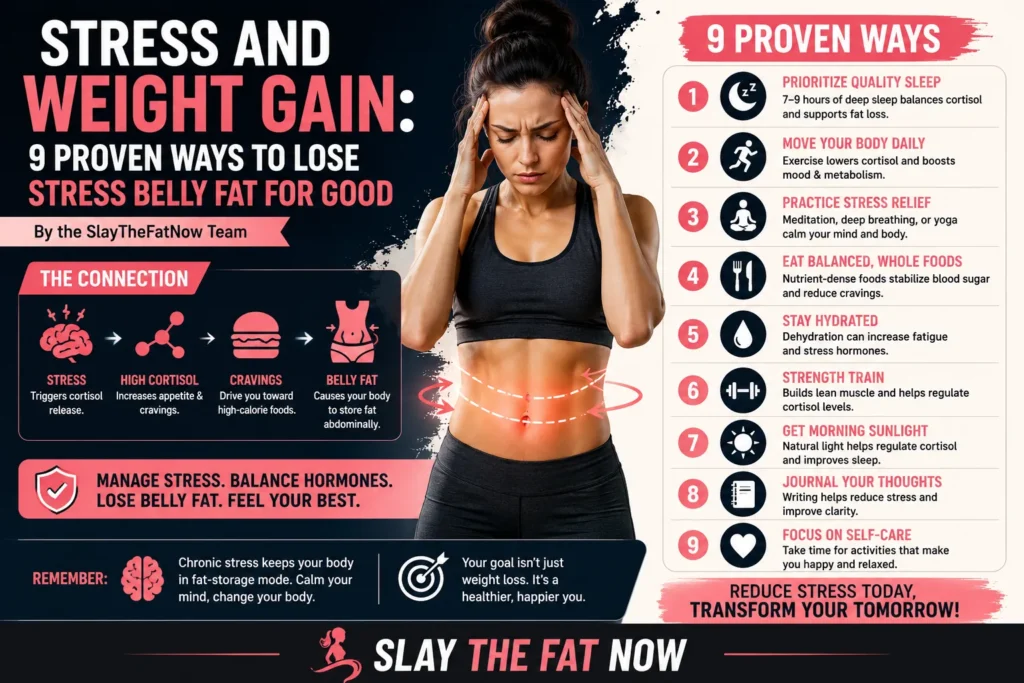
Stress and Weight Gain: 9 Proven Ways to Lose Stress Belly Fat for Good
By the SlayTheFatNow Team
Stress and weight gain are directly connected through cortisol the hormone your body releases under pressure. Chronic cortisol elevation increases appetite, drives cravings for high-calorie food, and causes the body to store fat in the abdominal area. Managing stress through sleep, movement, and mindset is essential to losing stress belly fat.
You’re Eating Right, Exercising and Still Gaining Weight
You’ve cut the carbs. You’re hitting the gym. You’re doing everything “right” and the scale keeps climbing, especially around your stomach. You’re tired, wired, and completely confused.
Here’s the part nobody talks about: stress and weight gain are biologically linked, and no amount of dieting will fix a body that’s flooded with cortisol 24 hours a day.
This isn’t about willpower. This isn’t about eating less. This is about a hormonal cascade your body triggers automatically under stress and it’s designed to make you store fat, not burn it.
The good news? Once you understand the mechanism, you can break it. This article shows you exactly how.
How Stress and Weight Gain Are Actually Connected
The relationship between stress and weight gain starts with a hormone called cortisol. When your brain perceives a threat a deadline, an argument, financial pressure, even chronic bad news it signals your adrenal glands to release cortisol and adrenaline.
This is your “fight or flight” response. It’s brilliant for short-term survival. But when stress is constant as it is for millions of Americans cortisol stays elevated long after the threat has passed. And chronically elevated cortisol does something specific and predictable to your body: it makes you fatter, especially around the belly.
In this article, you’ll learn:
- The exact biological mechanism linking stress belly fat to cortisol
- Why stress weight is different from regular weight gain
- 9 evidence-backed strategies to lose stress weight
- What to stop doing immediately if you’re dealing with chronic stress
Why Addressing Stress Weight Gain Changes Everything
This isn’t just about aesthetics. Stress belly fat specifically visceral fat, which wraps around your internal organs is the most dangerous type of fat in your body. It’s associated with:
- Higher risk of type 2 diabetes
- Cardiovascular disease and high blood pressure
- Chronic inflammation throughout the body
- Hormonal imbalances that make further weight loss harder
- Depression, brain fog, and reduced cognitive performance
Addressing stress and weight gain isn’t optional if you want long-term health. And the strategies that work sleep, movement, mindset, nutrition timing also improve energy, mood, and productivity simultaneously.
The Cortisol-to-Belly-Fat Pipeline (Step by Step)
1. Your brain detects stress (work, relationships, finances, poor sleep)
2. Adrenal glands release cortisol and adrenaline
3. Blood sugar spikes to fuel “fight or flight” even if you’re just sitting at a desk
4. Insulin is released to manage that blood sugar spike
5. Blood sugar crashes → intense cravings for sugar, fat, and salt
6. Cortisol signals the body to store unused energy as visceral (belly) fat
7. Poor sleep (caused by cortisol) raises ghrelin (hunger hormone) further
8. The cycle repeats daily until stress is actively managed
What the Research Says About Stress and Weight Gain
- A 2014 study in Obesity journal found that women who reported high chronic stress were significantly more likely to accumulate visceral abdominal fat regardless of caloric intake.
- According to the American Psychological Association’s 2023 Stress in America report, 76% of American adults report at least one physical symptom of stress with weight gain being among the top three reported effects.
- Chronic stress increases cortisol levels by up to 50%, which directly stimulates fat cell development in the abdominal region.
- Sleep deprivation one of the primary side effects of chronic stress increases ghrelin (the hunger hormone) by 28% and decreases leptin (the fullness hormone) by 18%, according to research from the University of Chicago.
- Studies show that stress-eaters consume an average of 40% more calories on high-stress days than on low-stress days.
The science is unambiguous: stress and weight gain aren’t loosely correlated they’re mechanistically linked. And without addressing the stress itself, no diet will produce permanent results.
Real Story: How Jennifer Lost 31 Pounds by Treating Stress Not Just Calories
Jennifer, a 42-year-old healthcare administrator from Chicago, had been overweight for three years ever since a major job change sent her stress through the roof. She worked with a nutritionist, tracked macros diligently, and walked 8,000 steps daily. The weight barely moved.
When she finally addressed her stress with a consistent 10-minute morning meditation, a strict 10:30 PM bedtime, and two phone-free hours each evening something shifted within six weeks. Her cravings dropped dramatically. She stopped reaching for chips at 10 PM. She had energy to actually push through her workouts.
In nine months, she lost 31 pounds. Her diet hadn’t changed significantly. What changed was her cortisol and with it, her entire metabolic environment.
Jennifer’s story isn’t unique. It’s the pattern we see over and over: people who can’t lose stress weight despite doing “everything right” until they treat the actual root cause.
9 Proven Ways to Lose Stress Weight That Actually Work
These aren’t generic wellness tips. These are specifically targeted at the cortisol-insulin-fat storage cycle that drives stress belly fat.
1. Prioritize Sleep Above Everything Else
Nothing else on this list works well on 5–6 hours of sleep. Cortisol naturally peaks in the morning and dips at night but chronic poor sleep keeps it elevated 24/7. Aim for 7–9 hours. Set a non-negotiable bedtime and protect it like a meeting with your doctor. This is the single highest-leverage action for how to lose stress weight.
2. Try Low-Intensity Movement (Not More HIIT)
This is counterintuitive: if you’re chronically stressed, high-intensity exercise adds to your cortisol load. Walking, yoga, swimming, and cycling at a comfortable pace lower cortisol while still burning fat. Save the intense workouts for days when your energy and mood are genuinely good.
3. Eliminate Caffeine After 12 PM
Caffeine triggers cortisol release. If you’re already stress-elevated, afternoon coffee sends cortisol surging again disrupting sleep and amplifying the hunger cycle. Cut caffeine after noon for two weeks and observe the difference in your cravings, sleep quality, and morning energy.
4. Eat Protein at Every Meal
Protein stabilizes blood sugar, reducing the cortisol-driven glucose spikes that lead to fat storage. Aim for 25–35g of protein at each meal. This also directly reduces ghrelin keeping hunger in check even on high-stress days.
5. Practice 4-7-8 Breathing (The Fastest Cortisol Reset)
Developed by Dr. Andrew Weil, the 4-7-8 technique activates your parasympathetic nervous system within minutes. Inhale for 4 counts, hold for 7, exhale for 8. Do this for 4 cycles, three times daily especially before meals and before bed. It directly counters the physiological stress response.
6. Set Hard Limits on Screen Time at Night
Blue light from screens suppresses melatonin and keeps your nervous system in an alert state mimicking cortisol’s effect. Phones and laptops off by 9 PM is the target. Use that time to read, stretch, or talk. Your sleep and your waistline will reflect it.
7. Build a “Stress Eating Interrupt” Habit
When a craving hits under stress, insert a 10-minute delay. Drink 16 oz of water. Walk outside. Call someone. Most stress-driven cravings pass within 10 minutes if you don’t feed them immediately. This single habit reduces stress-related calorie intake dramatically for most people.
8. Address the Source of Stress Directly
This sounds obvious, but it’s the step most people skip. If work is overwhelming, that’s a boundaries problem not a breathing exercise problem. If a relationship is the stressor, no supplement will fix it. Make a list of your top three stress sources and identify one concrete action you can take on each this week.
9. Support Cortisol With Targeted Nutrition
Certain nutrients directly support adrenal function and help regulate cortisol: magnesium (found in dark leafy greens, pumpkin seeds), vitamin C (peppers, citrus), and omega-3 fatty acids (fatty fish, walnuts). These won’t eliminate stress, but they reduce your physiological sensitivity to it.
The Honest Truth About Losing Stress Belly Fat
⚠️ Reality Check: Stress belly fat is real, but it’s also often used as an excuse to avoid addressing diet and exercise. The truth is both matter. Cortisol management is essential but it works alongside good nutrition and movement, not instead of it.
Let’s break some common myths head-on:
- Myth: “Supplements will lower my cortisol.” Ashwagandha and phosphatidylserine show modest effects in research, but no supplement overrides chronic lifestyle stress. Address the root first.
- Myth: “I just need to do more cardio.” High-volume cardio under chronic stress often raises cortisol further, stalls fat loss, and increases injury risk. Smarter movement beats more movement.
- Myth: “Once the stressful period ends, the weight will fall off.” Sometimes but not always. Chronic stress rewires your metabolic set point. Active intervention is usually required.
- Myth: “Stress belly fat is just regular belly fat.” It’s not. Visceral fat (the stress-driven kind) responds differently to diet and exercise than subcutaneous fat. It often requires cortisol management before it budges.
Practical Steps to Start Losing Stress Weight This Week
Do These First:
- Set a bedtime alarm (not just a wake-up alarm). Go to bed 30 minutes earlier than usual starting tonight.
- Add protein to breakfast. Scrambled eggs, Greek yogurt, or a protein shake before coffee.
- Walk for 20 minutes after dinner. This stabilizes blood sugar and lowers evening cortisol simultaneously.
- Cut one major stressor this week. One meeting you can skip. One commitment you can delegate. One “yes” that becomes a “no.”
- Practice 4-7-8 breathing every morning before you check your phone.
Stop Doing These:
- Drinking coffee on an empty stomach (spikes cortisol immediately)
- Skipping meals and then bingeing under stress
- Doing intense workouts on days when you’re already depleted
- Scrolling social media in bed it raises cortisol and disrupts sleep onset
- Using alcohol to “de-stress” it raises cortisol the next morning
For more on building sustainable habits that support fat loss under pressure, read our guide to lasting weight loss habits.
Stress Management Strategies for Weight Loss: Which Approach Works Best?
| Strategy | Cortisol Impact | Fat Loss Effect | Time to Results | Difficulty |
|---|---|---|---|---|
| Sleep optimization | Very High | High | 1–2 weeks | Low |
| Daily walking | High | Moderate–High | 2–4 weeks | Low |
| Meditation / breathwork | Moderate–High | Indirect | 4–8 weeks | Low–Medium |
| Protein-focused diet | Moderate | High | 2–4 weeks | Medium |
| Therapy / counseling | Very High (long-term) | High (indirect) | 8–12 weeks | Medium |
| HIIT workouts | Can increase cortisol | Mixed (when stressed) | Variable | High |
| Supplements (ashwagandha) | Low–Moderate | Minimal alone | 6–8 weeks | Low |
The verdict: Sleep + walking + dietary protein is the highest-ROI combination for most people dealing with stress and weight gain. Start there before adding complexity.
Frequently Asked Questions About Stress and Weight Gain
Can stress alone cause weight gain without overeating?
Yes though it’s less common than stress-driven overeating. Chronically elevated cortisol signals the body to store fat (especially visceral fat) and can slow metabolism. However, the most significant driver is usually the behavioral response to stress: increased eating, poor sleep, and reduced movement.
Why does stress cause belly fat specifically?
Visceral fat cells in the abdominal region have more cortisol receptors than fat cells elsewhere in the body. This makes the belly area disproportionately responsive to cortisol fat gets stored there first and released last. This is why stress belly fat is so notoriously stubborn.
How long does it take to lose stress belly fat?
With consistent stress management, improved sleep, and a supportive diet, most people notice visible changes in belly fat within 8–12 weeks. However, this varies significantly based on baseline cortisol levels, lifestyle factors, age, and hormone status.
Does cortisol cause weight gain in everyone?
Not everyone responds the same way. Some people lose appetite under stress (though this is often followed by rebound eating). The tendency toward stress-driven weight gain is influenced by genetics, existing hormone levels, sleep quality, and the nature and duration of the stressor.
What is the fastest way to reduce cortisol naturally?
The fastest short-term cortisol reset is controlled breathing specifically the 4-7-8 technique or box breathing. For longer-term reduction, nothing beats consistent quality sleep, which resets your cortisol rhythm at a biological level.
Is stress belly fat the same as visceral fat?
Yes stress belly fat is largely visceral fat, which sits between and around internal organs. Unlike subcutaneous fat (just under the skin), visceral fat is metabolically active and inflammatory. It responds to cortisol strongly and poses greater health risks.
What foods help reduce stress and weight gain?
Foods that support cortisol regulation include magnesium-rich foods (spinach, pumpkin seeds), omega-3 sources (salmon, sardines, walnuts), vitamin C foods (bell peppers, citrus), and complex carbohydrates that stabilize blood sugar (oats, sweet potatoes, legumes). Avoid ultra-processed foods, which amplify inflammation and cortisol sensitivity.
Does exercise help with stress weight?
Yes but the type matters. Low-to-moderate intensity exercise (walking, yoga, cycling) lowers cortisol and promotes fat burning. High-intensity exercise adds to cortisol load and should be used sparingly when you’re already chronically stressed. Move daily, but don’t punish your body in the process.
Can therapy help with weight gain caused by stress?
Absolutely. Cognitive behavioral therapy (CBT) has been shown to reduce emotional eating, improve stress management, and support weight loss indirectly. If your stress is rooted in deep patterns anxiety, trauma, relationship dynamics therapy addresses what lifestyle changes alone cannot.
How do I know if my weight gain is stress-related?
Key signs include: weight concentrated in the belly despite overall low body fat, weight gain during a clearly identifiable stressful period, strong cravings for sugar and salty food under pressure, poor sleep, and unexplained fatigue. If these patterns match, stress and cortisol are likely significant contributors.
Does intermittent fasting help with stress belly fat?
It can but with caveats. Intermittent fasting reduces insulin levels and can help target visceral fat. However, skipping meals can also spike cortisol in people with chronically elevated stress. If fasting causes anxiety, irritability, or intense cravings, it may be raising cortisol more than helping. Start with a 12-hour eating window and assess your response.
Why do I crave junk food when I’m stressed?
Cortisol triggers the brain’s reward system to seek high-calorie, high-fat, high-sugar foods because in ancestral environments, stress meant physical danger requiring energy. Your brain isn’t broken; it’s running old software. Recognizing this as a cortisol-driven reflex (not hunger) gives you the awareness to insert a pause before acting on it.
Can stress affect metabolism long-term?
Yes. Prolonged high cortisol can reduce thyroid function, decrease muscle mass (raising your metabolic set point), and impair insulin sensitivity all of which slow your resting metabolism. This is why chronic stress and weight gain form a cycle that becomes harder to break the longer it continues.
Is it possible to lose weight while still stressed?
Yes, but it’s significantly harder. The goal isn’t to eliminate all stress before starting that’s unrealistic. Instead, layer in stress-reduction practices (sleep, breathing, walking) alongside your nutrition changes. Progress will be slower, but consistent small actions still move the needle even in high-stress periods.
What supplements help with stress and weight gain?
The most evidence-backed options include ashwagandha (shown in clinical trials to reduce cortisol by 14–28%), magnesium glycinate (supports sleep and nervous system calm), phosphatidylserine (blunts cortisol response to exercise), and omega-3 fish oil (reduces inflammation and cortisol sensitivity). Always consult a doctor before starting supplements.
Stress Has Been Holding Your Weight Hostage. Take It Back.
Join thousands of people at SlayTheFatNow who’ve broken the stress-fat cycle using our proven 4-week Cortisol Reset Program no extreme diets, no punishing workouts.
The Bottom Line: Stress and Weight Gain Are Solvable Together
Stress and weight gain aren’t just loosely related. They’re part of the same biological loop cortisol drives fat storage, fat storage drives shame, shame drives more stress, and the cycle continues.
The exit isn’t another diet. It’s addressing the root: regulating your nervous system, protecting your sleep, moving your body intentionally, and eating in a way that supports your hormones do not spike them.
You don’t have to eliminate stress to lose the weight. You just have to stop letting stress run your biology unchecked.
Start with one thing this week sleep, walking, breathing and build from there. For a complete roadmap, explore all our resources at SlayTheFatNow.com.
Sources: