 Skip to content
Progesterone and Weight Gain: What Is Actually Happening and What to Do About It
You started gaining weight and nothing changed. Same food, same exercise, same life and yet your body is different. Bloated. Heavier in the middle. Hungrier than you have been in years. Your doctor mentions your hormones are shifting, maybe mentions progesterone, and you leave with more questions than answers.
Here is the truth that most articles about progesterone and weight gain get wrong: progesterone itself is rarely the direct cause of fat accumulation. But a disruption in progesterone specifically, the complex cascade that follows when it drops can make weight gain nearly inevitable, and standard diet advice structurally unable to fix it.
This guide explains exactly what progesterone does, what happens to weight when it falls, why the distinction between natural progesterone and synthetic progestins matters enormously, and the seven specific strategies most supported by evidence for addressing progesterone-related weight changes naturally.
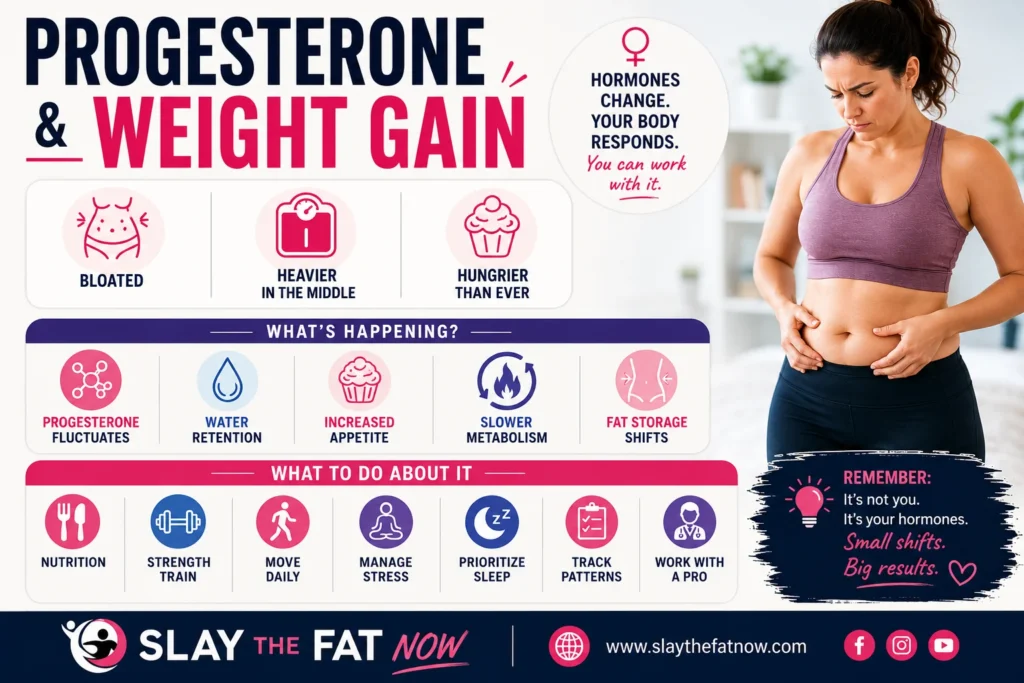
Natural progesterone itself does not directly cause fat gain. However, low progesterone relative to estrogen creates a state called estrogen dominance which promotes fluid retention, fat storage, disrupted sleep, and worsened insulin sensitivity. The pregnenolone steal where chronic stress diverts hormone precursors toward cortisol and away from progesterone amplifies all of these effects. The fix is not simply taking progesterone; it is addressing the three root causes: stress-driven cortisol overproduction, estrogen dominance, and the nutrient deficiencies that impair progesterone synthesis.
What Progesterone Actually Does in Your Body
Before understanding what goes wrong, understanding what progesterone does right clarifies why its decline has such wide-ranging effects on weight, mood, sleep, and body composition.
Progesterone is a steroid hormone produced primarily by the corpus luteum the structure that forms in the ovary after ovulation each month. During pregnancy, the placenta becomes the primary source. In smaller amounts, the adrenal glands and brain also produce progesterone throughout life.
Its reproductive roles are well known: preparing the uterine lining for pregnancy, supporting early gestation, and regulating the menstrual cycle in balance with estrogen. But progesterone’s effects extend far beyond reproduction and it is these broader effects that explain its relationship with weight.
Progesterone as the body’s natural diuretic. Progesterone is a natural antagonist of aldosterone the hormone that promotes sodium and water retention. When progesterone is adequate, it prevents excessive fluid buildup. When it falls, aldosterone goes unchecked and the body retains more water, causing the bloating and puffiness that many women notice in the days before their period and increasingly throughout perimenopause.
Progesterone as metabolic support. Progesterone supports thyroid hormone function. It helps maintain the cellular sensitivity to thyroid hormones that drives metabolic rate. Low progesterone is associated with functional hypothyroid-like symptoms fatigue, cold hands and feet, sluggish metabolism even when thyroid blood tests appear normal, because the issue is receptor sensitivity rather than hormone production.
Progesterone as natural sedative. This is progesterone’s most underappreciated role, and the one most directly connected to weight gain. Progesterone is metabolised in the body into a neurosteroid called allopregnanolone. Research published in the Medical Research Archives (Morningstar, 2025) confirmed that allopregnanolone is a potent positive allosteric modulator of the GABA-A receptor the primary inhibitory neurotransmitter receptor in the brain. This is the same receptor system targeted by benzodiazepines and most sleep medications. Allopregnanolone produces sedative, anxiolytic, and hypnotic effects that promote sleep initiation and deep sleep architecture.
When progesterone declines, allopregnanolone levels fall with it. The resulting reduction in GABAergic tone is why perimenopausal women often experience worsening sleep quality, increased nighttime waking, heightened anxiety, and racing thoughts at night even women who never had sleep problems before. And as established in our guide on leptin resistance, disrupted sleep directly worsens the leptin-ghrelin balance, increases cortisol, and drives the hunger and fat-storage environment that makes weight loss impossible regardless of effort.
Progesterone as estrogen’s counterbalance. This is the relationship most central to weight gain. Estrogen and progesterone work together. Estrogen promotes cell growth, fluid retention, and fat storage in the hips, thighs, and abdomen. Progesterone counterbalances these effects. When they are in appropriate ratio, the system works. When progesterone drops faster than estrogen as reliably happens in perimenopause estrogen becomes dominant, and its fat-promoting, fluid-retaining effects go unchecked.
Does Progesterone Cause Weight Gain? The Honest Science
This is the question most women are asking, and the answer requires more precision than most articles provide.
Natural (bioidentical) progesterone does not directly cause fat accumulation. The REPLENISH trial a large, well-designed randomized controlled trial found no clinically significant weight change over 12 months of combined 17β-estradiol and natural micronized progesterone therapy in postmenopausal women. The 2024 International Menopause Society White Paper confirmed that hormone therapy has weight-neutral effects in well-designed clinical trials.
The effects that natural progesterone can produce on the scale are: temporary water retention (typically 1–3 pounds), mild increases in appetite in the days immediately following administration in some women, and improved sleep which, paradoxically, can initially appear as minor weight fluctuation as the body’s stress response normalises.
Synthetic progestins are a different story entirely. This distinction is critical and is consistently missed in mainstream discussions. Progestins the synthetic laboratory-created compounds found in most combined contraceptive pills, hormonal IUDs, implants, and the Depo-Provera injection have a different molecular structure from natural progesterone, and they interact with hormone receptors differently. DMPA (depot medroxyprogesterone acetate, the injectable contraceptive) consistently shows meaningful weight gain in clinical studies, particularly in younger women. Other synthetic progestins show smaller but real effects on appetite and fat storage.
This matters enormously because most studies historically linking “progesterone” to weight gain actually studied progestins and most articles on this topic use the terms interchangeably. They are not the same compound. They do not behave the same way in the body. Treating them as equivalent gives women an inaccurate picture of their personal risk.
The more accurate framing: Weight gain associated with hormonal changes around perimenopause is primarily driven by the fall in progesterone not its presence. When progesterone drops, it leaves estrogen relatively dominant. And estrogen dominance, compounded by the sleep disruption and cortisol elevation that follow from falling progesterone, is where the weight gain originates.
The Real Mechanism: How Low Progesterone Leads to Weight Gain
Low progesterone drives weight gain through four interconnected pathways. Understanding all four explains why approaches focused on single variables consistently fail.
Pathway 1: Estrogen Dominance
Progesterone drops faster than estrogen in the transition to perimenopause. This creates a relative excess of estrogen not necessarily because estrogen is high in absolute terms, but because its counterbalance has weakened. Estrogen dominance causes: fat storage, particularly around the abdomen, hips, and thighs; fluid retention and bloating; and increased sensitivity of fat cells to insulin promoting fat storage rather than fat burning.
A low progesterone-to-estrogen imbalance can lead to symptoms ranging from weight gain to adult acne, heavy periods, breast tenderness, and many mood-related symptoms.
Body fat itself produces estrogen which is why the estrogen dominance of perimenopause tends to be self-reinforcing. More fat cells produce more estrogen; more estrogen relative to progesterone promotes more fat storage; more fat storage produces more estrogen.
Pathway 2: The Pregnenolone Steal How Chronic Stress Directly Drains Progesterone
This mechanism is one of the most important in hormonal weight management and one of the least explained in conventional medical settings.
Pregnenolone is the “master hormone” the raw material from which the body synthesizes all steroid hormones, including progesterone, cortisol, estrogen, testosterone, and DHEA. Think of pregnenolone as a raw ingredient that can be converted down multiple hormone pathways depending on what the body perceives as most urgently needed.
Under chronic stress, the body’s survival priority is clear: make cortisol. Cortisol is the acute stress response hormone. When the brain perceives danger whether that is a genuine physical threat or the sustained low-level stress of modern life it signals the adrenal glands to produce more cortisol. To meet this demand, the body diverts pregnenolone preferentially down the cortisol production pathway. The result is the pregnenolone steal: less pregnenolone is available to convert into progesterone, and progesterone levels fall.
High chronic stress raises cortisol, which can lower progesterone and lead to weight gain. Low cholesterol can also cause low progesterone, as cholesterol is a direct precursor for pregnenolone meaning very low-fat diets or extreme calorie restriction can impair progesterone synthesis by removing the raw material.
The consequences of the pregnenolone steal for weight are direct. Less progesterone means less allopregnanolone, less GABAergic calming effect, worse sleep quality, higher baseline anxiety, more cortisol, more fat storage a self-reinforcing loop that can persist for years without ever being identified as a hormonal issue.
Pathway 3: Sleep Disruption and the Hunger Hormone Cascade
As established above, declining progesterone reduces allopregnanolone, which reduces the calming GABAergic signal that enables deep sleep initiation and maintenance. Women frequently report light, fragmented sleep, frequent awakenings, and waking feeling completely unrefreshed as progesterone falls in perimenopause.
The weight implications are direct and measurable. Poor sleep:
- Raises ghrelin (hunger hormone) by up to 28%
- Lowers leptin (fullness hormone), worsening leptin resistance
- Elevates cortisol, driving abdominal fat storage
- Impairs insulin sensitivity, shifting the body toward fat storage
Women whose progesterone decline has disrupted sleep may be doing everything right with their diet and exercise and still gaining weight because the disrupted hormonal environment created by sleep deprivation is overriding the calorie math. For more on this mechanism, see our guide on leptin resistance and weight loss.
Pathway 4: Impaired Thyroid and Metabolic Function
Progesterone supports thyroid hormone receptor sensitivity. When progesterone falls, cells can become less responsive to thyroid hormones producing functional hypothyroid symptoms (fatigue, cold intolerance, weight gain, slow digestion, low mood) even when thyroid blood tests are within the normal range. This is described in clinical literature as a reduction in thyroid receptor sensitivity rather than reduced thyroid hormone production.
Additionally, as progesterone declines, insulin sensitivity often weakens, and estrogen dominance may exacerbate visceral fat storage the belly fat that is particularly metabolically disruptive. Low progesterone shifts the metabolic balance towards storing rather than burning fuel.
12 Signs Your Weight Gain May Be Progesterone-Related
These signs, considered together rather than in isolation, point toward hormonal disruption as a primary driver:
- Weight gain despite no meaningful change in diet or exercise
- Bloating that is persistent, not just post-meal
- Puffiness in the face, fingers, and abdomen fluid retention rather than fat
- Weight gain concentrated in the lower abdomen, hips, and thighs
- Intense PMS symptoms in the week before your period cravings, mood swings, bloating
- Sleep is worsening difficulty falling asleep, frequent waking, unrefreshing sleep
- Anxiety, irritability, or low mood that feels disproportionate to circumstances
- Heavy, irregular, or shorter cycles a sign of declining progesterone disrupting the cycle
- Breast tenderness in the second half of your cycle
- Sugar and carbohydrate cravings that feel impossible to control
- Fatigue that sleep does not resolve
- You are in your late 30s to 50s and symptoms have appeared or worsened recently
None of these individually confirms progesterone disruption but four or more together, particularly in the context of perimenopause, warrants a conversation with a doctor and potentially a hormone panel.
The Progesterone-Cortisol-Weight Triangle: Why Stress Is the Central Driver
One of the most clinically important insights in hormonal weight management and one almost entirely absent from mainstream diet advice is that chronic stress does not just make you tired and irritable. It directly suppresses progesterone production and creates the hormonal environment in which weight gain is the biologically expected outcome.
The mechanism is the pregnenolone steal, described above. But the implications are broader than a simple hormone diversion. When the body is in a sustained stress state:
Cortisol is elevated signaling fat cells to store rather than burn, particularly in the abdominal region. Progesterone is suppressed removing its counterbalancing effect on estrogen and its sleep-promoting allopregnanolone production. Estrogen becomes relatively dominant further promoting fat storage. Sleep deteriorates worsening the leptin-ghrelin balance and insulin sensitivity. Cravings intensify cortisol drives appetite for high-calorie, high-carbohydrate foods.
This is why many women in perimenopause find that the harder they restrict food and the more they exercise, the worse their symptoms become. Exercise particularly high-intensity cardio at high volume is itself a physiological stressor that raises cortisol. Severe calorie restriction raises cortisol. Both deplete the pregnenolone available for progesterone synthesis.
The counter-intuitive truth: for women with stress-driven progesterone depletion, doing less specifically, reducing high-intensity exercise, eating more, and prioritising rest often produces better hormonal results than doing more.
7 Natural Strategies to Address Progesterone-Related Weight Gain
These seven strategies target the three root causes identified above: cortisol-driven progesterone depletion, estrogen dominance, and the nutrient deficiencies that impair progesterone synthesis.
Strategy 1: Reduce Cortisol The Single Highest-Leverage Change
Because chronic stress is the primary suppressor of progesterone through the pregnenolone steal, cortisol management is not an optional wellness addition. It is the foundational intervention.
Morning sunlight exposure (10–15 minutes within 30 minutes of waking). This is the most evidence-supported free intervention for circadian cortisol regulation. Bright morning light sets the cortisol awakening response rhythm ensuring that cortisol peaks appropriately in the morning and declines through the day. Disrupted circadian cortisol is one of the primary features of perimenopause-related hormonal dysregulation.
Delay coffee to 60–90 minutes after waking. As detailed in our guide on what to drink first thing in the morning, consuming caffeine during the cortisol awakening response amplifies the morning cortisol spike. For women with already-elevated cortisol, this worsens the pregnenolone steal each morning.
Shift exercise away from high-intensity chronic cardio. Long, high-intensity cardio sessions on a calorie deficit raise cortisol significantly. For women with progesterone depletion, this compounds the problem. Replace with: strength training 2–3 times weekly (which builds insulin-sensitive muscle without the same cortisol cost), and moderate-intensity walking, yoga, or swimming. The shift from cardio-dominant to strength-dominant exercise is one of the most consistent recommendations in functional medicine for perimenopause-related hormonal weight gain.
Adaptogens for HPA axis support. Ashwagandha and rhodiola rosea have among the strongest evidence of any natural compounds for modulating the HPA axis the stress-response system that drives cortisol production. Ashwagandha has multiple double-blind studies showing significant reductions in cortisol and self-reported stress. Rhodiola shows similar cortisol-modulating effects with particular evidence for fatigue resistance. Both are considered safe for most women and are appropriate starting points for cortisol management when lifestyle changes alone are insufficient. Typical effective dose: ashwagandha 300–600mg of root extract daily, rhodiola 100–200mg daily.
Strategy 2: Support Progesterone Production with Targeted Nutrients
Progesterone synthesis requires specific cofactors. When these are deficient which is extremely common in women under chronic stress, eating restricted diets, or navigating perimenopause progesterone production is impaired regardless of how much pregnenolone is available.
Vitamin B6 (pyridoxine). B6 facilitates the enzymatic processes involved in progesterone synthesis and is clinically associated with improved luteal phase length and reduced PMS symptoms. A study published in Phytotherapy Research found that B6 combined with other nutrients improved progesterone levels and cycle regularity. Food sources: chickpeas, bananas, tuna, potatoes, turkey. If supplementing: 25–50mg daily as part of a B-complex (isolated high-dose B6 supplementation above 100mg daily long-term carries a risk of peripheral neuropathy).
Zinc. Zinc is essential for follicle development and ovulation the process that produces the corpus luteum that makes progesterone. Without adequate zinc, the hormonal trigger for progesterone production is impaired at its source. Research links zinc deficiency to lower progesterone levels and disrupted ovulation. Food sources: pumpkin seeds, oysters, beef, chickpeas, cashews. Supplement dose if needed: 15–30mg zinc picolinate or glycinate daily with food.
Magnesium. Magnesium supports both adrenal function and ovarian hormone production. It is also essential for the enzymatic conversion of cholesterol to pregnenolone the first step in steroid hormone synthesis. Deficiency in magnesium directly impairs the upstream production of all sex hormones. It also reduces cortisol reactivity, supporting the pregnenolone steal pathway. As a bonus, magnesium glycinate at 300–400mg before bed is one of the most effective natural interventions for the sleep disruption associated with progesterone decline. Food sources: dark leafy greens, pumpkin seeds, almonds, dark chocolate. Supplement: magnesium glycinate 300–400mg before bed.
Vitamin C. The ovaries contain among the highest concentrations of vitamin C in the body. Vitamin C is absorbed in large amounts just before ovulation and stimulates progesterone production in the corpus luteum. Research confirms that adequate vitamin C intake is associated with higher luteal phase progesterone. Food sources: bell peppers, kiwi, citrus fruits, broccoli, strawberries. Note: consistent daily dietary intake is more effective than intermittent supplementation.
Vitamin D. Vitamin D receptors are found in ovarian tissue, and vitamin D deficiency is associated with disrupted ovulation and reduced progesterone production. Research published by Vitamins for Women (2026) confirms that vitamin D supports progesterone synthesis and overall hormone regulation. Most women in northern latitudes are deficient, particularly through winter months. Target blood level: 60–80 nmol/L. Supplement dose: typically 1,000–3,000 IU daily depending on baseline level and sun exposure.
Healthy fats and cholesterol. Cholesterol is the direct precursor for pregnenolone the raw material for all steroid hormones including progesterone. Very low-fat diets and extreme calorie restriction can impair progesterone synthesis by removing the substrate needed to begin the steroidogenesis pathway. Including adequate healthy fat at every meal olive oil, avocado, eggs, nuts, fatty fish supports the hormonal synthesis foundation. One to two tablespoons of healthy fat per meal is the functional medicine recommendation for women managing hormonal balance.
Strategy 3: Reduce Estrogen Dominance Through Diet and Liver Support
Since the weight effects of low progesterone are largely mediated through relative estrogen dominance, supporting the body’s ability to metabolise and eliminate excess estrogen addresses the imbalance from the other direction.
Cruciferous vegetables the most targeted dietary intervention for estrogen dominance. Broccoli, cauliflower, Brussels sprouts, cabbage, and kale contain indole-3-carbinol (I3C) and its metabolite DIM (diindolylmethane). DIM supports the healthy metabolism of estrogen through a pathway called 2-hydroxylation converting estrogen to less potent, more easily eliminated forms rather than the more potent 4- and 16-hydroxyestrone pathways associated with fat storage and hormonal symptoms. Aim for 1–2 servings of cruciferous vegetables daily.
Fibre the estrogen elimination pathway. Estrogen that has been processed by the liver is excreted through bile into the intestine, where it should be eliminated in the stool. When the gut microbiome is disrupted or fiber is low, an enzyme called beta-glucuronidase can deconjugate this estrogen, allowing it to be reabsorbed into circulation a process called enterohepatic recirculation that directly worsens estrogen dominance. Adequate soluble fiber (25–35g daily) feeds the beneficial gut bacteria that suppress beta-glucuronidase and ensures estrogen is eliminated rather than recycled.
Support liver function. The liver is responsible for processing and clearing excess estrogen. Poor liver function from alcohol, processed food, or inadequate nutrition impairs this clearance, allowing estrogen to accumulate. Practical support: reduce or eliminate alcohol (a direct hepatotoxin and potent driver of estrogen dominance), increase water intake, eat beets, dandelion greens, and artichoke which support bile production and liver phase 2 detoxification.
Reduce xenoestrogen exposure. Environmental estrogens oestrogen-like compounds from plastics (BPA, BPS), pesticide residue, synthetic fragrances, and conventional meat raised with hormones add to the total estrogen load, worsening the imbalance with low progesterone. Practical reductions: filter drinking water, switch to glass or stainless-steel food storage, buy organic for the highest-pesticide produce (the “dirty dozen”), and choose pasture-raised animal products where possible.
Strategy 4: Prioritise Sleep Protecting the Allopregnanolone Pathway
Because declining progesterone reduces allopregnanolone and disrupts sleep, and because that sleep disruption drives hunger and fat storage through the leptin-ghrelin pathway, improving sleep quality is both a consequence of addressing progesterone decline and a direct intervention on weight.
Target 7–9 hours of sleep with consistent bed and wake times. Cool, dark room (18–19°C). Magnesium glycinate 300–400mg before bed this is the most evidence-supported natural supplement for the sleep disruption pattern associated with progesterone decline, specifically because it supports GABAergic neurotransmission through the same receptor pathway that allopregnanolone activates. Some women find that low-dose oral progesterone therapy specifically for its sleep benefits (via allopregnanolone) is remarkably effective this is something to discuss with a doctor as a medical intervention, not a self-prescribed one.
Avoid alcohol before bed alcohol disrupts sleep architecture specifically in the second half of the night, eliminating the deep sleep phases where the hormone repair processes of sleep are concentrated.
Strategy 5: Adjust Your Exercise to Match Your Hormonal Reality
The mismatch between conventional exercise advice “do more cardio, create a bigger deficit” and the hormonal needs of women with progesterone depletion is one of the most consistent patterns in perimenopause weight management.
Reduce high-intensity cardio volume. More than three or four high-intensity sessions per week in a calorie deficit raises cortisol significantly, feeding the pregnenolone steal and worsening progesterone depletion. If you are doing daily intense cardio and not losing weight, reducing volume is likely to produce better hormonal outcomes than increasing it.
Prioritise strength training. Resistance training 2–3 times weekly improves insulin sensitivity, preserves the muscle mass that supports metabolic rate, and does not carry the same cortisol cost as sustained high-intensity cardio. For women over 40, strength training is the most metabolically protective exercise type available. See our guide on why metabolism slows after 40 for the full case.
Walk daily. Walking particularly after meals reduces post-meal triglycerides, improves insulin sensitivity, reduces cortisol, and supports the circadian light exposure that regulates cortisol rhythm. A 10–15-minute walk after each main meal is one of the most evidence-supported daily habits for metabolic health.
Consider yoga or slow movement. Yoga specifically activates the parasympathetic nervous system the “rest and digest” state that reduces HPA axis activation and cortisol production. Even 10–15 minutes daily of slow, breath-focused movement produces measurable reductions in cortisol and improves HRV (heart rate variability), a marker of autonomic nervous system health. For women with stress-driven progesterone depletion, yoga is a targeted intervention, not a soft wellness activity.
Strategy 6: Address Insulin Resistance Closing the Estrogen-Insulin Loop
Insulin resistance and estrogen dominance are closely connected. Elevated insulin increases the activity of aromatase the enzyme that converts androgens to estrogen potentially worsening estrogen dominance in the absence of adequate progesterone to counterbalance. Conversely, estrogen dominance worsens insulin sensitivity.
Protein-first eating at every meal 25–35g of quality protein per meal supports satiety, reduces blood sugar variability, and preserves muscle mass that improves insulin sensitivity. See our guide on what to drink first thing in the morning for the full context on morning routines.
ACV water before meals 1–2 teaspoons of apple cider vinegar in water before a meal slows gastric emptying and reduces the post-meal insulin spike. Over consistent use, the acetic acid mechanism improves insulin receptor sensitivity. For women with progesterone-related insulin sensitivity disruption, this is one of the most directly targeted and lowest-cost natural interventions.
Reduce refined carbohydrates and sugar not because of their calories per se, but because of their direct effect on insulin. The chronic insulin elevation from a diet dominated by refined carbohydrates promotes fat storage, worsens insulin resistance, impairs leptin signalling, and increases aromatase activity all of which compound the hormonal imbalance driven by low progesterone.
Time-restricted eating (12-hour overnight fast) allowing the body a consistent 12-hour fasting period overnight improves insulin sensitivity, reduces circulating triglycerides, and supports the metabolic rest that the liver needs to process excess estrogen. A practical implementation: finish dinner by 7–8pm and eat breakfast at 7–8am.
Strategy 7: Consider Vitex (Chasteberry) The Most Evidence-Supported Herbal Intervention
Vitex agnus-castus, commonly called chasteberry, is the most clinically studied herbal supplement for progesterone support. It does not contain hormones. Instead, it influences the hypothalamic-pituitary-ovarian (HPO) axis specifically, it acts on dopamine receptors in the pituitary to reduce prolactin levels. Elevated prolactin suppresses ovulation, and without ovulation there is no corpus luteum, and without a corpus luteum there is no progesterone. By reducing prolactin, vitex supports the conditions for regular ovulation and therefore progesterone production.
Clinical trials have shown that vitex improved progesterone levels and normalised cycles in women with luteal phase defects. One randomised trial showed benefits for women with mild hyperprolactinemia, which can suppress ovulation. Research published in Vitamins for Women (2026) confirmed that vitex improves luteal phase progesterone and cycle regularity within 3–6 months in clinical trials.
Important caveats: Vitex is most appropriate for premenopausal and perimenopausal women who are still cycling. It works by supporting the HPO axis function for postmenopausal women who have completed the transition, the mechanism is less applicable. Vitex should not be combined with hormonal contraceptives without medical guidance, as it interacts with the same pituitary pathways these medications work through. Typical effective dose: 400–500mg of standardized chasteberry extract daily, taken in the morning. Allow 3–6 months for full effect to develop. Not appropriate during pregnancy.
The Progesterone vs. Progestin Question: What You Need to Know If You Are on HRT or Contraception
If you are taking or considering hormonal therapy, the distinction between natural progesterone and synthetic progestins is medically significant and the weight implications differ substantially between the two.
Natural micronized progesterone (Prometrium, Utrogestan) has the same molecular structure as the progesterone your body makes. It is bioidentical. Clinical trial evidence, including the REPLENISH trial, shows it is weight-neutral in the context of HRT. It promotes sleep through the allopregnanolone pathway. It has a more favourable safety profile compared to synthetic progestins, with emerging evidence suggesting lower breast cancer risk.
Synthetic progestins (medroxyprogesterone acetate, levonorgestrel, norethindrone, and others) have different molecular structures that interact with hormone receptors differently. They can bind not only progesterone receptors but also androgen and glucocorticoid receptors producing side effects including water retention, increased appetite, metabolic disruption, and in the case of DMPA (the injectable) consistent weight gain.
If you are experiencing weight gain, bloating, or metabolic disruption on a progestin-containing contraceptive or HRT, the specific type of progestogen is a relevant conversation to have with your prescriber. Switching from a synthetic progestin to natural micronized progesterone within a hormone therapy protocol is a conversation that more women are now having with informed prescribers and the evidence supports the distinction.
The 2024 International Menopause Society White Paper confirmed that diet changes, reduced activity, and muscle loss with aging are the main drivers of midlife weight gain and not HRT when natural progesterone is used.
When to See a Doctor
Natural strategies address the lifestyle and nutritional foundations of progesterone balance effectively for many women. But some situations warrant medical assessment and intervention:
See a doctor if: your symptoms are severe or significantly affecting quality of life; you have been using natural strategies consistently for 3 months with no improvement; your cycles are becoming increasingly irregular or absent; you are experiencing symptoms that suggest significant hormonal disruption (severe mood changes, very heavy bleeding, complete loss of sleep); or you want a definitive baseline assessment of your hormonal status.
What to ask for: A hormone panel including oestradiol (E2), FSH, LH, total progesterone (day 21 of cycle for premenopausal women, or random for postmenopausal), and prolactin. Also relevant: thyroid panel (TSH, Free T3, Free T4), fasting insulin and HbA1c, and vitamin D level. This panel gives a complete picture of the hormonal environment driving symptoms.
Regarding HRT: If you are in perimenopause or menopause and symptoms are significantly affecting quality of life, hormone replacement therapy with natural micronized progesterone is a legitimate medical option with a well-established evidence base. The decades-old fear of HRT was largely driven by the Women’s Health Initiative study using synthetic progestins not natural progesterone. A conversation with a menopause-specialist physician or gynaecologist about the updated evidence is worthwhile for women who are significantly symptomatic.
Frequently Asked Questions
1. Does progesterone cause weight gain?
Natural (bioidentical) progesterone does not directly cause fat accumulation. The REPLENISH trial, a large randomised controlled trial, found no clinically significant weight change over 12 months of natural progesterone therapy. What progesterone-related hormonal shifts do cause is water retention and bloating which registers on the scale but is not fat. The weight gain most associated with progesterone disruption comes from low progesterone specifically, the estrogen dominance, sleep disruption, and insulin resistance that follow when progesterone falls below its counterbalancing role.
2. What is the difference between progesterone and progestin?
Natural progesterone is bioidentical its molecular structure is identical to the hormone the human body produces. Synthetic progestins are lab-created compounds with modified molecular structures that mimic some progesterone functions but interact with additional receptors. The distinction matters significantly for weight: natural progesterone is weight-neutral in clinical trials, while synthetic progestins particularly the DMPA injectable consistently show meaningful weight gain, especially in younger women.
3. What are the symptoms of low progesterone?
The most common: persistent bloating and fluid retention, weight gain particularly in the lower abdomen and hips, intense PMS symptoms in the second half of the cycle, worsening sleep quality, increased anxiety or irritability, irregular or heavy periods, breast tenderness, sugar and carbohydrate cravings, and fatigue that sleep does not resolve. In perimenopause, these symptoms may appear without an obvious cyclical pattern as progesterone becomes increasingly erratic.
4. What is estrogen dominance and how does it relate to progesterone?
Estrogen dominance is the state in which estrogen is high relative to progesterone not necessarily elevated in absolute terms. It most commonly occurs when progesterone drops faster than estrogen in perimenopause, leaving estrogen’s effects (fluid retention, fat storage, cell proliferation) without adequate counterbalance. Symptoms include weight gain (particularly lower abdomen, hips, and thighs), bloating, heavy periods, breast tenderness, mood swings, and fatigue. Addressing estrogen dominance requires both supporting progesterone production and supporting estrogen elimination through diet and liver function.
5. What is the pregnenolone steal and how does it affect progesterone?
The pregnenolone steal refers to the diversion of pregnenolone the raw material for all steroid hormones preferentially toward cortisol production during chronic stress. Because both cortisol and progesterone are made from pregnenolone, high cortisol demand reduces the pregnenolone available for progesterone synthesis. The result is that chronic stress directly suppresses progesterone levels creating the sleep disruption, estrogen dominance, and metabolic disruption described in this article. Managing cortisol is therefore a primary strategy for supporting progesterone, not a secondary wellness concern.
6. How can I naturally increase progesterone?
The most evidence-supported natural approaches are: reducing chronic stress (the primary suppressor through the pregnenolone steal), ensuring adequate nutritional cofactors for hormone synthesis (vitamin B6, zinc, magnesium, vitamin C, vitamin D, healthy fats), supporting estrogen elimination through cruciferous vegetables and adequate fiber, improving sleep quality through magnesium and consistent sleep timing, replacing high-intensity cardio with strength training, and considering vitex (chasteberry) the most clinically studied herbal support for the HPO axis and progesterone production.
7. Why is my weight gain concentrated in my belly during perimenopause?
Abdominal fat accumulation during perimenopause is driven by the interaction of three hormonal changes that occur simultaneously: declining progesterone allows estrogen to become relatively dominant, promoting fat storage; declining estrogen (in actual post menopause) shifts fat distribution from peripheral (hips and thighs) to central (abdomen); and elevated cortisol which rises as the estrogen and progesterone buffer of the stress response system is removed directly drives visceral (abdominal) fat storage. The result is abdominal weight gain that appears disproportionate to overall calorie intake and that responds poorly to standard diet advice.
8. Does chasteberry (vitex) actually increase progesterone?
Vitex does not contain hormones it works by reducing prolactin through dopamine receptor activity in the pituitary gland. By reducing prolactin, it supports regular ovulation, and ovulation is the event that creates the corpus luteum that produces progesterone. Multiple clinical trials confirm that vitex improves luteal phase progesterone levels and cycle regularity, particularly in women with luteal phase defects or mild hyperprolactinemia. Results typically develop over 3–6 months of consistent use. It is most relevant for premenopausal and perimenopausal women who are still cycling.
9. Can low progesterone cause anxiety and poor sleep?
Yes, through a well-documented neurological pathway. Progesterone is metabolized to allopregnanolone, a eurysternid that enhances GABA-A receptor activity the same pathway as benzodiazepine sleep and anti-anxiety medications. When progesterone falls, allopregnanolone falls with it, reducing GABAergic calming and sleep-promoting activity. The result is difficulty falling asleep, nighttime waking, heightened anxiety, and low mood particularly in the second half of the menstrual cycle and throughout perimenopause. This is hormonal in nature, not simply a psychological stress response.
10. Should I take progesterone for weight loss?
Progesterone therapy whether natural micronized progesterone or progestins is not a weight loss treatment. Natural progesterone is weight-neutral in clinical trials. Its relevance to weight in perimenopause is indirect: by counterbalancing estrogen dominance and supporting sleep quality through allopregnanolone, progesterone therapy can reduce some of the secondary drivers of weight gain fluid retention, poor sleep, cortisol elevation, and insulin resistance. For women who are significantly symptomatic in perimenopause, hormonal therapy may improve quality of life and create better conditions for weight management, but this is a medical decision requiring proper evaluation, not a self-prescribed weight loss strategy.
11. How long does it take to see results from natural progesterone-balancing strategies?
Realistic timelines: sleep quality typically improves within 2–4 weeks of consistent magnesium use and stress management. Bloating and fluid retention often reduce within 2–3 weeks of addressing estrogen dominance through diet. Hormonal cycle improvements with vitex or nutrient support take 3–6 months as the HPO axis restores more regular function. Meaningful weight loss requires 8–16 weeks of consistent implementation of all strategies, as the hormonal environment takes time to stabilise before the calorie arithmetic can work effectively.
12. Is it normal to gain weight during perimenopause even with a good diet?
Yes. The hormonal changes of perimenopause declining progesterone, fluctuating estrogen, rising cortisol, worsening insulin sensitivity, and deteriorating sleep create a biological environment in which weight gain is the physiologically expected outcome, independent of diet quality. This does not mean weight management is impossible in perimenopause. It means the strategies required are different from the calorie-focused approach that may have worked before: addressing sleep, cortisol, insulin, estrogen elimination, and progesterone support together rather than calories alone.
13. Can I test my progesterone levels at home?
Several private testing services offer saliva or dried urine hormone panels that include progesterone alongside estradiol, cortisol, DHEA, and testosterone. These can provide a useful baseline but have limitations saliva testing in particular shows significant variability and is not standardized across labs. The most clinically meaningful test is a serum progesterone measured on day 21 of a 28-day cycle (the mid-luteal peak). If your cycle is irregular, the optimal timing changes. Private blood testing services make this accessible without a GP referral, though interpretation of results is best done with a clinician familiar with hormonal health.
14. Does alcohol affect progesterone levels?
Yes, significantly. Alcohol impairs liver function reducing the liver’s ability to process and eliminate excess estrogen, which worsens estrogen dominance relative to progesterone. Alcohol also raises cortisol acutely and disrupts sleep architecture, both of which suppress progesterone through the pregnenolone steal and the stress-response pathways described above. Even moderate alcohol consumption (two to three drinks per week) has measurable effects on hormone balance in perimenopausal women. Reducing or eliminating alcohol is one of the most targeted lifestyle interventions for estrogen dominance and progesterone support available.
15. What foods help balance progesterone naturally?
Foods most directly supportive: zinc-rich foods (pumpkin seeds, oysters, beef, chickpeas) for ovulation and corpus luteum function; vitamin B6 foods (chickpeas, bananas, tuna, potatoes) for progesterone synthesis enzymes; magnesium-rich foods (dark leafy greens, pumpkin seeds, almonds) for adrenal and ovarian support; vitamin C foods (bell peppers, kiwi, citrus, broccoli) for corpus luteum progesterone production; healthy fats (avocado, olive oil, eggs, fatty fish) as cholesterol precursors for hormone synthesis; and cruciferous vegetables (broccoli, Brussels sprouts, cabbage, kale) for estrogen metabolism and DIM production.
The Bottom Line
Progesterone and weight gain are connected but the connection is more nuanced than most articles convey. Natural progesterone itself does not cause fat gain. But the fall in progesterone, the estrogen dominance it leaves in its wake, the sleep disruption it drives through the allopregnanolone pathway, and the pregnenolone steal that chronic stress compounds together create a hormonal environment in which weight gain is biologically inevitable and standard calorie advice structurally unable to fix.
The seven strategies in this guide target the three root causes simultaneously: reducing cortisol to restore pregnenolone availability, providing the nutritional cofactors progesterone synthesis requires, and supporting estrogen elimination through diet, fiber, and liver function. Together they address the hormonal environment not just the symptom of weight on the scale.
For many women, this hormonal picture also overlaps with leptin resistance, thyroid sensitivity changes, and insulin resistance. The most complete approach combines the strategies in this article with the guidance in our related guides on leptin resistance and why metabolism slows after 40.
Your body is not broken. It is doing exactly what it was designed to do in response to the hormonal signals it is receiving. Change the signals and the body’s response changes with them.
References
- Morningstar M. Pregnenolone and Progesterone in Reproductive Health, Sleep, Growth, Neurological Function. Medical Research Archives. September 2025.
- Black DR, Minkin MJ, Graham S, et al. Effects of combined 17β-estradiol and progesterone on weight and blood pressure in postmenopausal women of the REPLENISH trial. Menopause. 2021.
- Cleveland Clinic. Low Progesterone: Causes, Symptoms, Tests & Treatment. 2023.
- Grötsch MK, Ehlert U. Allopregnanolone and mood in the peripartum: a longitudinal assessment in healthy women. Frontiers in Behavioral Neuroscience. 2024.
- Dr. Fiona ND. The Pregnenolone Steal: A Closer Look. Clinical commentary.
