 Skip to content
Alcohol and Weight Loss: 7 Truths Before Your Next Drink
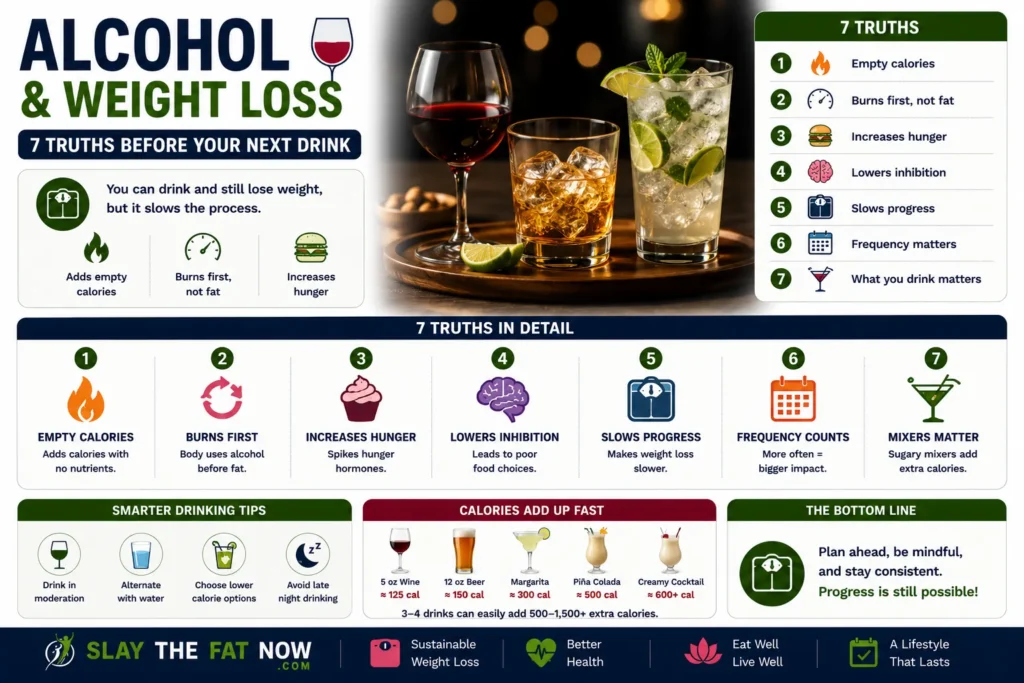
Yes, you can drink alcohol and still lose weight, but it makes the process slower and harder. Alcohol adds calories your body burns first, which pauses fat-burning while it’s in your system, and it tends to increase hunger and lower inhibition around food. How much alcohol slows weight loss depends on quantity, frequency, and what you drink it with.
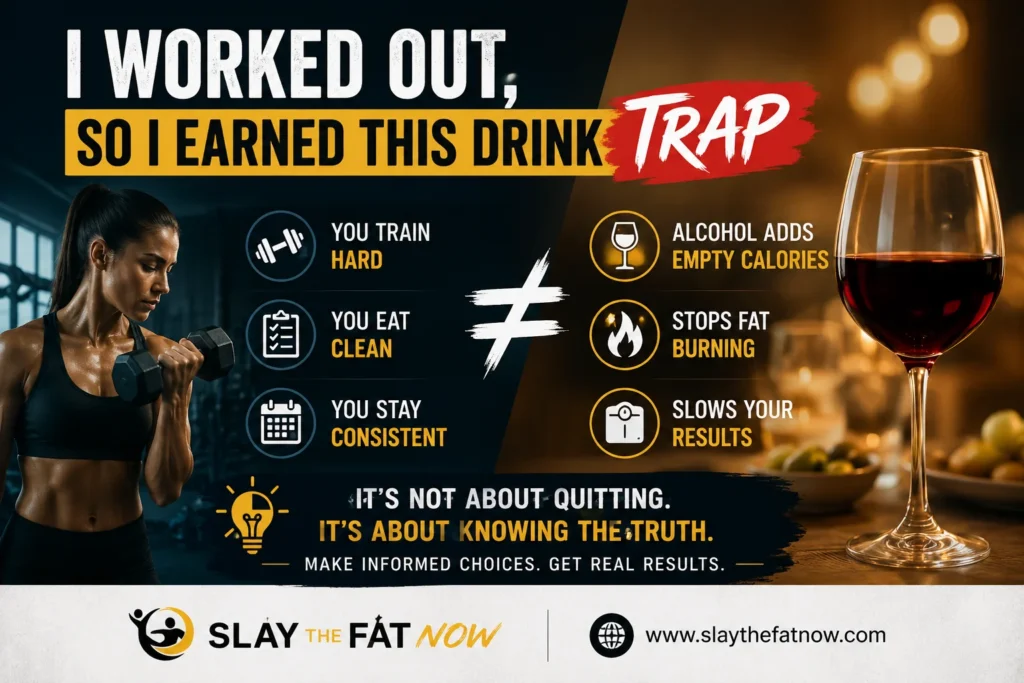
The “I Worked Out, So I Earned This Drink” Trap
You hit the gym. You tracked your meals all week. Friday night rolls around, and that glass of wine or three feels earned. Then Monday’s weigh-in doesn’t move, and it’s confusing, because on paper you “did everything right.”
This is one of the most common frustrations in weight loss, and almost nobody talks about it honestly. Most advice either says “never drink again” (unrealistic for most adults) or ignores the topic entirely (unhelpful). Neither approach matches how people actually live.
The truth about alcohol and weight loss sits in the middle: it’s not about quitting forever, and it’s not about pretending it has zero effect. It’s about understanding exactly what alcohol does to your body so you can make an informed call instead of guessing.
What’s Really Happening: Alcohol and Weight Loss Explained
Here’s the mechanism in plain terms, without the lecture.
Alcohol contains 7 calories per gram more than carbs or protein (4 calories per gram) and close to fat (9 calories per gram). But the bigger issue isn’t just the calorie count. It’s metabolic priority.
Your body treats alcohol as something to process and clear out, not store. So when you drink, your system shifts its attention to metabolizing the alcohol first which means fat-burning slows down while alcohol is in your bloodstream. Your body isn’t choosing to gain weight; it’s just temporarily pausing fat oxidation to deal with what it sees as a more urgent substance to clear.
On top of that, alcohol tends to increase appetite and lower the inhibition that normally stops you from ordering the appetizer sampler. That’s why “can you drink alcohol and lose weight” usually isn’t really a chemistry question it’s a behavior question, because the extra food eaten alongside drinks often outweighs the calories in the drink itself.
In this article, you’ll learn the real data on alcohol’s effect on weight, a realistic example of how this plays out for someone actually trying to lose weight, the patterns that come up again and again, the myths worth retiring, and a practical way to keep drinking in your life without stalling your progress.
Why This Actually Matters for Your Results
This isn’t about morality or willpower it’s about understanding where your effort is actually going.
- You stop blaming yourself for “doing everything right” and not seeing results. If alcohol is part of your week, it’s worth accounting for honestly instead of mentally writing it off.
- You avoid the compounding effect. A few hundred extra calories from drinks plus the food eaten alongside them can erase an entire day’s calorie deficit in one evening.
- You protect your sleep and recovery. Alcohol disrupts sleep quality, and poor sleep independently increases next-day cravings and hunger a double hit on top of the calories themselves.
- You can actually keep alcohol in your life if you want to. Most people don’t need total abstinence to lose weight; they need an honest accounting of where it fits.
What the Research Actually Shows
Let’s look at real numbers instead of vague warnings.
A standard drink defined by the NIAAA and CDC as 14 grams of pure alcohol works out to roughly 12 ounces of regular beer, 5 ounces of wine, or 1.5 ounces of liquor. Calorie-wise, that’s about 100–150 calories per drink before you add any mixers, and sweet cocktails like piña coladas can run as high as 500 calories in a single glass.
On the appetite side, a controlled study found that people consumed significantly more food at a meal when alcohol was included compared to a non-alcoholic version of the same drink researchers measured a roughly 290-calorie difference in food intake between people who drank wine with or before a meal versus those who had none. That’s on top of the calories in the wine itself.
A 24-year cohort study of male health professionals found that people who increased their alcohol intake by an average of two or more drinks per day gained more weight over time than those whose drinking stayed stable, while people who cut back by 1–2 drinks per day actually lost a small amount of weight suggesting the relationship runs in both directions.
Interestingly, research also shows this isn’t purely linear. A systematic review of controlled trials found that when alcohol was added to someone’s diet, total calorie intake went up but not always by the full amount of the alcohol’s calories, since some people unconsciously eat slightly less elsewhere. This is why two people who drink the same amount can see different effects on the scale.
On guidelines: the newest 2025–2030 Dietary Guidelines for Americans moved away from the older “1 drink for women, 2 for men” framing and now simply recommends consuming less alcohol for better health overall a notable shift worth knowing if you’ve seen the older numbers floating around online.
A Realistic Example: What This Looks Like Week to Week
Picture someone call her Jen, 38, in a calorie deficit, losing weight steadily during the week. Her weekday eating is dialed in. But Friday and Saturday nights, she has 3–4 glasses of wine with friends, plus the shared appetizers and late-night tacos that come with it.
Those two nights alone can add 600–800 calories from wine and another 800–1,000 from the food that wouldn’t have happened sober easily erasing 2–3 days of her weekday calorie deficit in a single weekend.
Jen didn’t quit drinking. She made one change: she picked one night instead of two, switched from wine to a lower-calorie option on the night she did drink, and ate a protein-forward meal beforehand so she wasn’t drinking on an empty stomach (which also reduces the appetite-stimulating effect). Her weekly average calorie deficit came back, and her weight loss resumed within two weeks without giving up her social life entirely.
What Years of Doing This Reveals
A few patterns show up constantly when you’ve watched people navigate this for years.
First, the food eaten while drinking usually does more damage than the drinks themselves. People fixate on the calories in a beer or cocktail and completely ignore the nachos, the late-night drive-through, or the extra portion they wouldn’t have eaten sober.
Second, frequency matters more than total amount on any single occasion. Someone who drinks moderately five nights a week often struggles more with consistent progress than someone who drinks more heavily on one occasion but stays alcohol-free the rest of the week total weekly calories and sleep disruption add up differently.
Third, drink choice creates a massive calorie range. A vodka soda and a frozen margarita can both feel like “having a drink,” but one is roughly 100 calories and the other can be 400–600.
Fourth, the people who keep both alcohol and their progress long-term plan for it, rather than reacting to it. Deciding in advance how many drinks, on which nights, removes the in-the-moment decision-making that alcohol itself makes harder.
Reality Check: What Most People Get Wrong
A few myths worth retiring.
Myth: Any amount of alcohol completely stops weight loss. Reality: Research shows the effect is dose-dependent occasional, moderate drinking has a measurably smaller impact than frequent or heavy drinking, and total weekly calorie balance still governs the outcome.
Myth: Wine or beer is automatically “healthier” for weight loss than liquor. Reality: A glass of wine and a shot of vodka have similar calorie counts. What changes the math is mixers, portion size, and how many you have not the type of alcohol itself.
Myth: You can “work off” drinking calories with extra cardio. Reality: This is mathematically possible but rarely realistic a single night of drinking plus accompanying food can exceed what most people burn in an entire workout.
Myth: You have to quit alcohol completely to lose weight. Reality: Most research on this topic studies habitual drinking patterns, not occasional moderate drinking. Total abstinence isn’t required for most people awareness and planning go a long way.
Practical Advice: What to Do (and What to Avoid)
Do this:
- Eat a protein-rich meal before drinking it slows alcohol absorption and reduces the appetite-stimulating effect.
- Pick lower-calorie options when you do drink: a vodka soda or dry wine over a sugary cocktail.
- Decide your number of drinks before you start, not after the first one (alcohol itself impairs that decision).
- Alternate alcoholic drinks with water to slow consumption and reduce total volume.
- Track your weekly average, not just daily numbers one heavier weekend doesn’t erase a good week if the average still works.
Avoid this:
- Don’t drink on an empty stomach if you’re trying to manage food intake it amplifies hunger and lowers your guard around food choices.
- Don’t assume “light beer” or “skinny margarita” labeling means low-calorie; check actual nutrition facts.
- Don’t try to “save calories all day” for drinking at night this often backfires into overeating once alcohol lowers inhibition.
- Don’t ignore sleep disruption from drinking; poor sleep independently drives next-day cravings regardless of what you ate.
Comparing Your Options
| Approach | Best for | Tradeoff |
|---|---|---|
| Full abstinence during active weight loss | People who find moderation hard to stick to | Fastest, most predictable results; harder socially |
| Planned moderate drinking (1–2x/week, set limit) | People who want to keep a social life intact | Slower progress; requires real planning and tracking |
| Lower-calorie drink swaps | People unwilling to reduce frequency | Helps but doesn’t address the appetite/food side effect |
| “Drink and track” approach | Detail-oriented people who already track food | Time-consuming; requires consistent honesty in logging |
For most people balancing real life with weight loss goals, planned moderate drinking with a pre-set limit has the best track record it doesn’t require giving up your social life, but it removes the in-the-moment decision-making that derails most people.
For a deeper look at how this fits into your broader calorie strategy, check out our calorie deficit guide which breaks down how to build in flexibility without losing momentum.
Frequently Asked Questions
Can you drink alcohol and lose weight at the same time?
Yes. Research shows moderate, planned drinking has a measurably smaller impact on weight loss than frequent or heavy drinking, and most people can lose weight while still drinking occasionally.
How much alcohol slows weight loss noticeably?
Frequent drinking (multiple nights per week) or higher quantities per occasion tend to show the clearest negative impact, largely due to both the calories and the extra food typically eaten alongside it.
Does alcohol stop fat burning completely?
Not completely, but it does pause it temporarily. Your body prioritizes metabolizing alcohol over burning fat while alcohol is in your system, which slows progress during that window.
Is wine better than beer or liquor for weight loss?
Not meaningfully. A standard serving of wine, beer, and liquor all contain roughly similar calories (100–150) before mixers type matters less than total quantity and what you drink it with.
Why do I overeat when I drink, even when I’m trying to lose weight?
Alcohol increases appetite and lowers the inhibition that normally helps you stick to planned food choices, which is why the food eaten while drinking often causes more impact than the drink itself.
Does alcohol affect men and women differently for weight gain?
Some research suggests men are more likely to add alcohol on top of their usual calorie intake, while women more often substitute it for other foods though individual results vary significantly.
How many calories are in a typical alcoholic drink?
A standard 12-ounce beer runs about 150 calories, a 5-ounce glass of wine about 120–150, and a 1.5-ounce shot of liquor about 100 sweet cocktails can run 300–500+ calories.
Does drinking alcohol affect sleep, and does that impact weight loss?
Yes. Alcohol disrupts sleep quality, and poor sleep is independently linked to increased next-day hunger and cravings, compounding its effect on weight loss.
Can I still lose weight if I have a few drinks every weekend?
Often yes, especially if you account for it in your weekly calorie average and avoid pairing it with excessive food many people successfully maintain steady progress this way.
Is it better to eat before or after drinking alcohol if I’m watching my weight?
Eating a protein-rich meal before drinking is generally better it slows alcohol absorption and helps blunt the appetite-stimulating effect that leads to overeating.
Do low-calorie or “skinny” cocktails actually help with weight loss?
They can help if the nutrition facts back up the marketing, but always check many “light” or “skinny” labeled drinks aren’t meaningfully lower in calories than standard versions.
Does alcohol increase belly fat specifically?
Research links alcohol more directly to overall weight gain through calories and increased food intake, though chronic heavy drinking has also been associated with abdominal fat accumulation in some studies.
How long does alcohol’s effect on metabolism actually last?
The fat-burning slowdown is generally tied to how long alcohol stays in your system typically a few hours per drink rather than causing a lasting change to baseline metabolism from occasional use.
What’s the easiest way to keep drinking without stalling progress?
Pre-deciding your number of drinks, choosing lower-calorie options, and eating beforehand are the three most effective, low-effort changes most people can make.
Should I quit alcohol completely to see faster results?
Not necessarily required, but cutting back especially on frequency tends to produce faster, more predictable results than trying to “manage” daily drinking through willpower alone.
Your Next Step
Alcohol and weight loss aren’t mutually exclusive but pretending alcohol has zero effect on your progress usually leads to confusion and frustration when the scale doesn’t match the effort. The goal isn’t perfection. It’s an honest plan that accounts for real life, including the parts that involve a drink with friends.
If you want help building a plan that actually accounts for your real schedule including the nights out SlaytheFatNow is a good starting point for resetting cravings and building momentum before you fine-tune the rest.
Pick one night this week to set a limit in advance, and notice how different the next morning feels. That’s the entire first step no all-or-nothing decision required.
