 Skip to content
7 Proven Ways to Finally Achieve Weight Loss with PCOS What Actually Works in 2026
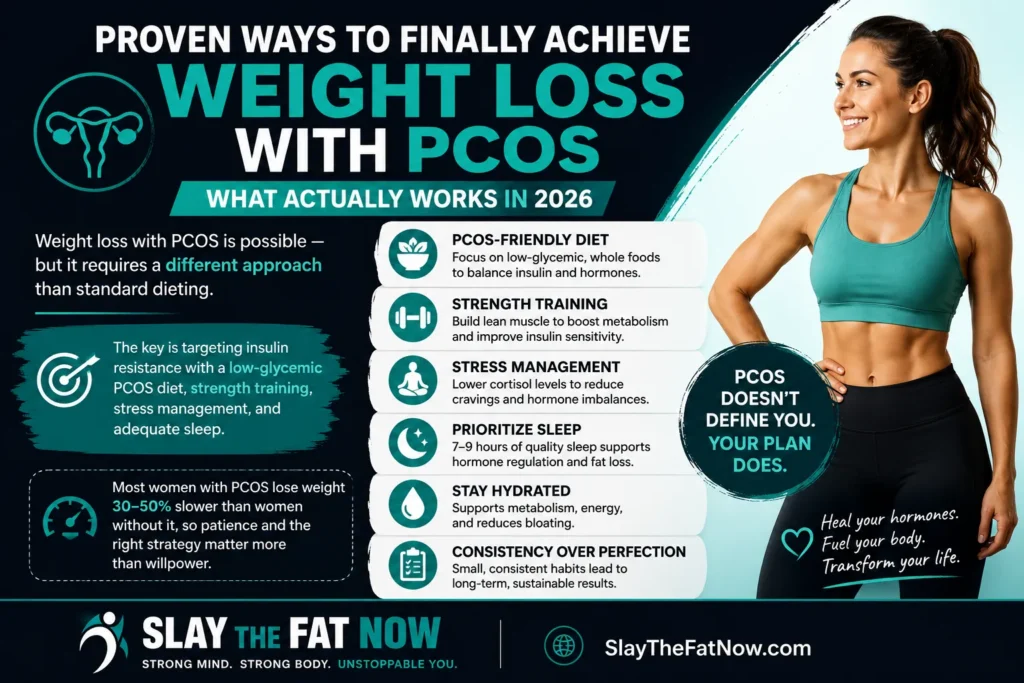
Weight loss with PCOS is possible but it requires a different approach than standard dieting. The key is targeting insulin resistance with a low-glycemic PCOS diet, strength training, stress management, and adequate sleep. Most women with PCOS lose weight 30–50% slower than women without it, so patience and the right strategy matter more than willpower.
You’re Not Lazy. Your Hormones Are Working Against You.
You’ve tried cutting calories. You’ve tried cardio every morning. You’ve cut out sugar, gone gluten-free, and maybe even tried intermittent fasting. And yet, the scale barely moves or worse, it creeps up.
Sound familiar? If you have polycystic ovary syndrome (PCOS), this isn’t a willpower problem. It’s a hormonal problem. And the frustrating truth is that most mainstream diet advice was never designed with PCOS in mind.
Here’s the thing: weight loss with PCOS follows completely different rules. Women with PCOS often have insulin resistance, elevated androgens, and disrupted hunger hormones that make fat storage easier and fat loss harder often 2 to 3 times harder than for women without the condition.
This article cuts through the noise. You’ll get science-backed strategies that actually target the root causes of PCOS weight gain not just generic diet tips dressed up in new packaging.
What Is PCOS and Why Does It Cause Weight Gain?
Polycystic ovary syndrome (PCOS) is one of the most common hormonal disorders in women of reproductive age, affecting roughly 1 in 10 women in the United States. It’s characterized by irregular periods, elevated androgens (male hormones), and small cysts on the ovaries though not everyone has all three.
But here’s what most people don’t realize: PCOS is fundamentally a metabolic disorder, not just a reproductive one. Up to 70–80% of women with PCOS have some degree of insulin resistance, meaning their cells don’t respond properly to insulin. When insulin can’t do its job, the body pumps out more of it and excess insulin signals your body to store fat, especially around the belly.
This is why PCOS belly fat is so stubborn. It’s not just about eating too much. It’s about a hormonal environment that actively favors fat storage and makes your body resistant to burning it.
The good news? Once you understand the mechanism, you can work with your hormones instead of against them. That’s what achieving real weight loss with PCOS looks like.
Why Losing Even 5% of Your Body Weight Changes Everything
You don’t need to lose 50 pounds to feel better. Research consistently shows that losing just 5–10% of your body weight for a 180-pound woman, that’s 9–18 pounds produce dramatic improvements in PCOS symptoms:
- Menstrual cycles often become more regular
- Insulin sensitivity improves, lowering diabetes risk
- Androgen levels drop, reducing acne and excess hair growth
- Fertility rates increase significantly
- Energy, mood, and sleep quality improve
- PCOS belly fat begins to visibly reduce
This is powerful because it shifts the goal from “I need to lose a ton of weight” to “I need a sustainable strategy that chips away consistently.” Small, steady progress with PCOS matters more than dramatic short-term results that can’t be maintained.
The Research Behind PCOS and Weight Gain
1 in 10 U.S. women affected by PCOS, per the NIH
70–80% of women with PCOS have insulin resistance, per clinical research
50% of women with PCOS are overweight or obese
5–10% weight loss needed to restore menstrual cycles in many cases
A landmark study published in the Journal of Clinical Endocrinology & Metabolism found that women with PCOS burned, on average, 400 fewer calories per day at rest compared to women without PCOS even when controlling for weight. That’s a 2,800-calorie metabolic disadvantage every week.
Additionally, according to the Office on Women’s Health, women with PCOS are at significantly higher risk of developing type 2 diabetes, heart disease, and endometrial cancer making weight management not just a cosmetic concern, but a serious long-term health priority.
Hunger hormones are also disrupted. Women with PCOS often have higher levels of ghrelin (the hunger hormone) and lower levels of leptin (the fullness hormone), making it harder to feel satisfied after eating which explains why simply “eating less” so often fails as a strategy on its own.
A Real PCOS Weight Loss Journey: Meet “Sarah”
Sarah, a 32-year-old teacher from Ohio, had been diagnosed with PCOS at 24. For nearly a decade, she’d tried everything: Weight Watchers, keto, juice cleanses. She’d lose 5 pounds, stall for weeks, and gain it back with interest. By the time she started working with a PCOS-informed nutritionist, she weighed 217 pounds and felt completely defeated.
The shift came when she stopped counting calories obsessively and started focusing on insulin management through a targeted PCOS diet to lose weight. Her plan included:
- Low-glycemic carbohydrates paired with protein at every meal
- Resistance training 3x per week (replacing daily cardio)
- Inositol supplementation (a natural insulin sensitizer)
- An 8–9 hour sleep goal to manage cortisol
- Stress reduction through journaling and walks
In 6 months, Sarah lost 28 pounds. More importantly, her periods became regular for the first time in years, her acne cleared, and she stopped craving sugar at 3pm every day. Her story isn’t unique it’s what happens when the strategy finally matches the condition.
Expert Insight: What Actually Works for Weight Loss with PCOS
After working with hundreds of women navigating PCOS, certain patterns emerge clearly. Here’s what separates women who succeed from those who stay stuck:
1. They Target Insulin First, Calories Second
Cutting calories while ignoring insulin resistance is like bailing water from a sinking boat without plugging the hole. Women who succeed with PCOS weight loss focus on what they eat specifically glycemic load before worrying about how much they eat. Protein and fiber at every meal blunt insulin spikes.
2. They Lift Weights (Not Just Cardio)
Chronic cardio can raise cortisol in women with PCOS, which raises insulin, which promotes fat storage. Strength training, on the other hand, builds muscle mass that improves insulin sensitivity around the clock even when you’re at rest. Most women who make this switch see a noticeable change in PCOS belly fat within 8–12 weeks.
3. They Treat Sleep Like a Non-Negotiable
Poor sleep elevates cortisol, disrupts hunger hormones, and worsens insulin resistance. Getting 7.5–9 hours is not a luxury for women with PCOS it’s a critical metabolic intervention. Sleep deprivation alone can erase the benefits of even a perfect diet.
4. They Don’t Go Extremely Low-Carb Forever
Low-carb diets can help jump-start PCOS weight loss, but very low-carb diets long-term can disrupt thyroid function and worsen cortisol in some women. The sweet spot is a moderate-carb, whole-food approach where carbs are high-quality (oats, legumes, sweet potatoes, berries) rather than eliminated entirely.
Ready to Build Your Personal PCOS Weight Loss Plan?
Stop guessing. Get a clear, step-by-step roadmap designed specifically for women with PCOS covering food, exercise, supplements, and mindset.
Reality Check: Breaking the Biggest PCOS Weight Loss Myths
Myth #1: “If You Just Eat Less and Move More, It Will Work”
This advice ignores insulin resistance entirely. Restricting calories too aggressively actually raises cortisol and can worsen insulin resistance in women with PCOS making weight loss harder, not easier. A modest caloric deficit (300–400 calories/day) is far more effective than aggressive restriction.
Myth #2: “Keto Will Fix Everything”
Keto can be helpful short-term for some women with PCOS because it lowers insulin dramatically. But very low-carb eating long-term can increase cortisol, disrupt thyroid hormones, and be hard to sustain. It’s not a cure-all, and it doesn’t work for everyone.
Myth #3: “You Can’t Lose Weight with PCOS”
Completely false. Slower, yes. Impossible, no. The research is clear that targeted lifestyle changes produce meaningful weight loss and symptom improvement in women with PCOS it just requires the right approach.
Myth #4: “Supplements Alone Will Fix It”
Inositol, berberine, and magnesium can meaningfully improve insulin sensitivity but they work alongside diet and exercise, not instead of it. No supplement replaces a consistent, hormone-smart lifestyle.
7 Practical Steps for Weight Loss with PCOS
- Rebuild your meals around protein and fiber. Aim for 25–30g of protein per meal and at least 30g of total fiber daily. This combination blunts insulin spikes, keeps you full longer, and directly targets the hormonal root of PCOS weight gain. Think eggs + vegetables at breakfast, not cereal.
- Follow a low-glycemic PCOS diet to lose weight. Replace refined carbs (white bread, sugary drinks, processed snacks) with slow-digesting carbs like lentils, oats, berries, quinoa, and sweet potatoes. The goal isn’t zero carbs it’s quality carbs that don’t spike insulin.
- Strength train at least 3 times per week. Squats, deadlifts, rows, and lunges build muscle that improves insulin sensitivity long after the workout ends. This is the single most underused tool in PCOS weight management.
- Manage cortisol aggressively. Cortisol worsens insulin resistance and promotes belly fat. Prioritize 8 hours of sleep, limit caffeine after noon, take walks in nature, and protect yourself from chronic stress. This isn’t soft advice it’s metabolic medicine.
- Consider evidence-backed supplements. Myo-inositol (2g twice daily) has strong clinical support for improving insulin sensitivity in PCOS. Vitamin D deficiency is common in PCOS and worsens insulin resistance get your levels tested. Magnesium glycinate (300–400mg/night) improves sleep and reduces cortisol.
- Track patterns, not just weight. The scale fluctuates wildly in PCOS due to hormones, water retention, and cycle timing. Track measurements, energy, skin clarity, and cycle regularity alongside weight. A week of no scale movement doesn’t mean nothing is changing.
- Work with your cycle, not against it. Energy, hunger, and exercise tolerance shift dramatically across your cycle. In the follicular phase (week 1–2), you can handle higher intensity training and slightly higher carbs. In the luteal phase (week 3–4), prioritize rest, lower intensity, and anti-inflammatory foods. This cyclical approach prevents burnout and supports hormonal balance.
💡 Pro Tip: The fastest path to PCOS weight loss isn’t a stricter diet it’s addressing insulin resistance through a combination of food quality, strength training, sleep, and stress management simultaneously. Any one of these alone gives modest results. All four together create compounding progress.
PCOS Diet Comparison: Which Approach Wins?
| Diet Approach | Pros for PCOS | Cons for PCOS | Best For |
|---|---|---|---|
| Low-Glycemic / Mediterranean | Reduces insulin spikes, anti-inflammatory, sustainable, hormone-friendly | Requires food quality awareness; slower initial results | Long-term management; most women with PCOS |
| Low-Carb / Keto | Fast initial weight loss; dramatically lowers insulin | May raise cortisol; hard to sustain; can affect thyroid | Short-term jump-start; those without thyroid issues |
| Intermittent Fasting (16:8) | Lowers insulin between meals; simplifies eating window | Can raise cortisol; may worsen anxiety; not suitable for all | Women who tend to overeat in evenings; no adrenal issues |
| Calorie Counting Only | Creates deficit; basic structure | Ignores food quality and insulin response; often fails for PCOS | Not recommended as the primary PCOS strategy |
| Anti-Inflammatory Diet | Reduces chronic inflammation that worsens PCOS; improves energy | Less research specifically on PCOS weight loss alone | Combining with low-glycemic approach for best results |
Verdict: For most women, a low-glycemic, Mediterranean-style eating pattern rich in lean protein, vegetables, legumes, healthy fats, and quality carbohydrates is the most effective and sustainable PCOS diet to lose weight. It targets insulin resistance without the hormonal downsides of extreme restriction.
For supplement and medication options to discuss with your doctor.
Frequently Asked Questions About Weight Loss with PCOS
1. Why is weight loss with PCOS so hard?
Women with PCOS have insulin resistance that promotes fat storage, elevated androgens that affect metabolism, and disrupted hunger hormones all of which make losing weight significantly harder than for women without PCOS. It’s not a lack of effort; it’s a different metabolic environment that requires a different strategy.
2. What is the best PCOS diet to lose weight?
The best PCOS diet to lose weight is a low-glycemic, whole-food approach that emphasizes lean protein, fiber-rich vegetables, legumes, and quality carbohydrates while minimizing sugar, refined grains, and processed foods. This directly targets insulin resistance, the core driver of PCOS weight gain.
3. How do I get rid of PCOS belly fat specifically?
PCOS belly fat is driven by elevated insulin and cortisol. Target it by lowering insulin (low-glycemic diet, strength training), reducing cortisol (adequate sleep, stress management), and supporting hormone balance. Spot reduction isn’t possible, but belly fat is typically the first to go when insulin resistance improves.
4. How much weight can I realistically lose with PCOS?
With a consistent, PCOS-targeted approach, most women lose 0.5–1 pound per week. That’s slower than average, but entirely realistic. A 5–10% body weight reduction over 3–6 months is a meaningful, medically significant goal that dramatically improves symptoms.
5. Does metformin help with weight loss in PCOS?
Metformin, a medication that improves insulin sensitivity, can support modest weight loss in women with PCOS typically 3–5% of body weight over 6 months. It works best when combined with dietary changes and exercise rather than used alone. Talk to your doctor about whether it’s appropriate for you.
6. Is intermittent fasting good for PCOS?
Intermittent fasting can be helpful for some women with PCOS by lowering overall insulin levels. However, extended fasting can raise cortisol, which worsens insulin resistance and may not suit all women particularly those with anxiety, adrenal fatigue, or disordered eating history. A 12–14 hour overnight fast is a safer starting point.
7. What foods should I avoid with PCOS to lose weight?
Avoid refined carbohydrates (white bread, pasta, sugary cereals), sugary beverages, ultra-processed snack foods, excess alcohol, and high-sugar fruits like grapes and bananas in large quantities. These spike insulin quickly and undermine weight loss efforts in women with PCOS.
8. Does inositol really work for PCOS weight loss?
Yes myo-inositol and D-chiro-inositol have solid clinical evidence for improving insulin sensitivity, reducing androgen levels, and supporting modest weight loss in women with PCOS. The standard effective dose in research is 2g of myo-inositol twice daily. Results typically emerge over 3–6 months.
9. Can you lose weight with PCOS without medication?
Absolutely. Many women achieve significant, lasting weight loss with PCOS through diet changes, strength training, sleep optimization, and stress management alone. Medication can help, but lifestyle change is both the foundation and, for many, sufficient on its own.
10. How does sleep affect weight loss with PCOS?
Sleep deprivation worsens insulin resistance, elevates cortisol, raises ghrelin (hunger hormone), and lowers leptin (fullness hormone) all of which make weight loss harder for women with PCOS. Getting 7.5–9 hours per night is one of the highest-leverage interventions available.
11. Is cardio or strength training better for PCOS weight loss?
Strength training is generally more effective for women with PCOS. It builds muscle mass that improves insulin sensitivity 24/7, not just during the workout. Excessive steady-state cardio can raise cortisol. A combination of strength training 3x/week plus moderate-intensity walking is the optimal strategy.
12. Does PCOS get better after losing weight?
Yes, often significantly. Even a 5–10% weight reduction can restore menstrual regularity, lower androgens, reduce acne and hair growth, improve fertility, and lower the risk of type 2 diabetes. Weight loss doesn’t cure PCOS, but it profoundly reduces its impact on daily life.
13. What is the role of stress in PCOS and weight gain?
Chronic stress elevates cortisol, which directly worsens insulin resistance and signals the body to store fat especially around the abdomen. Women with PCOS are often more sensitive to cortisol’s effects. Stress management isn’t optional; it’s a core component of any effective PCOS weight loss plan.
14. Are there PCOS-friendly meal prep ideas to support weight loss?
Yes. Focus on batch-cooking protein (grilled chicken, hard-boiled eggs, lentils), pre-portioning fiber-rich snacks (vegetables with hummus, nuts), and prepping grain bowls with quinoa or farro as the base. Having food ready reduces the likelihood of grabbing high-glycemic convenience options.
15. How long does it take to lose weight with PCOS?
Most women with PCOS begin to notice changes in energy, bloating, and cycle regularity within 4–8 weeks of consistent lifestyle changes. Visible weight loss typically becomes apparent at 8–12 weeks, with meaningful changes (5–10% body weight) achievable in 3–6 months with a consistent, PCOS-smart strategy.
Your Next Step: Stop Dieting. Start Healing.
Weight loss with PCOS isn’t about being harder on yourself. It’s about being smarter understanding the hormonal forces at play and systematically addressing them through food, movement, sleep, and stress management.
The women who succeed with PCOS aren’t those who restrict the most. They’re the ones who find the strategy that works with their hormones instead of fighting against them every day.
You have that information now. The next step is putting it to work.
Start Your PCOS Weight Loss Journey Today
Get our free, comprehensive PCOS weight loss guide including a 7-day meal plan, exercise template, supplement guide, and symptom tracker built specifically for women with PCOS.
Disclaimer: This article is for informational purposes only and does not constitute medical advice. Always consult a qualified healthcare provider before making changes to your diet, supplements, or exercise routine especially if you have PCOS or any other medical condition.
Sources:
