 Skip to content
Truths About Green Tea vs Lemon Water for Weight Loss (What Actually Works)
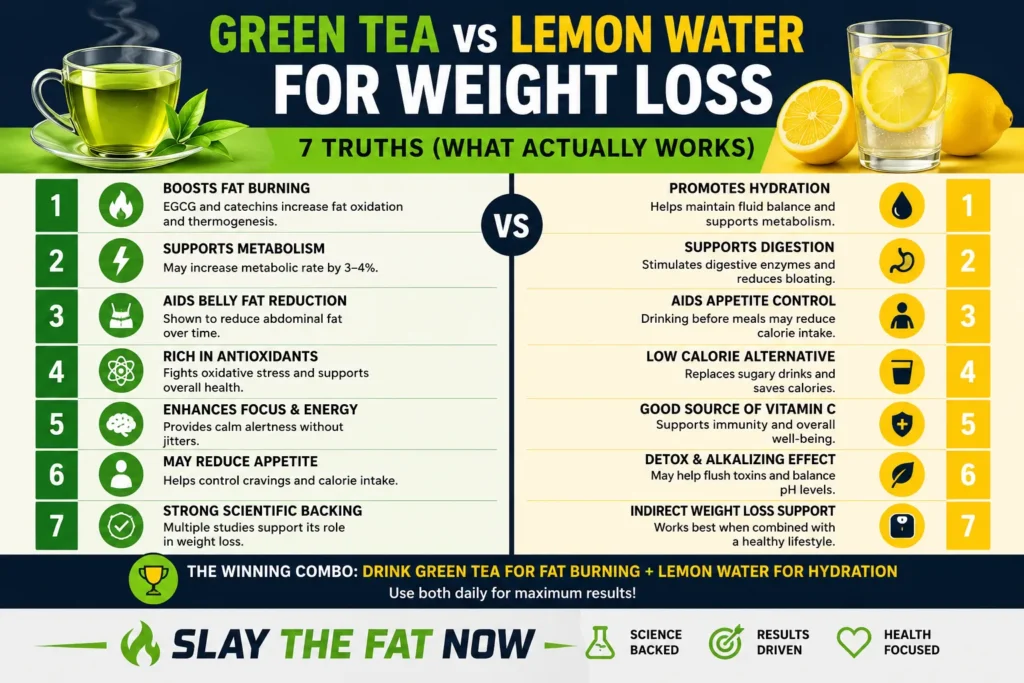
When comparing green tea vs lemon water for weight loss, green tea has a stronger scientific backing its catechins (especially EGCG) boost fat oxidation and metabolism. Lemon water supports weight loss indirectly through better hydration, appetite control, and calorie displacement. Both drinks help, but they work in different ways and are most powerful when used together.
You’ve Been Drinking the Wrong Thing Every Morning
Let’s be real. Every morning, millions of Americans pour themselves a glass of lemon water or brew a cup of green tea, convinced they’re doing something powerful for their waistline. And then… nothing changes.
Not because these drinks don’t work. But because most people don’t understand how they work or when to use each one.
You’ve probably heard friends swear by warm lemon water on an empty stomach. And you’ve seen the green tea supplements marketed as fat burners. The confusing part? Both sides have evidence. Both have science. And both have zealots who insist theirs is better.
So who’s right?
This article is going to cut through the noise. You’ll get real data, honest comparisons, and a clear answer on green tea vs lemon water for weight loss so you can stop guessing and start seeing results.
What Is This Really About?
The debate over green tea vs lemon water for weight loss isn’t just about two drinks. It’s about understanding how your body actually loses weight and how small daily habits either accelerate or sabotage that process.
Green tea and lemon water are both low-calorie, widely available, and easy to add to your routine. But they target weight loss through completely different mechanisms. Green tea works on your metabolism and fat cells. Lemon water works on your hydration, digestion, and calorie displacement.
By the end of this article, you’ll know:
- Which drink works better for fat burning
- When to drink each one for maximum effect
- Whether combining them is actually a smarter strategy
- What mistakes people make with both drinks
If you’re serious about losing weight, this is the comparison you’ve been waiting for. And if you’re ready to go deeper, check out our guide on how to speed up your metabolism naturally for more strategies that actually move the needle.
Key Benefits: Why These Drinks Actually Matter
Before we dive into who wins, let’s look at why either of these drinks belongs in a weight loss plan in the first place.
Green Tea Benefits for Weight Loss:
- Contains EGCG (epigallocatechin gallate), a powerful antioxidant that promotes fat oxidation
- The small amount of caffeine in green tea gives a mild but real metabolic lift
- Supports insulin sensitivity, helping your body manage blood sugar a key factor in fat storage
- May reduce visceral fat (the dangerous belly fat around organs) with consistent use
Lemon Water Benefits for Weight Loss:
- Zero calories, making it an instant swap for sugary drinks
- Helps with hydration, and hydration directly affects how efficiently your body burns fat
- Drinking water before meals has been shown to reduce how much food you eat
- Vitamin C in lemons plays a supporting role in fat oxidation during exercise
- Supports digestion and can reduce bloating, making you feel and look leaner faster
Neither drink is a magic bullet. But both offer real, documented support when used consistently inside a solid weight loss plan. Looking for a complete approach? Our beginner’s guide to losing weight without starving shows you how to build these habits into a full strategy.
Data and Facts: What the Science Actually Says
Here’s where things get interesting. The research on green tea is more robust and more direct.
Green Tea Research:
A review of 15 studies found that consistent consumption of green tea particularly varieties with higher EGCG content over at least 12 weeks was associated with measurable decreases in body weight and body fat. Another study involving 115 women observed significant reductions in body weight, BMI, and abdominal fat after 12 weeks of green tea extract intake.
A December 2024 meta-analysis of randomized controlled trials found that green tea combined with exercise training had a small but consistent effect on weight loss (SMD = -0.30), BMI reduction (SMD = -0.33), and fat reduction (SMD = -0.29) compared to exercise alone.
Research indicates that EGCG inhibits an enzyme that breaks down the hormone norepinephrine. When this enzyme is blocked, norepinephrine levels rise, signaling the body to break down more fat. Studies have consistently shown that regular consumption of green tea can lead to a modest but measurable reduction in body weight and belly fat.
Lemon Water Research:
Studies show that drinking water can temporarily increase the number of calories your body burns a process called water-induced thermogenesis with a modest increase of around 2–3% in calorie burn. Since lemon water is essentially flavored water, you get the same benefit.
A 2025 study found that drinking 500 ml of water before meals reduced feelings of hunger and meal energy intake. Researchers concluded that water may benefit weight management regardless of when someone drinks it.
Research indicates that lemon water’s primary weight-loss benefit is indirect stemming from caloric displacement (replacing high-calorie drinks with a zero-calorie option) and improved hydration status.
The Combined Bonus:
Here’s something most people miss entirely: catechins in green tea are relatively unstable in the non-acidic environment of the small intestine. However, adding citrus juice like lemon can change things dramatically. The vitamin C and citric acid in lemons increase the acidity of the tea, stabilizing the catechins and making them significantly more bioavailable your body can absorb up to five times more antioxidants from green tea when you add lemon.
That one fact alone changes the conversation.
Real Example: What Results Actually Look Like
Meet Sarah, a 34-year-old teacher from Ohio. She wasn’t dramatically overweight just carrying an extra 22 pounds that had crept up over five years of stress eating and skipping the gym.
She didn’t overhaul her diet overnight. Instead, she made two small changes:
- Every morning, she swapped her usual sweetened coffee for 2 cups of unsweetened green tea with a squeeze of lemon.
- She kept a 20 oz bottle of lemon water at her desk and sipped it throughout the day instead of the afternoon Diet Coke.
Over 12 weeks, combined with a modest calorie reduction and 3 walks per week, Sarah lost 14 pounds. Was it all the tea and lemon water? Of course not. But the habit shifts mattered. She was consuming roughly 300–400 fewer calories per day just from the beverage swaps and the green tea was giving her a small but consistent metabolic edge.
Her story isn’t unique. It’s exactly the kind of result you can realistically expect when you stop treating these drinks as magic and start treating them as tools.
🎯 Ready to Build Your Fat-Burning Morning Routine?
Stop guessing and start with a clear plan. Check out our 7-day weight loss jumpstart guide at slaythefatnow.com it walks you through exactly how to use drinks like green tea and lemon water as part of a complete, realistic system.
Expert Insight: What Actually Works After Years of Watching People Struggle
Having helped hundreds of people lose weight and watching even more fail certain patterns show up again and again.
The people who succeed with green tea drink it consistently, unsweetened, and pair it with at least some form of physical activity. They don’t drink 10 cups a day hoping for a miracle. They drink 2–3 cups, stay patient for 8–12 weeks, and let it work as part of a broader plan.
The people who succeed with lemon water use it primarily as a replacement strategy. They’re not losing weight because of the lemon they’re losing weight because they replaced 300 calories of soda with zero-calorie lemon water, and that simple swap compounds beautifully over time.
The people who fail are the ones who add these drinks on top of their existing habits without changing anything else, expect dramatic results in two weeks, or constantly switch between strategies without giving any one approach time to work.
The honest truth? Green tea has more direct fat-loss mechanisms. But lemon water may be easier to stick with long-term for people who don’t enjoy the taste of tea. Sustainability beats potency every single time.
Reality Check: What They Won’t Tell You on Instagram
Let’s clear up some myths before you walk away with the wrong expectations.
Myth 1: “Green tea burns fat on its own.” False. Based on current evidence, green tea drinking may result in only a small weight loss in adults. The effect is real but modest, and tea works best as part of a comprehensive strategy. Drinking green tea while eating 500 extra calories a day will not produce fat loss.
Myth 2: “Lemon water detoxes your liver and melts belly fat.” Lemon water does not directly increase metabolic rate, dissolve fat cells, or detoxify the liver in a way that triggers weight reduction. The “detox” narrative is marketing, not biology.
Myth 3: “Warm lemon water is superior to cold.” According to nutrition experts, temperature doesn’t change lemon water’s nutritional value. The main benefit is increased water intake, which plays a role in appetite regulation and weight management.
Myth 4: “More green tea = more fat loss.” Too much green tea (more than 5 cups a day) can cause nausea, insomnia, headaches, and in rare cases, liver stress due to excessive caffeine and catechin concentration. Stick to 2–3 cups.
Myth 5: “Lemon water causes tooth decay, so it’s not worth it.” Frequent consumption of lemon water can lead to tooth enamel erosion due to its acidity. You can protect your teeth by drinking through a straw or rinsing your mouth with plain water after drinking lemon water. Problem solved don’t avoid it, just be smart about it.
Practical Advice: How to Use Both for Maximum Results
Green Tea: How to Do It Right
Step 1: Brew at 160–180°F, not boiling. High temperatures destroy catechins. Step 2: Add fresh lemon juice (half a lemon) to your cup. This boosts catechin absorption significantly. Step 3: Drink 2–3 cups daily one in the morning (not on a completely empty stomach if you’re sensitive to caffeine) and one 30 minutes before a workout. Step 4: Avoid adding sugar, honey, or milk these blunt the metabolic effect. Step 5: Be consistent. Give it 8–12 weeks minimum before judging results.
What to Avoid:
- Bottled green tea drinks (usually loaded with added sugar)
- Drinking after 4 PM if you’re caffeine-sensitive
- Expecting results in the first 2–3 weeks
Lemon Water: How to Do It Right
Step 1: Squeeze half a fresh lemon into 8–16 oz of water. Step 2: Drink a glass 20–30 minutes before each major meal to reduce hunger. Step 3: Keep a water bottle with lemon slices at your desk all day as a constant low-calorie drink. Step 4: Use it to replace any sugary beverage in your day soda, sweetened coffee, juice. Step 5: Use a straw when possible to protect tooth enamel.
The Power Move: Combine both. Drink warm green tea with lemon in the morning, and sip plain lemon water throughout the day. You get the metabolic benefits of green tea catechins AND the hydration and calorie displacement benefits of lemon water simultaneously.
For more smart drink swaps that support fat loss, check out our full breakdown of the best and worst drinks for weight loss.
Head-to-Head Comparison: Green Tea vs Lemon Water for Weight Loss
| Factor | Green Tea | Lemon Water |
|---|---|---|
| Fat Oxidation | ✅ Strong (EGCG-driven) | ❌ Minimal direct effect |
| Metabolism Boost | ✅ Moderate (caffeine + catechins) | ✅ Mild (thermogenesis from water) |
| Appetite Suppression | ✅ Mild (caffeine + volume) | ✅ Moderate (pre-meal water effect) |
| Calorie Count | ~2 calories per cup | ~5–10 calories per glass |
| Caffeine | ✅ Yes (~29mg per cup) | ❌ None |
| Vitamin C | ❌ Minimal | ✅ Good source |
| Digestive Support | ✅ Mild | ✅ Good |
| Ease of Use | ✅ Simple | ✅ Very simple |
| Tooth Enamel Risk | ❌ Low | ⚠️ Moderate (acidic) |
| Science Backing | ✅✅ Strong | ✅ Moderate |
| Best Time to Drink | Morning + pre-workout | Before meals + throughout day |
Verdict: For direct fat loss mechanisms, green tea wins. For lifestyle integration, calorie replacement, and hydration, lemon water is unbeatable. The smartest play is using both.
FAQs: Green Tea vs Lemon Water for Weight Loss
Q1: Is green tea or lemon water better for weight loss overall?
Green tea has stronger scientific backing for fat oxidation and metabolism. But lemon water is excellent for hydration, appetite control, and replacing sugary drinks. Together, they’re more effective than either alone.
Q2: Can I drink both green tea and lemon water in the same day?
Absolutely and you should. Drink green tea in the morning and pre-workout; sip lemon water before meals and throughout the day.
Q3: How long does it take to see results from green tea for weight loss?
Most studies show measurable changes after 8–12 weeks of consistent daily consumption combined with a calorie deficit.
Q4: Does lemon water actually burn belly fat?
Not directly. Lemon water doesn’t target belly fat specifically. However, staying hydrated and reducing high-calorie beverages can support overall fat loss, which includes belly fat over time.
Q5: How many cups of green tea should I drink for weight loss?
2–3 cups per day is the sweet spot supported by research. More isn’t necessarily better and can cause side effects.
Q6: Should I drink green tea on an empty stomach?
Not ideal if you’re caffeine sensitive. Have it shortly after waking with a small snack, or at least 30 minutes after a light breakfast
Q7: Is warm or cold lemon water better for weight loss?
There’s no meaningful difference. Pick whichever one you’ll actually drink consistently consistency beats temperature every time.
Q8: Can lemon water replace a meal for weight loss?
No. Lemon water has minimal calories and zero protein, fat, or fiber. It’s a support tool, not a meal replacement.
Q9: Does adding honey to green tea help with weight loss?
Honey adds calories and sugar. It partially counteracts the metabolic benefits of green tea. If you need sweetness, try a small amount of raw honey but keep it minimal.
Q10: Can diabetics drink green tea and lemon water?
Both are generally safe and can be beneficial for blood sugar management. Green tea has shown positive effects on insulin sensitivity. Always consult your doctor for personalized guidance.
Q11: Does green tea with lemon work better than plain green tea?
Yes. Adding lemon increases catechin bioavailability significantly your body absorbs up to five times more antioxidants compared to plain green tea.
Q12: Does lemon water help with bloating?
Yes. Staying well-hydrated reduces water retention from constipation, and the mild digestive support from lemon can ease bloating for many people.
Q13: Can I use bottled lemon juice instead of fresh lemons?
Fresh is always better. Bottled lemon juice often contains preservatives and loses some vitamin C. However, if bottled is what gets you to drink more water consistently, it’s better than nothing.
Q14: Will green tea interfere with sleep?
It can if you drink it too late in the day. With roughly 29mg of caffeine per cup, avoid green tea after 3–4 PM if you’re sensitive to caffeine.
Q15: Is there anyone who should avoid these drinks?
People with severe acid reflux may find lemon water irritating. Pregnant women and those on blood thinners or certain medications should consult a doctor before significantly increasing green tea consumption.
The Bottom Line on Green Tea vs Lemon Water for Weight Loss
If you’re standing in the kitchen tomorrow morning deciding between the two, here’s your answer:
Drink green tea if: You want a metabolic edge, you don’t mind a little caffeine, and you’re committed to a consistent 8–12 week habit.
Drink lemon water if: You need to cut sugar from your diet, you want an easy hydration boost, or you’re caffeine-free.
Do both if: You’re serious about weight loss and want every small advantage working in your favor.
Neither drink will melt fat on its own. But combined with a real food strategy, regular movement, and consistent habits, they’re two of the easiest and cheapest tools in your fat-loss toolkit.
🔥 Take the Next Step Toward Real Fat Loss
You’ve got the knowledge. Now it’s time to act.
At slaythefatnow.com, we break down exactly what it takes to lose weight without crash diets, extreme restrictions, or expensive supplements. Whether you’re just starting out or stuck at a plateau, we have the tools you need.
👉 Start with our free guide: How to Lose Your First 10 Pounds The No-BS Approach
Make green tea with lemon your morning ritual. Make lemon water your daily hydration habit. And let the bigger strategy do the rest.
