 Skip to content
Carbs and Weight Loss: The Truth in 7 Research-Backed Facts
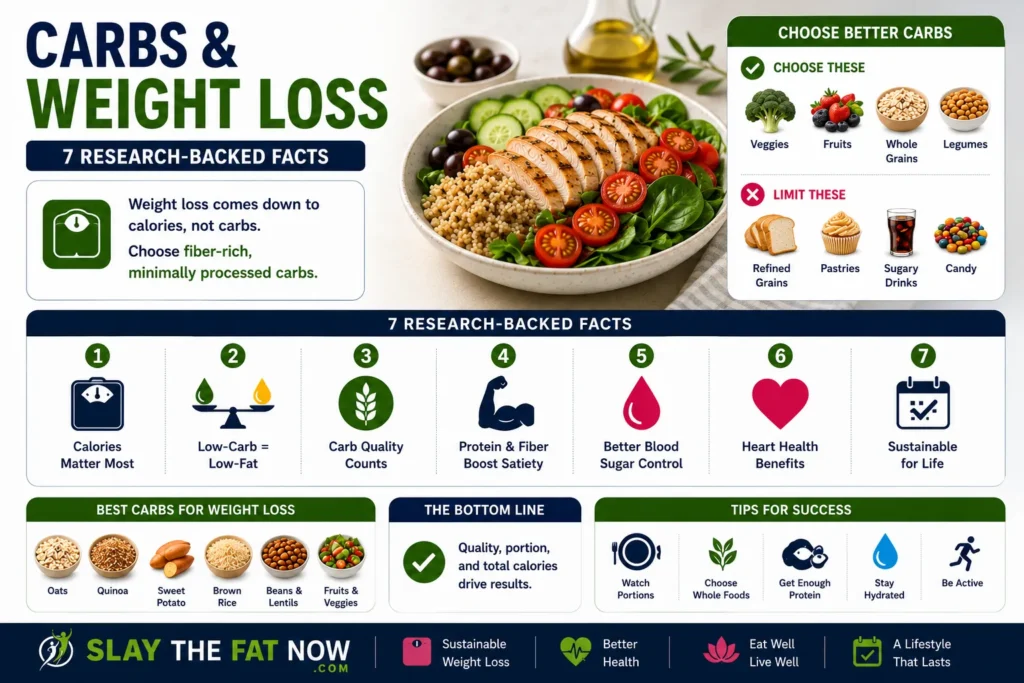
Carbs and weight loss aren’t enemies what matters most is total calorie intake, not whether those calories come from carbs. Research consistently shows low-carb and low-fat diets produce similar long-term results when calories and protein are matched. The real lever isn’t cutting carbs entirely; it’s choosing fiber-rich, minimally processed carbs over refined ones.
The Mistake That Keeps People Stuck
Somewhere along the way, carbs became the villain of every diet conversation. Bread, rice, pasta, fruit all lumped into one category and treated like the reason the scale won’t move.
So people cut them. Hard. And for a couple of weeks, it works the scale drops, energy feels different, clothes fit better. Then the cravings build, the rigidity gets exhausting, and the carbs come back, sometimes harder than before they left.
This cycle repeats so often that people start to believe they’re the problem that they just don’t have the discipline to “stick to it.” But the research tells a different story: the issue usually isn’t carbs themselves. It’s an approach that was never built to last.
Understanding the real relationship between carbs and weight loss changes the entire conversation from “what do I have to give up” to “what actually works long-term.”
What’s Actually True About Carbs and Weight Loss
Carbohydrates are one of three macronutrients, alongside protein and fat. They’re the body’s primary energy source, found in everything from leafy greens and lentils to white bread and soda which is exactly why lumping “carbs” into one good-or-bad category misses the point entirely.
The honest, research-backed answer on carbs and weight loss is this: total calorie balance drives weight change more than macronutrient ratio does. That doesn’t mean all carbs are created equal fiber, processing level, and what the carb is paired with all affect hunger, blood sugar, and how easy a way of eating is to sustain. But “carbs make you fat” is an oversimplification that doesn’t hold up against the actual data.
By the end of this article, you’ll know what the major studies actually found, which carb sources support fat loss instead of working against it, and how to build an approach that doesn’t burn out in three weeks.
Why Getting This Right Actually Matters
This isn’t just an academic debate. Misunderstanding carbs and weight loss has real costs:
- Wasted effort. People cut foods that were never the problem while ignoring portion sizes and overall intake the variables that actually drive results.
- Unnecessary restriction. Eliminating entire food groups makes eating harder to sustain socially, financially, and mentally, often without speeding up results.
- The yo-yo cycle. Extreme carb restriction is one of the most common patterns that precedes regain, because it’s difficult to maintain indefinitely.
- Missed nutrients. Many carb-containing foods beans, fruit, whole grains, vegetables are also the biggest sources of fiber, which plays its own role in appetite regulation and metabolic health.
Getting this right means fewer wasted months on an approach that was destined to be temporary.
What the Research Actually Shows
This is one of the most heavily studied questions in nutrition science, and the findings are remarkably consistent:
- The landmark DIETFITS trial at Stanford, involving over 600 participants followed for a year, found that when low-carb and low-fat groups were both coached to eat high-quality, whole foods, average weight loss was nearly identical between the two approaches.
- A large meta-analysis of 38 randomized controlled trials covering nearly 6,500 adults found that low-carbohydrate and low-fat diets produced comparable effects on body weight at 6–12 months, with differences emerging mainly in cholesterol markers rather than weight itself.
- A 2025 literature review concluded that low-carbohydrate diets produced significantly more short-term weight loss than unrestricted low-fat diets but when calorie intake was matched between groups, the difference disappeared, reinforcing that calories, not carbs specifically, were doing the work.
- An NIH-funded study comparing a high-carb, low-fat plant-based diet against a low-carb, high-fat animal-based diet found people lost weight on both diets, though only the low-fat diet led to a significant loss of body fat specifically while the low-carb diet produced lower, steadier insulin and glucose levels, suggesting different diets may offer different secondary benefits even when weight outcomes are similar.
- On the fiber side, the CDC notes that the Dietary Guidelines for Americans recommend adults get 22 to 34 grams of fiber daily as a population-level target, and that fiber supports both blood sugar control and weight management yet most American adults fall well short of that range.
- Government nutrition surveys have found average fiber intake among U.S. adults sits closer to 17 grams a day roughly half the recommended range which says less about carbs being “bad” and more about which carbs people are choosing.
The throughline across nearly every major trial: macronutrient ratio matters far less than people assume, and food quality matters more than the carb-or-no-carb framing suggests.
If you want to see how this plays out in a full eating framework, our guide to sustainable fat-loss nutrition breaks down how to apply this without extreme restriction.
A Realistic Example
Consider two people starting the same week: David cuts carbs almost entirely no bread, no rice, no fruit and loses weight quickly for the first ten days, mostly water weight from depleted glycogen stores. By week four, he’s exhausted by the restriction, missing his easy options at work lunches, and starts swinging between rigid days and “give up” days.
Meanwhile, Priya keeps carbs in her diet but shifts which carbs she’s eating swapping white rice for a mix of whole grains and legumes, snacking on fruit instead of crackers, and paying more attention to portions than elimination. Her early progress is slower, but four months later, she’s still doing it. Nothing about her plan felt unsustainable enough to abandon.
Same goal. Very different trajectories. The difference wasn’t willpower it was whether the approach was something a real life could actually hold.
What Years of Looking at This Pattern Teaches You
A few things become obvious after watching enough people try and abandon carb-cutting approaches:
- The first two weeks of low-carb results are misleading. Early, fast weight loss on a low-carb diet is largely water weight, since the body stores carbohydrate alongside water. People see that number and assume it’ll continue at that pace it won’t, and the disappointment that follows often triggers all-or-nothing thinking.
- Fiber is doing more work than people give it credit for. High-fiber carbs slow digestion, support fullness, and feed the gut microbiome benefits that get lost entirely when “cutting carbs” means cutting all of them indiscriminately, fiber included.
- The diet that wins is the one a person can still be doing in a year. Every major trial comparing diet types eventually lands on the same conclusion: adherence beats macronutrient theory.
- Refined carbs are the real common thread in poor outcomes not carbs broadly. Sugary drinks, white bread, pastries, and heavily processed snack foods tend to be low in fiber and easy to overeat. That’s a processing and fiber problem, not proof that rice or oats are working against you.
- People rarely fail from eating too many vegetables, beans, or whole grains. The carb sources that cause the most trouble in practice are almost always the refined, low-fiber ones.
Reality Check: What Most Carb Content Won’t Tell You
- Cutting carbs isn’t inherently “more effective” for fat loss long-term. Short-term water-weight loss creates the illusion of superior results, but matched-calorie studies routinely show the gap closes or disappears over months.
- Low-carb diets aren’t free of trade-offs. Some research shows they can raise LDL cholesterol in certain people, alongside HDL increases a mixed picture worth discussing with a doctor, especially for anyone with existing cardiovascular risk factors.
- Trend-driven strategies like carb cycling have thin evidence behind them. They aren’t harmful for most healthy adults, but they aren’t proven to outperform a simpler, consistent approach either.
- Individual response varies. Some people genuinely feel and perform better with less or more carbohydrate insulin sensitivity, activity level, and personal preference all play a role. There’s no single right macronutrient ratio for everyone.
- This isn’t a fast process no matter which approach you choose. Anyone promising rapid, dramatic results from cutting one macronutrient is selling a short-term outcome, not a sustainable one.
Practical Steps That Actually Work
- Shift carb quality before cutting carb quantity. Trade refined grains and added sugars for whole grains, legumes, fruit, and vegetables. This alone changes fullness and energy for a lot of people.
- Prioritize fiber at each meal. Beans, lentils, oats, berries, and vegetables all bring fiber along with their carbohydrate content, which slows digestion and supports satiety.
- Pair carbs with protein and fat. A meal of just rice digests faster than rice with chicken and vegetables. Pairing macronutrients smooths out hunger and energy swings.
- Watch portions on refined, low-fiber carbs specifically. This is where most overeating tends to happen not with an extra serving of vegetables.
- Don’t fear fruit. Whole fruit comes packaged with fiber and water that slow sugar absorption very different from fruit juice or dried fruit with added sugar.
- Notice where your carbs are actually coming from. Many people are surprised once they pay attention often it’s beverages and snacks, not meals, driving the bulk of refined carb intake.
- Build in flexibility from day one. A plan with zero room for a slice of birthday cake or a weekend pasta dinner is a plan that eventually gets abandoned entirely.
- Judge progress over weeks, not days. Weight fluctuates daily for reasons that have nothing to do with fat loss water retention, sodium, hormones, digestion. Look at trends over time.
What to avoid: cutting an entire food group without a clear reason, chasing the fastest possible early results, and assuming a slower week means the approach has failed.
For a closer look at how fiber-forward eating fits into a broader plan, see our guide to high-fiber foods for fat loss.
Comparing the Major Approaches
| Approach | Best For | Limitations |
| Low-carbohydrate | People who feel more satisfied eating more protein and fat, or who want steadier blood sugar | Can be harder to sustain socially; cholesterol effects vary by individual |
| Low-fat, higher-carb (whole-food based) | People who prefer more volume of food and plant-forward eating | Requires attention to refined carb intake to avoid blood sugar swings |
| Moderate-carb, fiber-focused | Most people looking for a sustainable, flexible long-term approach | Less dramatic early water-weight loss than strict low-carb |
| Carb cycling / advanced timing strategies | Experienced exercisers with specific performance goals | Thin long-term evidence for general fat loss; added complexity for limited proven benefit |
If you’re not sure which structure fits your lifestyle, our diet approach quiz can help narrow it down based on your habits and goals.
Frequently Asked Questions
Do I need to cut carbs to lose weight?
No. Research consistently shows that total calorie intake, not carbohydrate amount specifically, is the primary driver of weight change. Carb quality and fiber intake matter more than elimination.
What are “good carbs” for fat loss?
Fiber-rich, minimally processed carbs vegetables, legumes, whole fruit, oats, and whole grains support fullness and steadier blood sugar, which makes them easier to build a sustainable approach around.
Are all carbs the same for weight loss?
No. A carb source’s fiber content, processing level, and what it’s paired with all affect how it impacts hunger and blood sugar, even though the calorie-for-calorie effect on weight is similar.
Why did I lose so much weight in the first week of cutting carbs?
That rapid early loss is largely water weight. Carbohydrate is stored in the body alongside water, so cutting carbs sharply releases that water quickly it isn’t a preview of ongoing fat-loss speed.
Is low-carb better than low-fat for weight loss?
Major trials, including Stanford’s DIETFITS study, found roughly equal weight loss between low-carb and low-fat groups when both focused on whole foods. Neither approach has a clear long-term advantage for most people.
How do I know what carb approach is right for me?
It depends on activity level, preferences, and what’s sustainable for you long-term. Government dietary guidelines recommend most carbohydrate calories come from whole, fiber-rich sources rather than refined ones, regardless of overall approach.
Does cutting carbs reduce belly fat specifically?
No diet reliably targets fat loss from one area of the body. Overall fat loss, achieved through any sustainable approach, is what reduces fat across the body, including the midsection, over time.
Is fruit bad for weight loss because of sugar?
No. Whole fruit’s fiber and water content slow sugar absorption considerably compared to processed sugar sources, and fruit is linked to better, not worse, weight outcomes in most research.
What’s the difference between simple and complex carbs?
Simple carbs (sugar, refined grains) digest quickly and can spike blood sugar. Complex carbs (whole grains, legumes, vegetables) digest more slowly thanks to fiber, supporting steadier energy and fullness.
Can I lose weight eating rice or bread?
Yes. Portion size and overall daily intake determine weight outcomes far more than whether a specific food like rice or bread is included.
Does carb cycling work for fat loss?
It can work for some people, particularly athletes timing carbs around training, but there’s limited evidence it outperforms a simpler, consistent eating pattern for general fat loss.
Why do low-carb diets sometimes raise cholesterol?
Some low-carb approaches are higher in saturated fat, which can raise LDL cholesterol in certain individuals, even as HDL also rises. Response varies by person, which is part of why a doctor’s input matters for anyone with cardiovascular risk factors.
Is keto the best diet for fat loss?
Research doesn’t show ketogenic diets outperforming other matched-calorie approaches for long-term fat loss in most people. It may suit some individuals’ preferences and hunger patterns better than others.
Why does fiber matter so much for weight management?
Fiber slows digestion, supports fullness, and feeds the gut microbiome. Most public health guidance points to fiber-rich carbs as supportive of weight management, distinct from carbohydrate content overall.
Will eating carbs at night cause weight gain?
Timing alone has limited evidence behind it; total daily intake matters far more than what time of day carbs are eaten for most people.
Where to Go From Here
The honest answer on carbs and weight loss is less dramatic than most headlines suggest: it’s not about cutting carbs out, it’s about choosing better ones and keeping an eye on overall intake. The research is remarkably consistent on this, even when trends suggest otherwise.
Start with one shift this week: swap one refined carb for a fiber-rich one. That’s a more useful first step than eliminating an entire food group overnight.
This article is for general educational purposes and isn’t a substitute for personalized medical or nutrition advice. If you have diabetes, a history of disordered eating, or another health condition, please talk to a doctor or registered dietitian before making significant changes to your diet.
Sources
- Stanford Medicine, DIETFITS study summary
- “The Effect of Low-Fat and Low-Carbohydrate Diets on Weight Loss and Lipid Levels: A Systematic Review and Meta-Analysis”
- “Low-fat versus Low-carbohydrate Diet,” Journal of Nature and Science of Medicine
- NIH Research Matters, “Low-fat diet compared to low-carb diet”
- CDC, “Fiber: The Carb That Helps You Manage Diabetes”
