 Skip to content
How to Deal with Food Cravings: 7 Proven Ways to Stop Them Fast
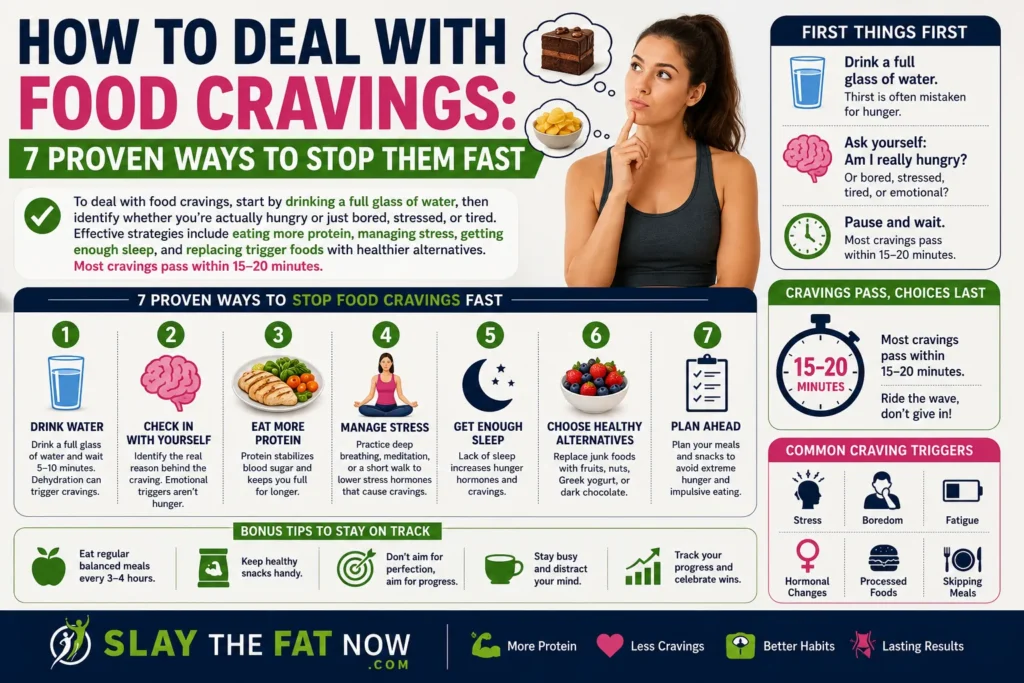
To deal with food cravings, start by drinking a full glass of water, then identify whether you’re actually hungry or just bored, stressed, or tired. Effective strategies include eating more protein, managing stress, getting enough sleep, and replacing trigger foods with healthier alternatives. Most cravings pass within 15–20 minutes.
You’ve been doing everything right eating clean, skipping dessert, counting calories and then 9 PM hits. Suddenly you’re standing in front of the fridge, staring at a tub of ice cream like it owes you money.
Here’s what nobody tells you: that craving isn’t a personal failure. It’s a signal. And once you understand what your body is actually asking for, you can stop food cravings in their tracks instead of white-knuckling through them every single night.
This guide breaks down exactly how to deal with food cravings using strategies backed by nutrition science not willpower alone.
Why Food Cravings Happen (And Why Willpower Isn’t the Answer)
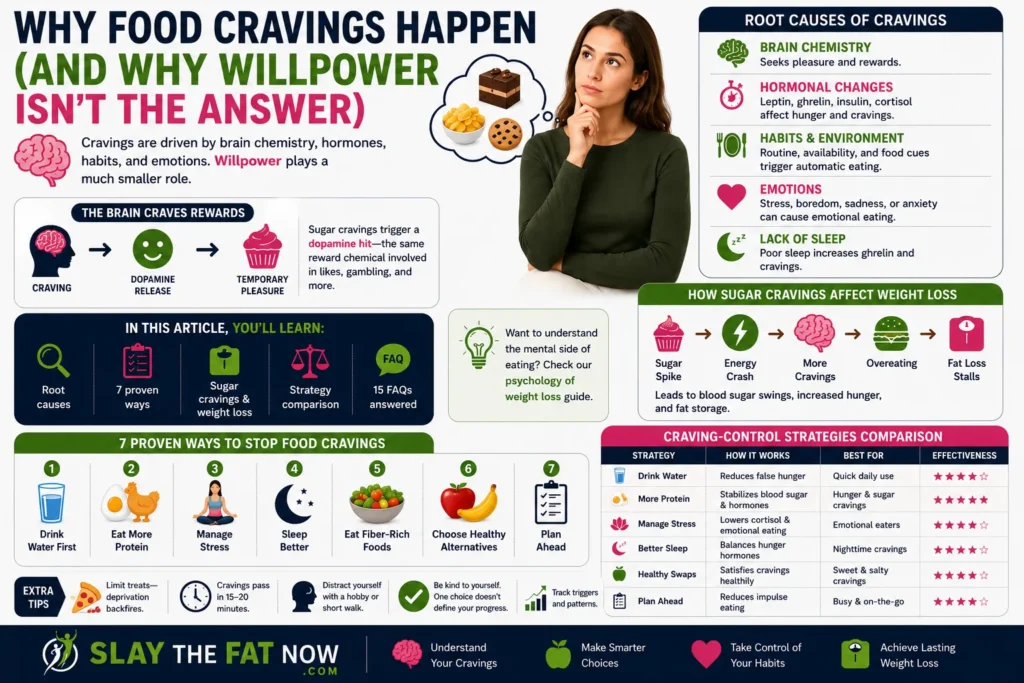
Food cravings are intense urges to eat a specific food usually something high in sugar, fat, or salt. They’re driven by a combination of brain chemistry, hormones, habits, and emotions. Willpower plays a much smaller role than most people think.
When you crave sugar, for example, your brain is often seeking a dopamine hit the same reward chemical triggered by things like social media likes or gambling. That’s why stopping food cravings requires strategy, not just discipline.
In this article, you’ll learn:
- The root causes of food cravings
- 7 science-backed methods to stop them
- How sugar cravings affect weight loss specifically
- A comparison of craving-control strategies
- 15 FAQs answered clearly
Want to understand the mental side of eating? Read our deep-dive on the psychology of weight loss for context.
Why Controlling Food Cravings Is the Missing Link in Your Weight Loss
Most diets fail not because people don’t know what to eat it’s because cravings derail them. Here’s what happens when you get a handle on your cravings:
- Fewer calories consumed without feeling deprived
- Better blood sugar control, which reduces energy crashes
- Improved mood and focus throughout the day
- Less emotional eating in the evenings
- Sustainable weight loss not just short-term restriction
Learning how to deal with food cravings is, in many ways, the foundation of any successful fat-loss plan. It’s covered extensively in our guide on building a healthy relationship with food.
What the Research Says About Food Cravings and Weight Loss
Key Statistics:
- Nearly 97% of women and 68% of men report experiencing food cravings, according to research published in the journal Appetite (NCBI).
- Sugar cravings are directly linked to blood glucose fluctuations when blood sugar drops, the brain signals urgency for quick-energy foods.
- A NIDDK study found that poor sleep increases hunger hormones (ghrelin) by up to 24%, making cravings significantly harder to resist.
- Protein-rich meals suppress the hunger hormone ghrelin more effectively than high-carb or high-fat meals, per research in the American Journal of Clinical Nutrition.
- Stress raises cortisol, which directly triggers cravings for high-fat, high-sugar foods a survival mechanism that backfires in modern life.
These aren’t random cravings. They’re neurological and hormonal responses which means they respond to neurological and hormonal solutions, not just “eating less.”
Real-World Example: How Sarah Stopped Her 10 PM Sugar Cravings
Sarah, a 38-year-old teacher from Ohio, came to us after struggling with nightly sugar cravings for years. Every evening around 10 PM, she’d destroy any progress she made during the day with cookies or ice cream. She wasn’t hungry she was exhausted and stressed from work.
Here’s what changed for her:
- She added 30g of protein to her lunch (chicken, Greek yogurt, or eggs)
- She replaced late-night TV with a 20-minute walk after dinner
- She started going to bed 45 minutes earlier
- She kept dark chocolate (85%+) available as a planned indulgence
Within 3 weeks, her 10 PM cravings dropped by about 70%. She didn’t use any supplements or special diets just lifestyle adjustments that fixed the root cause.
This is the pattern we see repeatedly. Cravings are almost always a symptom. Fix the cause, and the craving fades.
Ready to Finally Stop Food Cravings for Good?
Get our free weight loss action plan built around real strategies that address the root cause of cravings, not just symptoms.Get My Free Plan →
Expert Insight: What Actually Works to Stop Food Cravings
After working with hundreds of people struggling with weight loss, here’s what becomes clear very quickly: most craving-management advice is backwards.
People are told to “resist” cravings. But resistance requires willpower, which is a finite resource that depletes across the day. By evening, after dozens of small decisions, willpower is essentially gone.
What actually works is reducing the need for willpower in the first place through smart meal timing, protein intake, stress management, and environment design.
Top Craving Patterns We See (And Their Real Causes)
- Sugar cravings after lunch → Blood sugar crash from a high-carb lunch
- Late-night snacking → Sleep deprivation or emotional dysregulation
- Salt cravings → Often a sign of stress or dehydration
- Chocolate cravings → Can be linked to magnesium deficiency or low mood
- Constant hunger on a diet → Not enough protein or fiber; calories too low
The all-or-nothing mindset also plays a huge role one slip leads to a full binge. We cover this in detail in our piece on the all-or-nothing mindset and weight loss.
Reality Check: Myths About Food Cravings You Need to Stop Believing
Myth #1: “Cravings mean your body needs that food.”
Reality: Your body doesn’t “need” Oreos. Cravings are driven by habit and reward circuitry, not nutritional deficiency (with rare exceptions like iron or magnesium).
Myth #2: “Just avoid the food entirely and you’ll stop craving it.”
Reality: Complete restriction often makes cravings more intense. Studies show that “forbidden food” thinking increases obsession, not decreases it.
Myth #3: “Cravings are a sign your diet is working.”
Reality: Persistent, intense cravings often signal that your diet is too restrictive or imbalanced. Sustainable diets reduce cravings over time they don’t maintain them.
Myth #4: “Craving-suppressant supplements are the answer.”
Reality: Most supplements have weak or no evidence for reducing cravings. Lifestyle factors sleep, protein, hydration, stress have far stronger effects.
7 Proven Ways to Deal with Food Cravings (Step-by-Step)
1. Drink Water First
Dehydration is routinely mistaken for hunger. Before acting on a craving, drink 12–16 oz of water and wait 10 minutes. This simple step eliminates a surprising number of “cravings.”
2. Eat More Protein at Every Meal
Protein is the most satiating macronutrient. Aim for at least 25–30g of protein per meal eggs, chicken, Greek yogurt, cottage cheese, or legumes. Higher protein intake directly reduces cravings and late-night snacking, per multiple clinical studies.
3. Never Skip Breakfast (Especially Protein-Rich)
A high-protein breakfast sets your blood sugar and hunger hormones on a stable path for the day. Skipping breakfast leads to larger blood sugar swings and stronger afternoon sugar cravings for weight loss situations.
4. Manage Stress Actively
Stress is one of the biggest craving triggers. Cortisol directly increases appetite for high-calorie foods. Daily stress management even 10 minutes of deep breathing, walking, or journaling measurably reduces emotional eating.
5. Get 7–9 Hours of Sleep
Sleep deprivation raises ghrelin (hunger hormone) and lowers leptin (satiety hormone). One poor night of sleep can increase calorie intake the next day by 300–500 calories mostly from high-sugar, high-fat foods.
6. Identify Your Craving Triggers
Keep a simple log: when did the craving hit? What were you doing? What were you feeling? Most people discover 2–3 predictable triggers (boredom, stress, certain times of day, specific environments). Once you see the pattern, you can interrupt it.
7. Plan a Healthy “Pleasure Food”
Deprivation backfires. Instead of eliminating all indulgences, plan for a small, satisfying one daily dark chocolate, a handful of nuts, or a piece of fruit with nut butter. Planned treats reduce bingeing by removing the “last supper” mentality.
For a broader look at how mindset drives eating behavior, check our article on body image and weight loss.
Craving Control Strategies: Comparison at a Glance
| Strategy | Effectiveness | Time to Result | Difficulty | Best For |
|---|---|---|---|---|
| Drink water first | ⭐⭐⭐ | Immediate | Very Easy | Quick craving impulse |
| High-protein meals | ⭐⭐⭐⭐⭐ | 1–3 days | Easy–Moderate | All-day craving control |
| Improve sleep quality | ⭐⭐⭐⭐⭐ | 2–7 days | Moderate | Late-night snacking |
| Stress management | ⭐⭐⭐⭐ | 1–2 weeks | Moderate | Emotional eating |
| Craving trigger journaling | ⭐⭐⭐⭐ | 1–2 weeks | Easy | Habit-based cravings |
| Planned indulgences | ⭐⭐⭐⭐ | Immediate | Easy | Restriction bingeing |
| Craving supplements | ⭐⭐ | Variable | Easy | Minor support only |
Frequently Asked Questions: How to Deal with Food Cravings
1. How long do food cravings last if you ignore them?
Most cravings peak and fade within 15–20 minutes. Distraction, hydration, or a brief walk are enough to outlast them in most cases.
2. Why do I crave sugar all the time?
Constant sugar cravings usually signal blood sugar instability, insufficient protein intake, poor sleep, or high stress levels. Addressing these root causes not suppressing the craving is the solution.
3. Does drinking water really help stop food cravings?
Yes. Dehydration is frequently misinterpreted as hunger. Drinking 12–16 oz of water and waiting 10 minutes eliminates a significant number of false craving signals.
4. What foods stop cravings naturally?
High-protein foods (eggs, Greek yogurt, chicken), fiber-rich foods (legumes, vegetables), and healthy fats (avocado, nuts) are the most effective at reducing cravings naturally by stabilizing blood sugar and increasing satiety hormones.
5. How do I stop sugar cravings for weight loss specifically?
Focus on eliminating blood sugar spikes: eat protein with every meal, reduce refined carbs, avoid skipping meals, improve sleep, and add planned low-sugar treats so you’re not feeling deprived.
6. Can stress cause food cravings?
Absolutely. Cortisol the primary stress hormone directly increases appetite and cravings for high-fat, high-sugar comfort foods. Stress management is essential craving management.
7. Is it normal to crave food at night?
Very common, yes. Nighttime cravings are usually driven by sleep deprivation, emotional fatigue, habitual patterns, or not eating enough earlier in the day. They can be reduced significantly with the right daytime eating strategy.
8. Why do I crave junk food when dieting?
Restrictive diets trigger neurological and hormonal responses that increase cravings. The “forbidden fruit” effect makes restricted foods more mentally appealing. Flexible dieting with planned indulgences typically reduces this effect.
9. Does exercise reduce food cravings?
Yes. Moderate aerobic exercise temporarily suppresses appetite and improves mood, reducing emotional eating. It also improves sleep quality, which further reduces cravings.
10. What vitamins or minerals help with food cravings?
Magnesium deficiency is linked to chocolate cravings. Chromium can help with blood sugar stability. Zinc deficiency can affect taste perception. However, these are supporting factors not primary solutions for most people.
11. How do I stop emotional eating and food cravings?
Identify the emotion driving the craving (boredom, stress, loneliness), then create a competing behavior a walk, a call to a friend, journaling, or a brief breathing exercise. Emotional eating responds much better to behavior substitution than to restriction.
12. How does sleep affect food cravings?
Poor sleep increases ghrelin (hunger hormone) and decreases leptin (fullness hormone), making everything feel more craving-worthy. Even one poor night’s sleep can significantly increase appetite and cravings the next day.
13. Can eating more often reduce cravings?
For some people, eating 4–5 smaller meals prevents the extreme blood sugar drops that trigger intense cravings. For others, intermittent fasting reduces overall appetite. It depends on your individual hunger pattern experiment to find what works.
14. Are food cravings a sign of nutritional deficiency?
Occasionally ice cravings can signal iron deficiency (pica), and persistent salt cravings may indicate adrenal issues. But for most common cravings (sugar, chocolate, chips), nutritional deficiency is rarely the primary cause.
15. How long does it take to stop food cravings after changing your diet?
Most people notice a significant reduction in cravings within 2–4 weeks of consistent dietary changes, improved sleep, and stress management. Sugar cravings in particular can reduce noticeably within 7–10 days of cutting refined sugar.
Take Control of Your Cravings Starting Today
You don’t need more willpower. You need a smarter system. Explore our full library of weight loss guides and build the plan that actually fits your life.Start My Weight Loss Journey →
Final Thoughts
Learning how to deal with food cravings isn’t about becoming a robot who never wants to eat pizza. It’s about understanding what’s driving those urges and having practical tools to respond to them intelligently.
Protein, sleep, stress management, hydration, and self-awareness are not glamorous. But they work. And unlike willpower, they don’t run out.
Start with one strategy this week. Notice what happens. Then add another. Progress builds, and cravings lose their grip not through force, but through understanding.
Sources: NCBI – Food Cravings and the Brain | NIDDK – Weight Management Research
