 Skip to content
7 Powerful Steps to Build a Healthy Relationship with Food (And Finally Lose Weight for Good)
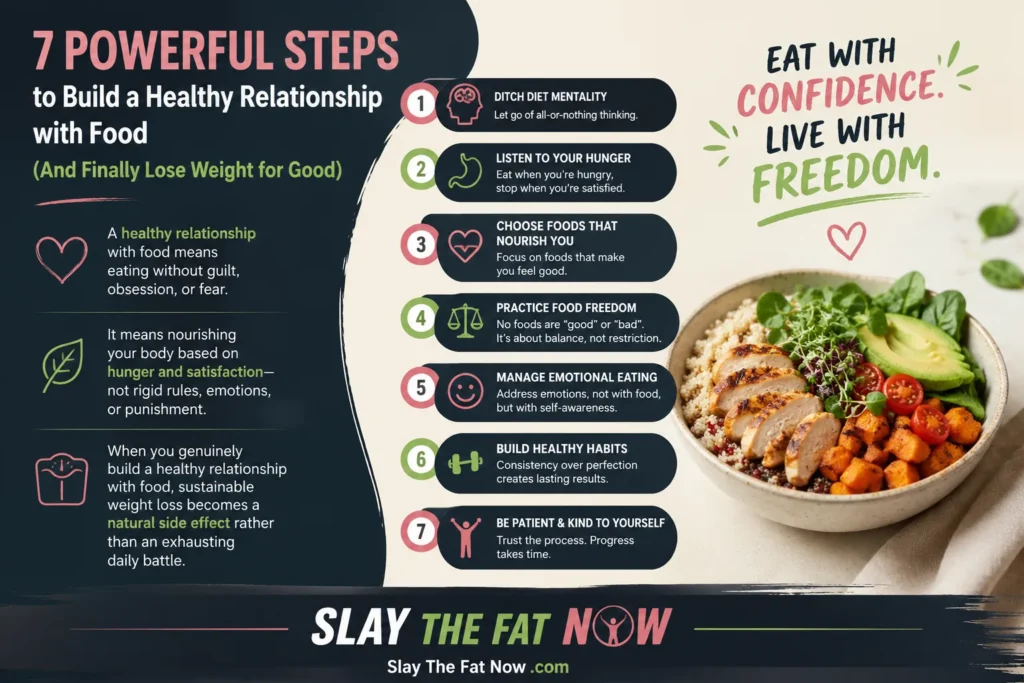
A healthy relationship with food means eating without guilt, obsession, or fear. It means nourishing your body based on hunger and satisfaction not rigid rules, emotions, or punishment. When you genuinely build a healthy relationship with food, sustainable weight loss becomes a natural side effect rather than an exhausting daily battle.
You Are Not Broken You Have Just Been Given Terrible Advice
Here is a hard truth most diet programs will never admit: the reason you cannot stop thinking about food is not a willpower problem. It is a relationship problem.
You have spent years counting calories, skipping meals, labeling foods as good or bad, and then feeling like a complete failure every time you ate something off plan. You have been told to eat less and move more as if you simply lacked the discipline to do it. You internalized that message, and it destroyed something important your trust in your own body.
The good news is that you can rebuild that trust. And when you do, something remarkable happens you stop obsessing over food, cravings quiet down, emotional eating loses its grip, and your body naturally moves toward a healthier weight. That is not wishful thinking it is what the research consistently shows.
What You Will Learn in This Guide
This guide breaks down exactly what a healthy relationship with food looks like, why so many Americans fall into patterns of food obsession and chronic dieting, and the specific steps you can take starting today to rewire your entire mindset around eating.
Whether you have been chasing weight loss for years, are exploring intuitive eating for weight loss, or simply want to stop obsessing over food and enjoy your meals again this guide is for you. For deeper support and practical resources, visit Slay the Fat Now a platform built specifically for people ready to leave diet culture behind for good.
Why a Healthy Relationship with Food Is the Foundation of Lasting Weight Loss
Most people treat the food relationship as a secondary concern. They want the meal plan, the macro breakdown, the food list. But here is what happens when you fix the relationship first:
- You eat less without consciously trying, because you are responding to genuine hunger rather than rules or emotions.
- You stop bingeing after periods of restriction, because you are no longer restricting in the first place.
- You naturally choose more nutritious foods, because food stops functioning as a reward or a punishment.
- You maintain your weight long-term, because the changes you make are genuinely sustainable.
- Your mental health improves, because food guilt and body shame are exhausting and you finally put them down.
Healing your relationship with food does not delay weight loss. It creates the conditions under which lasting weight loss actually becomes possible.
What the Research Says: 5 Eye-Opening Statistics on Food Obsession and Dieting in America
This is not a feeling or a philosophy. The data backs it up clearly.
- 45 million Americans go on a diet each year, spending over $33 billion on weight loss products annually yet national obesity rates continue to climb. (Source: Boston Medical Center)
- Approximately 65% of dieters return to their pre-diet weight within three years. Calorie restriction alone does not produce lasting results for most people.
- A study published in Appetite found that people who practice intuitive eating have lower BMIs, less emotional eating, and significantly better body satisfaction compared to chronic dieters.
- People caught in restrict-binge cycles are five times more likely to report constant food obsession, disordered eating episodes, and long-term weight cycling than non-dieters.
- The CDC reports that stress, anxiety, and depression are among the most significant drivers of overeating in American adults confirming that emotional wellbeing and food behavior are inseparable.
The pattern is unmistakable: restriction creates obsession, obsession drives overeating, overeating triggers guilt, and guilt resets the cycle. Breaking out requires a fundamentally different approach.
| Ready to Break the Diet Cycle? Discover evidence-based strategies at slaythefatnow.com Start Your Transformation Today |
A Real-Life Scenario: From Chronic Dieter to Genuine Food Freedom
Meet Sarah. She is 38 years old, lives in Ohio, and has been dieting since she was 16. Keto, Weight Watchers, intermittent fasting, 1,200-calorie plans she has done them all, and she has lost weight on every single one. But it never stays off.
When she is on plan, Sarah thinks about food constantly. She meal preps with military precision, tracks every bite, and white-knuckles her way through social events. When she slips a slice of birthday cake, a plate of fries at a work lunch the guilt is immediate and crushing. She eats more. Then more again. Then promises herself she will start fresh on Monday.
Sarah’s problem is not a lack of discipline. Her entire relationship with food is built on rules, restriction, and punishment. When she finally stopped dieting and started healing her food relationship honoring hunger cues, removing forbidden foods, learning to trust her body again something shifted that no diet had ever produced.
She lost 22 pounds over 14 months. Not quickly by diet-culture standards, but it stayed off. More importantly, she stopped thinking about food around the clock. The mental freedom she gained, she says, was worth far more than the number on the scale.
What Actually Works: Patterns Seen Across Hundreds of Weight Loss Journeys
After working with many people trying to lose weight sustainably, certain patterns become impossible to ignore.
People Who Succeed Long-Term Consistently Do These Things
- They stop labeling foods as morally good or bad and instead focus on how specific foods make them feel physically and mentally.
- They eat when they are hungry and stop when they are comfortably satisfied not when the plate is empty or the timer goes off.
- They have made peace with occasional treats and can include them without the meal turning into a binge.
- They move their bodies because it feels good, not because they are punishing themselves for what they ate.
- They have separated their self-worth from the number on the scale and no longer let a bad weigh-in ruin their entire day.
People Who Keep Struggling Share These Same Patterns
- They live in all-or-nothing mode either perfectly on plan or completely off it, with no sustainable middle ground.
- They use food to manage stress, boredom, loneliness, and anxiety rather than developing other coping strategies.
- They do not trust their body and believe they need strict external rules to prevent themselves from overeating.
- They have dieted so long that they have completely lost touch with genuine physical hunger and fullness signals.
The solution is not finding a better diet plan. It is unlearning the diet mentality entirely and deliberately rebuilding a healthy relationship with food from the ground up.
Reality Check: 4 Common Myths About Food Relationships That Are Holding You Back
Myth 1: Intuitive Eating Means Eating Whatever You Want, Whenever You Want
Intuitive eating for weight loss gets dismissed because people assume it is a green light for unlimited junk food. It is not. Intuitive eating means learning to listen to your body and your body, when it is no longer in a state of chronic deprivation, naturally gravitates toward balance. Most people discover they want vegetables, protein, and whole foods more often, not less, once restriction ends.
Myth 2: You Have to Love Your Body Before You Can Change It
Body acceptance is valuable, but you do not need to feel love for your body to treat it with respect. You simply need to stop punishing it. Many people lose weight not because they loved themselves into change, but because they finally stopped hating themselves into starvation.
Myth 3: This Approach Is Too Slow and I Need Faster Results
Rapid weight loss is almost always followed by rapid weight regain. The research on this point is overwhelming. Sustainable loss half a pound to two pounds per week built on a foundation of a genuine healthy relationship with food will outlast every crash diet you have ever tried.
Myth 4: Building a Healthy Food Relationship Means Giving Up the Foods You Love
Deprivation is the single biggest enemy of a healthy relationship with food. Learning to include all foods including treats, comfort foods, and social foods in a balanced, guilt-free way is precisely what prevents the bingeing and emotional eating patterns that derail most diets.
7 Practical Steps to Build a Healthy Relationship with Food Starting Now
Step 1: Drop the All-or-Nothing Mindset Immediately
One slice of pizza does not ruin your progress. One salad does not make you healthy. Lasting change lives in the sustainable middle ground. Begin catching yourself when you think in extremes and gently redirect toward a more balanced perspective.
Step 2: Reconnect with Your Actual Hunger and Fullness Signals
Use a simple internal hunger scale of one to ten, where one is ravenously hungry and ten is uncomfortably stuffed. Aim to start eating around a three or four and stop at a six or seven. This sounds straightforward, but many chronic dieters have been ignoring their body’s signals for so long that they require real practice to recognize them again.
Step 3: Remove Moral Labels From All Foods
When you label a food as bad or sinful, eating it triggers guilt. Guilt triggers more eating. Instead, practice neutral language: this food is lower in fiber and protein rather than this food is terrible. Removing the emotional charge from food choices changes the entire dynamic of eating.
Step 4: Identify Your Emotional Eating Triggers
Food is commonly used to soothe stress, boredom, loneliness, or anxiety. Start keeping a simple feelings journal not a calorie log noting what you were experiencing emotionally before you ate. Over time, clear patterns emerge that make emotional eating far easier to address. For practical tools on this, visit our guide at Slay the Fat Now.
Step 5: Practice Mindful Eating at Every Meal
Mindful eating is not about slowing down your chewing it is about eating with your full attention. Put your phone down. Sit at a table. Notice the flavors, textures, and aromas of your food. Eating with genuine awareness naturally reduces overeating and dramatically increases meal satisfaction.
Step 6: Stop Treating Exercise as Punishment for Eating
If your only motivation to exercise is to burn off what you ate, movement becomes something you dread. That mindset breeds resentment and ultimately leads to quitting. Explore forms of movement you genuinely enjoy. Check out our beginner-friendly movement guides at Slay the Fat Now to find activities that feel like a gift to your body, not a tax on your appetite.
Step 7: Get Support Healing a Food Relationship Is Real Work
Rebuilding your relationship with food after years of dieting is not something you have to figure out alone. Working with a registered dietitian, a therapist who specializes in eating behaviors, or an evidence-based coaching program can cut the timeline significantly and help you avoid the pitfalls that derail solo attempts.
Diet Mentality vs. Healthy Food Relationship: A Side-by-Side Comparison
| Diet Mentality | Healthy Food Relationship |
| Rules-based eating | Hunger-based eating |
| Foods are good or bad | All foods can fit in balance |
| Weight loss through restriction | Weight loss as a natural side effect |
| Exercise as punishment | Movement as self-care |
| Guilt and shame after eating | Satisfaction and neutrality after eating |
| All-or-nothing thinking | Progress over perfection |
| Short-term results, long-term regain | Sustainable change that lasts |
| Constant food obsession | Mental freedom from food chatter |
Frequently Asked Questions About Building a Healthy Relationship with Food
Q1: What does a healthy relationship with food actually look like?
A healthy relationship with food means eating in response to genuine physical hunger, enjoying your meals without guilt or anxiety, seeing all foods as neutral rather than moral choices, and being able to include treats occasionally without it spiraling into a binge. You feel in control of food not controlled by it.
Q2: Can I still lose weight while building a healthy relationship with food?
Yes, and research consistently supports this. People who heal their food relationship and practice intuitive eating often achieve more sustainable weight loss than those on strict diets. The key difference is that the weight comes off as a natural byproduct of balanced eating rather than a desperate, exhausting restriction effort.
Q3: How do I stop obsessing over food?
Food obsession almost always originates from restriction. When you remove forbidden foods and allow yourself to eat satisfying, balanced meals without guilt, the constant mental chatter around food tends to quiet significantly within weeks. The first step is removing the restriction and practicing genuine permission to eat.
Q4: Is intuitive eating effective for weight loss?
Intuitive eating for weight loss is backed by a growing body of research. Studies have found that intuitive eaters have lower average BMIs and less emotional eating than chronic dieters. It works best when combined with body awareness and self-compassion practices. Read more at Slay the Fat Now.
Q5: How long does it take to build a healthy relationship with food?
Most people notice a meaningful, sustained shift within two to four months of consistent practice. Healing years of diet mentality takes time and patience, but the changes, once internalized, tend to last a lifetime rather than unraveling after a few weeks like most diets do.
Q6: What are the signs of an unhealthy relationship with food?
Key signs include constant preoccupation with food and calories, intense guilt or shame after eating, frequent cycles of restriction followed by bingeing, using food to manage emotions rather than hunger, avoiding social situations that involve eating, and feeling completely out of control around specific foods.
Q7: What is the difference between intuitive eating and mindful eating?
Intuitive eating is a comprehensive framework centered on honoring hunger, rejecting diet culture, and rebuilding body trust. Mindful eating is a specific practice of paying full attention during meals. They complement each other powerfully, and both support building a genuine, lasting healthy relationship with food.
Q8: Can emotional eating be overcome?
Absolutely. Emotional eating is not a character flaw it is a learned coping mechanism developed over years of responding to difficult emotions with food. With growing self-awareness, alternative coping strategies, and sometimes professional support, most people can significantly reduce emotional eating and regain a real sense of control.
Q9: Do I need to give up certain foods to have a healthy relationship with food?
No. In fact, giving up specific foods typically makes them more mentally powerful and harder to eat in moderation. A healthy relationship with food includes all foods. The goal is not eliminating what you love it is learning to eat everything in a way that feels balanced, satisfying, and free of guilt.
Q10: Is it normal to think about food constantly?
Constant food obsession is extremely common among chronic dieters, but it is not an inevitable part of life. It is almost always a direct symptom of restriction or an unaddressed emotional relationship with food. Most people find that when they stop restricting and heal their food relationship, the mental noise around food drops dramatically.
Q11: How do I tell the difference between real hunger and emotional hunger?
Try a simple mental test sometimes called the apple test: ask yourself honestly whether you would eat a plain piece of fruit right now. If yes, you are likely physically hungry. If you would only eat your specific craving item, you are probably eating in response to an emotion. Pause, check in with how you are feeling, and decide from there.
Q12: What role does stress play in overeating and weight gain?
Cortisol the primary stress hormone directly triggers cravings for high-fat and high-sugar foods and encourages the body to store fat. Chronic stress is one of the leading drivers of overeating in American adults. Managing stress through quality sleep, consistent movement, and mindfulness practices has a direct, measurable impact on food behavior and body composition.
Q13: Do I need to track calories to lose weight?
Calorie tracking can be a useful short-term awareness tool for some people, but for many it deepens food obsession and reinforces disordered thinking patterns. Research shows that people who successfully build a healthy relationship with food often lose meaningful weight without ever counting a single calorie, relying instead on hunger and fullness cues.
Q14: How does social media affect my relationship with food and my body?
Diet culture content on social media before-and-after transformation photos, extreme what-I-eat-in-a-day videos, clean eating challenges reinforces unrealistic body standards and constant comparison. Actively curating your social media feed to include body-neutral, evidence-based, and compassionate content can make a surprisingly significant difference to your food mindset over time.
Q15: When should I seek professional help for my relationship with food?
If you experience frequent bingeing or purging episodes, extreme restriction, significant emotional distress around eating, or behaviors that are interfering with your daily life, please seek support from a registered dietitian or therapist who specializes in eating behaviors. The National Eating Disorders Association (NEDA) offers a free helpline and connects you to specialized professionals who can help.
Ready to Stop Obsessing Over Food and Start Truly Living?
A healthy relationship with food is not a luxury or a side goal. It is the single most powerful foundation you can build if you want weight loss that actually lasts. When you stop fighting your food and your body and start working with them instead, everything changes your weight, your energy, your mood, and your freedom.
You have already tried the meal plans. You have done the calorie tracking. You have white-knuckled your way through restriction enough times to know it does not work. Now it is time to try something that actually lasts.
| Visit slaythefatnow.com for free guides, expert strategies, and a community of real people on the same journey. Your relationship with food and with yourself deserves better. Start today. |
Explore More Resources on Slay the Fat Now
- Weight Loss Mindset Strategies — Rewire how you think about your body and food
- How to Stop Emotional Eating — Practical tools to break the emotional eating cycle for good
- Beginner’s Guide to Intuitive Eating — The 10 core principles and how to apply them to real life
- Sustainable Weight Loss Without Dieting — Evidence-based approaches that produce results that actually stick
