 Skip to content
Slaythefatnow.com · Women’s Health · Weight Loss
7 Proven Ways to Lose Weight After 50 for Women (That Actually Work in 2026)
To lose weight after 50 as a woman, focus on eating more protein, strength training at least 3x per week, managing cortisol and estrogen shifts, prioritizing sleep, and cutting ultra-processed foods. These five pillars address the real drivers of weight gain over 50 not just calories and deliver sustainable fat loss after 50.
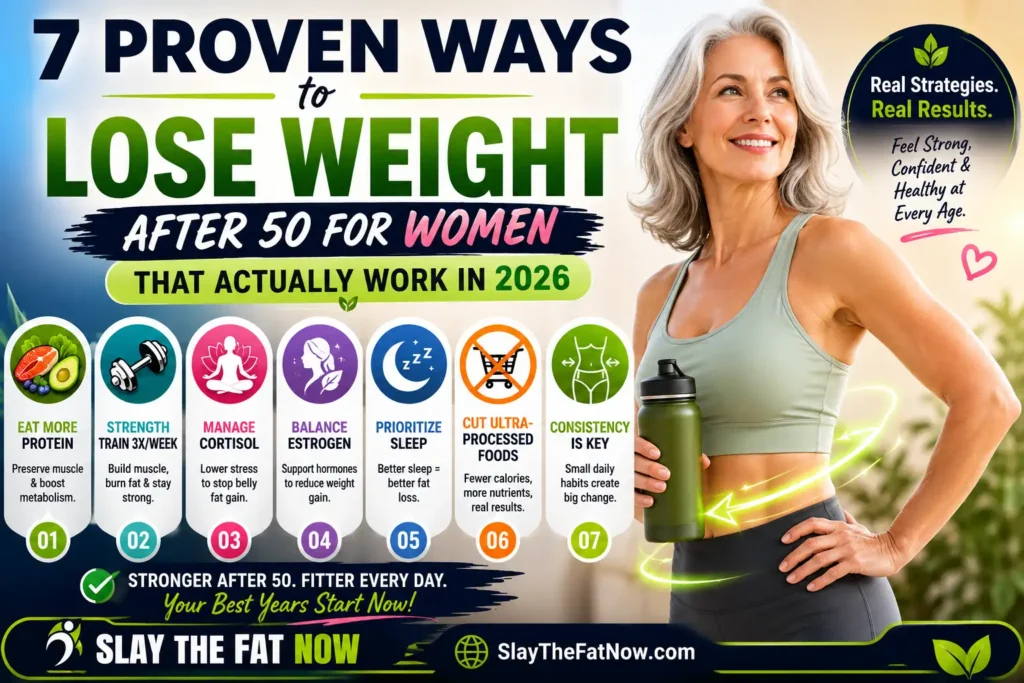
You’re Doing Everything Right So Why Can’t You Lose Weight After 50?
You’ve tried cutting calories. You’ve walked more. Maybe you even went back to the gym. But the scale barely moves and when it does, the weight creeps back within weeks.
Here’s the frustrating truth most articles won’t tell you: the same strategies that worked at 35 will not work at 55. Your body has changed at a hormonal, metabolic, and cellular level. Trying to “eat less and move more” without understanding those changes is like trying to fix a car engine with a spatula.
This isn’t about willpower. It’s about biology and once you understand what’s driving weight gain after 50, the path forward becomes surprisingly clear.
What’s Really Happening to Your Body After 50
Learning how to lose weight after 50 as a woman starts with understanding what changed. Three major forces hit simultaneously around menopause and the years that follow:
1. Estrogen Drops and Fat Redistributes
As estrogen declines, your body shifts fat storage from the hips and thighs to the abdomen. This visceral fat isn’t just cosmetic it’s metabolically active and harder to shift. It also raises inflammation markers, making it easier to gain and harder to lose.
2. Muscle Mass Declines (Sarcopenia)
Women lose roughly 3–8% of their muscle mass per decade after 30, and the rate accelerates after 50. Less muscle means a lower resting metabolic rate so you burn fewer calories at rest than you used to, even if your habits haven’t changed.
3. Insulin Sensitivity Drops
Midlife hormonal changes reduce how efficiently your cells respond to insulin. This makes it easier for carbohydrates even healthy ones to trigger fat storage rather than energy use. Managing blood sugar becomes central to fat loss after 50.
Knowing these three drivers helps you stop blaming yourself and start targeting the right levers. You’ll learn all of them in this article and find more targeted guides at our menopause weight loss resource.
Why This Time in Your Life Is Actually an Advantage
Before we get tactical, here’s something worth sitting with women over 50 who successfully lose weight keep it off at higher rates than younger women. Why? Lifestyle stability, self-knowledge, and motivation rooted in health not appearance alone.
3×More likely to sustain weight loss when health is the primary motivation vs. aesthetics
1–2 lbs. Safe and sustainable weekly weight loss target for women over 50
40% Reduction in cardiovascular risk with just 5–10% of body weight lost in this age group
Losing weight in your 50s also delivers outsized health returns: better bone density, lower diabetes risk, improved joint health, deeper sleep, and sharper cognition. The stakes and the payoff are higher than they’ve ever been.
What the Research Says About Weight Loss Over 50
This isn’t guesswork. Here’s what the evidence shows:
- A National Institutes of Health study found that modest calorie restriction combined with protein optimization significantly improved body composition in adults over 50 without sacrificing lean muscle mass.
- Research published in Menopause journal found that resistance training was more effective than aerobic exercise alone for reducing abdominal fat in postmenopausal women.
- The CDC’s healthy weight guidelines confirm that even a 5–10% reduction in body weight produces significant improvements in blood pressure, blood sugar, and cholesterol in midlife adults.
- Sleep deprivation (less than 7 hours) raises ghrelin (hunger hormone) by up to 28% a factor disproportionately affecting women in perimenopause and menopause due to night sweats and sleep disruption.
The data is clear: weight loss over 50 is absolutely achievable but it requires a different strategy than the one you used at 30.
Real Example: How Sandra Lost 22 lbs at 54
Sandra, a 54-year-old teacher from Ohio, had been carrying an extra 35 lbs for nearly five years. She’d tried every diet keto, intermittent fasting, calorie counting. Nothing stuck. At her lowest point, she told her doctor she was eating “barely 1,200 calories a day” but still gaining weight.
The turning point came when she stopped chasing calorie restriction and started focusing on three things: eating 120g of protein daily, lifting weights three times a week, and getting 7.5 hours of sleep consistently. She also cut out nightly wine (two glasses, which added up to 300 calories and disrupted her sleep architecture).
In 9 months, Sandra lost 22 lbs., dropped two clothing sizes, and more importantly her fasting blood sugar normalized, and her joint pain nearly disappeared.
A composite of client experiences at SlayTheFatNow.com
Sandra’s story isn’t unique. It’s what happens when you stop fighting your biology and start working with it.
Ready to Build Your Personal Fat-Loss Plan?
Our free guide walks you through the exact steps women over 50 need to lose fat, protect muscle, and feel energized without starving or killing yourself at the gym. Get the Free Guide →
Expert Insight: What Moves the Needle for Fat Loss After 50
After working with hundreds of women navigating midlife weight loss, here are the patterns that consistently separate women who succeed from those who spin their wheels:
Pattern #1: They Eat More Protein, Not Less Food
Most women over 50 are chronically under-eating protein. The goal should be 0.7–1g of protein per pound of body weight. Protein preserves muscle increases satiety, and has a higher thermic effect meaning your body burns more calories just digesting it.
Pattern #2: They Lift Weights Before They Do Cardio
Cardio burns calories in the moment. Strength training raises your metabolic rate for 24–48 hours after the session. Women who make resistance training their primary exercise and add cardio as a supplement lose more fat and keep more muscle than those who do the reverse.
Pattern #3: They Track Sleep as Seriously as Diet
Every hour of sleep under 7 hours increases hunger hormones, reduces willpower, and impairs the body’s ability to burn fat vs. muscle during a calorie deficit. Sleep isn’t recovery. Sleep is active fat loss.
Pattern #4: They Stop Eating at Night
A consistent 12–14 hour overnight fast (e.g., done eating by 7 PM, not eating until 7–9 AM) significantly improves insulin sensitivity without the extreme restriction of intermittent fasting protocols. This one change alone helps many women break through plateaus.
Reality Check: 5 Myths About Weight Loss Over 50 to Stop Believing
❌ MYTH: “My metabolism is completely broken after 50”
✅ TRUTH: Research shows metabolism doesn’t dramatically change between ages 20–60. What changes is muscle mass. Rebuild the muscle, and metabolism follows.
❌ MYTH: “I need to eat 1,200 calories to lose weight”
✅ TRUTH: Eating too little signals starvation mode your body holds fat and burns muscle. Most women over 50 need 1,600–1,900 calories to lose fat while preserving muscle.
❌ MYTH: “Cardio is the best way to lose weight after 50”
✅ TRUTH: Strength training consistently outperforms cardio for long-term fat loss and metabolic health in postmenopausal women.
❌ MYTH: “It’s too late weight loss gets impossible after menopause”
✅ TRUTH: Multiple clinical trials show women in their 50s, 60s, and 70s successfully lose significant weight and maintain it with the right approach.
❌ MYTH: “Supplements will fix my slow fat loss”
✅ TRUTH: No supplement overrides poor sleep, a high-sugar diet, or muscle loss. Supplements are extras not foundations.
7 Practical Steps: How to Lose Weight After 50 as a Woman
Here’s your action plan. These aren’t tips they’re the foundational shifts that work specifically for weight loss over 50.
- 1Prioritize Protein at Every MealAim for 25–35g of protein per meal eggs, Greek yogurt, chicken, salmon, cottage cheese, or legumes. This preserves muscle and keeps hunger controlled for hours.
- 2Strength Train 3x Per WeekUse compound movements: squats, deadlifts, rows, presses. You don’t need heavy weights consistency and progressive overload matter more. Even bodyweight training delivers results.
- 3Walk 8,000–10,000 Steps DailyLow-intensity movement throughout the day (NEAT) burns more total calories than gym sessions for most women. It also lowers cortisol a key driver of belly fat after 50.
- 4Eliminate Ultra-Processed FoodsPackaged snacks, fast food, seed-oil-heavy products, and sweetened drinks drive inflammation and insulin spikes. Replace them with whole, single-ingredient foods wherever possible.
- 5Protect Your Sleep7–8.5 hours of sleep is non-negotiable. Prioritize sleep hygiene: dark room, cool temperature, no screens 60 minutes before bed. If night sweats are disrupting sleep, speak to your doctor about hormonal support.
- 6Manage Stress ActivelyChronic stress raises cortisol, which directly promotes abdominal fat storage. Daily practices that work: 10-minute walks outside, breathwork, yoga, or simply leaving your phone in another room for an hour.
- 7Track What Matters (Not Just Calories)Track protein intake, sleep hours, strength progress, and waist measurement not just calories or scale weight. The scale often lags because you’re building muscle while burning fat. Progress photos and measurements tell the real story.
Comparing the Best Approaches for Weight Loss Over 50
Not all diet and exercise strategies work equally for women over 50. Here’s an honest comparison:
| Approach | Fat Loss | Muscle Protection | Sustainability | Best For |
|---|---|---|---|---|
| Calorie Restriction Only | Moderate | Poor | Low | Short-term jumpstart only |
| High-Protein + Strength Training | High | Excellent | High | Long-term fat loss & metabolism |
| Keto Diet | High (initially) | Moderate | Moderate | Insulin resistance, blood sugar control |
| Mediterranean Diet | Moderate–High | Good | Very High | Heart health + sustainable fat loss |
| Cardio-Only Exercise | Low–Moderate | Poor | Moderate | Cardiovascular health (not primary fat loss) |
| Intermittent Fasting (16:8) | Moderate | Moderate | Variable | Insulin sensitivity; not ideal for all women |
The verdict: For most women asking how to lose weight after 50, the combination of a high-protein Mediterranean-style diet with strength training as the primary exercise form delivers the best results both in the short and long term.
Frequently Asked Questions: How to Lose Weight After 50 (Woman)
Is it really possible to lose weight after 50 as a woman?
Yes, absolutely. Multiple large studies confirm women in their 50s, 60s, and beyond can and do successfully lose significant fat. The key is using strategies matched to midlife biology not the same approach from your 30s.
How many calories should a woman eat per day to lose weight after 50?
Most women over 50 lose fat effectively at 1,600–1,900 calories, depending on activity level and body size. Going below 1,400 calories typically triggers muscle loss and metabolic adaptation, making long-term success harder.
What is the best diet for weight loss over 50?
A high-protein Mediterranean-style diet is consistently the best-evidenced approach for women over 50. It emphasizes lean protein, vegetables, healthy fats, and whole grains while limiting ultra-processed foods and sugar.
Does menopause make it impossible to lose weight?
No. Menopause changes where your body stores fat and reduces insulin sensitivity, but it doesn’t prevent fat loss. Addressing these hormonal shifts through diet, sleep, strength training, and stress management restores your ability to lose weight.
What exercise is best for weight loss after 50 for women?
Strength training (2–4x weekly) is the most important exercise for women over 50. It rebuilds muscle, raises metabolism, and reduces abdominal fat. Combine it with daily walking (8,000+ steps) for best results.
How much protein does a woman over 50 need to lose weight?
Research suggests 0.7–1g of protein per pound of body weight so a 160-lb woman should aim for 112–160g of protein daily. Most women currently eat far less than this, which contributes to muscle loss and slower fat burning.
Why is belly fat so hard to lose after 50?
Declining estrogen shifts fat storage to the abdomen. This visceral fat is also driven by high cortisol and poor insulin sensitivity. It responds best to strength training, reduced sugar, improved sleep, and stress management not just calorie cutting.
Does intermittent fasting work for women over 50?
It can, but it’s not ideal for everyone. A shorter 12–14 hour overnight fast tends to work better for women over 50 than aggressive 16:8 protocols, which can raise cortisol and disrupt sleep in some women, particularly those in perimenopause.
How long does it take to lose weight after 50 as a woman?
With consistent effort, most women see noticeable changes in 6–12 weeks. A realistic expectation is 0.5–1.5 lbs per week. Body composition (fat vs. muscle ratio) often improves faster than the scale reflects so measure progress in multiple ways.
Should I take supplements for weight loss after 50?
The foundations protein, sleep, strength training, whole foods matter far more than supplements. That said, women over 50 often benefit from vitamin D3, magnesium, and creatine monohydrate for muscle support. Always check with your doctor first.
Can hormone replacement therapy (HRT) help with weight loss after 50?
HRT can reduce the hormonal drivers of belly fat accumulation and improve sleep quality in women with significant menopause symptoms. It isn’t a weight loss treatment on its own, but it can make other weight loss strategies more effective. Discuss risks and benefits with your doctor.
Is walking enough to lose weight over 50?
Walking alone is unlikely to produce significant fat loss after 50, but it’s a powerful complement to strength training. Aim for 8,000–10,000 steps daily to improve insulin sensitivity, lower cortisol, and increase total daily calorie burn.
What foods should women over 50 avoid to lose weight?
Prioritize avoiding ultra-processed snacks, sweetened beverages, refined carbohydrates (white bread, pastries), excessive alcohol, and fried foods. These foods promote inflammation, spike insulin, and undermine fat loss in midlife women more than they did at younger ages.
Does sleep really affect weight loss after 50?
Dramatically. Poor sleep raises ghrelin (hunger hormone), lowers leptin (fullness hormone), increases cortisol, and impairs blood sugar regulation all of which directly promote fat storage. Getting 7–8.5 hours of quality sleep is one of the highest-leverage fat loss tools available.
What is the fastest way to lose weight after 50 for a woman?
The “fastest” sustainable approach combines: high protein intake, strength training 3x weekly, an overnight 12-hour fast, 8,000+ daily steps, and 7+ hours of sleep. Cutting alcohol and ultra-processed foods amplifies results significantly. Expect real momentum within 4–6 weeks.
Take the First Step Toward Fat Loss After 50
You’ve got the knowledge. Now put it into action. Visit SlayTheFatNow.com for personalized plans, expert guides, and a community of women doing exactly what you’re here to do.Start Your Journey at SlayTheFatNow.com
The Bottom Line on How to Lose Weight After 50 as a Woman
If you’ve been struggling with your weight and nothing seems to work anymore, you’re not broken you’re just using the wrong tools for where your body is right now.
Weight loss over 50 is real. Fat loss after 50 is achievable. But it requires addressing the hormonal, muscular, and metabolic changes that come with this season of life not fighting against them.
Start with the two highest-leverage shifts: eat more protein and start lifting weights. Build from there. Sleep like it’s your job. Walk every day. Be patient but know that every week of consistency is compounding toward a version of you that feels strong, energized, and in control.
You’ve earned this decade. Let’s make it your healthiest one yet.
External Sources:
