 Skip to content
Stress Weight Gain Symptoms: Why You’re Getting Heavier Without Changing Your Diet
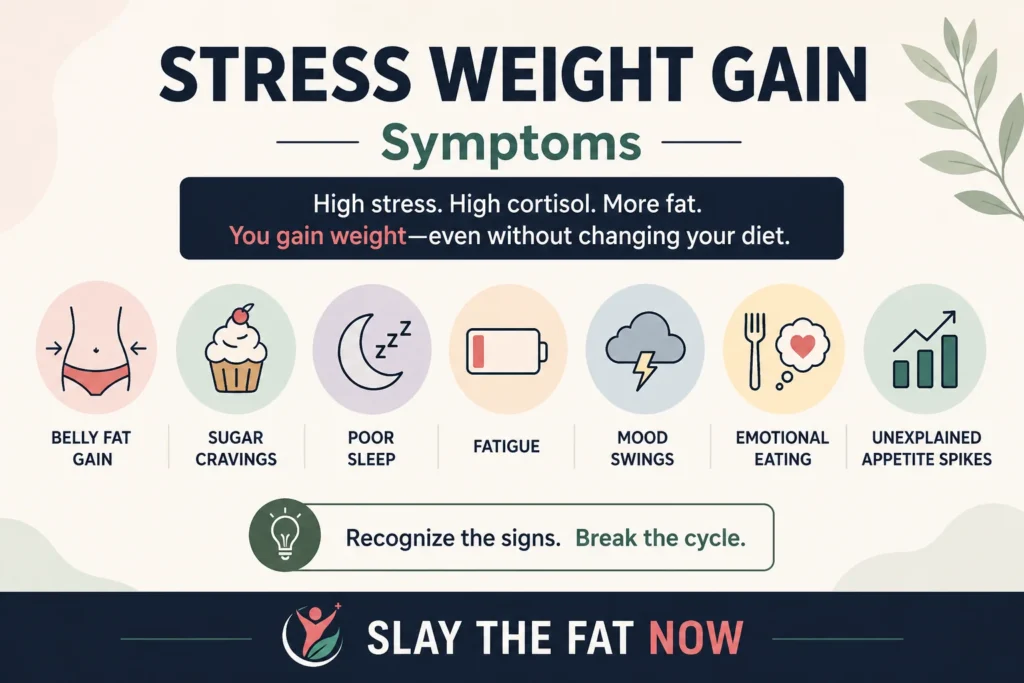
Stress weight gain symptoms include belly fat accumulation, intense sugar cravings, poor sleep, fatigue, mood swings, and unexplained appetite spikes. These are driven by chronically elevated cortisol — your body’s stress hormone — which increases fat storage, slows metabolism, and triggers emotional eating. Recognizing these signs early is the first step to breaking the cycle.
You’re Eating “Right” — So Why Is the Scale Going Up?
You’ve cut the junk food. You’re skipping dessert. You even started walking in the mornings. But somehow, the number on the scale keeps creeping up — and the fat settling right around your belly doesn’t budge no matter what you do.
Sound familiar? You’re not imagining it. And you’re not failing.
The missing piece most people overlook isn’t their diet — it’s their stress level. Chronic stress silently rewires your hormones, your appetite, your metabolism, and your fat storage patterns. The worst part? You might not even realize stress is the culprit because the symptoms look a lot like plain old weight gain.
This article breaks down exactly what stress weight gain symptoms feel like, why they happen, what the science says, and most importantly — what you can do about it right now.

What Is Stress-Related Weight Gain?
Stress weight gain isn’t a myth or an excuse. It’s a documented physiological process. When your body is under chronic psychological or physical stress — work pressure, financial worry, relationship conflict, poor sleep — it produces elevated levels of cortisol, your primary stress hormone.
Cortisol is meant to help you survive short-term threats. It sharpens your focus, raises blood sugar for quick energy, and suppresses non-essential functions. The problem starts when cortisol stays high day after day. That’s when it begins to work against you — driving up appetite, promoting fat storage (especially around the belly), disrupting sleep, and reducing your motivation to exercise.
Understanding the specific stress weight gain symptoms can help you identify whether stress is sabotaging your weight loss — and take action.

The 9 Key Stress Weight Gain Symptoms to Watch For
1. Stubborn belly fat that won’t move
This is the hallmark sign. Cortisol specifically directs fat storage to the abdomen — what’s often called a “stress belly” or “cortisol belly.” This visceral fat is metabolically active and particularly resistant to standard dieting. If your waist measurement keeps growing despite weight-loss efforts, elevated cortisol may be to blame.
2. Intense cravings for sugar and high-fat foods
Elevated cortisol raises insulin production, which drops blood sugar — and your brain responds by screaming for fast fuel: cookies, chips, pizza, soda. These cravings feel overwhelming because they’re hormonally driven, not just a lack of willpower.
3. Eating when you’re not truly hungry
Also called emotional eating or stress eating, this is the habit of reaching for food in response to boredom, anxiety, overwhelm, or sadness — not physical hunger. If you notice yourself eating more when stressed even though meals are normal, that’s a major symptom.
4. Poor, restless sleep — and still feeling exhausted
Cortisol follows a natural rhythm — high in the morning, low at night. Chronic stress disrupts this cycle, keeping cortisol elevated at bedtime. The result: difficulty falling asleep, waking up in the middle of the night, and feeling unrested even after 7–8 hours. Poor sleep independently raises cortisol and ghrelin (the hunger hormone), compounding weight gain.
5. Energy crashes and afternoon fatigue
If you hit a wall every afternoon — struggling to focus, feeling heavy, reaching for caffeine — that’s a sign your cortisol and blood sugar are dysregulated. This energy rollercoaster makes exercise feel impossible and snacking feel necessary.
6. Mood swings, irritability, and anxiety
Weight gain and mood problems from stress are deeply intertwined. Cortisol directly impacts brain chemistry — including serotonin and dopamine levels. Many people with stress-driven weight gain also experience heightened anxiety, emotional reactivity, and low motivation.
7. Digestive issues — bloating, constipation, or IBS flares
Stress disrupts the gut-brain axis, slowing digestion, altering gut bacteria balance, and causing bloating. Many people under chronic stress experience sudden IBS flares, constipation, or uncomfortable bloating — all of which can make the belly look and feel bigger.
8. Reduced motivation to exercise
This isn’t laziness — it’s biochemistry. Chronically high cortisol combined with poor sleep depletes energy reserves and blunts the drive to be active. The less you move, the fewer calories you burn, and the more weight accumulates.
9. Slower metabolism and plateaus
Prolonged stress can suppress thyroid function and interfere with muscle maintenance — both of which slow your metabolic rate. If you’ve hit a plateau after weeks of doing “everything right,” stress-induced metabolic slowdown may be why.
~43% of US adults report overeating due to stress (APA)
2× more likely to report weight gain with high stress (research study)
35 in waist circumference linked to metabolic risk in women (WebMD)
77% of Americans report physical symptoms from stress (APA)

What the Science Actually Says
The connection between stress and weight gain isn’t just anecdotal — it’s backed by decades of peer-reviewed research.
A nationally representative longitudinal study of over 1,300 Americans found that psychosocial stress from work demands, financial difficulty, and relationship strain was significantly associated with long-term weight gain — especially in people who were already overweight. The findings were consistent for both men and women across nearly a decade of follow-up.
A separate study published in PLOS ONE found that people with higher perceived stress levels were significantly more likely to report weight gain and were roughly twice as likely to increase comfort food consumption and food cravings compared to lower-stress counterparts.
Research published in PMC / NIH confirmed that stress triggers the release of multiple hormones — including cortisol, neuropeptide Y, and catecholamines — all of which interfere with normal fat storage and appetite regulation, pushing the body toward weight gain and eventually obesity.
Cleveland Clinic has documented that stress raises cortisol, which increases insulin production, causing blood sugar to drop — directly creating those intense cravings for sugary and fatty foods that feel impossible to resist.
The American Psychological Association consistently reports that stress-related eating is one of the leading behavioral contributors to weight gain in adults across the United States.

A Real-Life Scenario: Meet Sarah
Sarah is a 38-year-old marketing manager in Chicago. She’s been eating roughly 1,700 calories a day for three months — mostly whole foods, limited processed items. She goes on 30-minute walks three times a week. By all appearances, she’s “doing everything right.”
But Sarah gained 11 pounds over those three months. She couldn’t explain it.
When she started working with a weight loss coach, the conversation quickly turned to her lifestyle. She was sleeping 5–6 hours a night. She was managing a difficult team restructuring at work. She admitted to stress-snacking late at night — chips, crackers, chocolate — almost every evening. And she had been waking up at 3 a.m. for weeks, mind racing.
She wasn’t struggling with willpower. She was struggling with chronically elevated cortisol — and every symptom pointed to it. Once she addressed the stress with structured sleep, targeted nutrition timing, and stress-management practices, her weight started moving again within six weeks.
Sarah’s story is not unusual. Millions of Americans are in this exact situation — doing “everything right” except addressing the root hormonal driver.

What I’ve Seen Working With Clients Struggling With Stress Weight Gain
At SlayTheFatNow.com, working with clients across the United States on breaking through stubborn weight gain, a few patterns come up again and again:
Mistake #1: Cutting more calories when the scale stalls. Most people’s instinct when progress stops is to eat less. But if stress and poor sleep are already slowing your metabolism, further restriction raises cortisol even more — making the problem worse, not better.
Mistake #2: Ignoring sleep as a weight-loss tool. Sleep is not a lifestyle bonus — it’s metabolic medicine. Clients who prioritize 7–9 hours of quality sleep consistently see better results than those who over-exercise with poor sleep.
Mistake #3: Treating emotional eating as a character flaw. Comfort eating driven by stress is a hormonal response, not a personal failure. Addressing it requires strategy — not shame. Behavioral tools, structured meal timing, and stress resilience practices all outperform willpower alone.
Mistake #4: Skipping strength training. Muscle tissue is the engine of your metabolism. Stress breaks it down. Resistance training is one of the most effective tools for lowering cortisol over time while rebuilding metabolic rate. Cardio alone won’t fix a stress-driven plateau.
You can explore more on the stress belly fat guide and our emotional eating toolkit on the site.

The Honest Truth: Stress Alone Rarely Tells the Whole Story
It’s important to be real here. Stress is a major and underappreciated driver of weight gain — but it doesn’t explain everything. Other factors that may look like stress weight gain symptoms include:
- Hypothyroidism (underactive thyroid)
- Polycystic Ovary Syndrome (PCOS)
- Insulin resistance or prediabetes
- Cushing’s Syndrome (rare — characterized by extreme cortisol excess)
- Medications such as corticosteroids, antidepressants, or antipsychotics
- Perimenopause or menopause-related hormonal shifts
If you’re experiencing rapid, unexplained weight gain along with symptoms like extreme fatigue, muscle weakness, unusual bruising, or blood pressure changes, please consult a healthcare provider. A simple blood panel can rule out medical causes.
Stress weight gain is real — but it’s a starting point for investigation, not a final diagnosis.
Red flag: If you gain more than 10–15 lbs in a short period with no dietary changes, request thyroid, cortisol, and blood sugar testing from your doctor before starting any weight loss program.

What to Do About Stress Weight Gain: Actionable Steps
Do these things:
- Prioritize 7–9 hours of sleep — non-negotiable. Poor sleep is one of the strongest drivers of cortisol and hunger hormone imbalance.
- Add strength training 2–3x per week — builds muscle, lowers cortisol long-term, raises resting metabolism.
- Eat protein at every meal — stabilizes blood sugar, reduces cravings, and helps maintain muscle during stress.
- Practice daily stress decompression — 10 minutes of deep breathing, journaling, walking in nature, or meditation meaningfully lowers cortisol over time.
- Eat on a consistent schedule — irregular eating spikes cortisol and worsens blood sugar instability.
- Limit caffeine after 12 p.m. — caffeine raises cortisol. Late caffeine disrupts sleep, which raises cortisol further.
- Connect with a coach or community — social support is one of the most evidence-backed cortisol-lowering interventions available.
Avoid these:
- Extreme calorie restriction when already stressed — worsens cortisol and muscle loss
- Relying on willpower alone to combat stress eating — it’s hormonally driven, not a character issue
- Skipping meals — causes blood sugar crashes that spike cortisol and cravings
- Overtraining — excessive exercise without recovery is itself a cortisol stressor
- Comparing your progress to others — stress is highly individual; so is the path out of it
For a deeper dive on cortisol-busting meal plans, visit our cortisol-balancing nutrition guide and weight loss coaching programs.

Stress Weight Gain vs. Regular Weight Gain vs. Hormonal Weight Gain
Regular weight gain
- Consistent caloric surplus
- Fat distributed throughout body
- No major sleep or mood issues
- Responds quickly to diet changes
Stress-driven
Stress weight gain
- Diet may be “normal” or restricted
- Fat concentrates in belly/abdomen
- Poor sleep, mood swings, fatigue
- Resistant to standard dieting
- Intense sugar/fat cravings
Hormonal weight gain (thyroid/PCOS)
- Unexplained and rapid
- Often with hair loss, cold sensitivity
- Irregular cycles (PCOS)
- Requires medical diagnosis and treatment

Frequently Asked Questions About Stress Weight Gain Symptoms
What are the most common stress weight gain symptoms?
The most common include belly fat that won’t budge, intense food cravings (especially sugar), emotional eating, poor sleep, constant fatigue, mood swings, and digestive issues like bloating.
Can stress cause weight gain even if I’m not eating more?
Yes. Stress raises cortisol, which can slow your metabolism, reduce muscle mass, and increase fat storage — causing weight gain even without increased calorie intake.
How does cortisol cause belly fat?
Cortisol signals your body to store fat preferentially in the abdominal area — particularly visceral fat, which surrounds your organs. This is an evolutionary response to “danger,” but in modern chronic stress it becomes harmful.
How long does it take to lose stress belly fat?
With consistent stress management, sleep improvement, proper nutrition, and strength training, most people begin seeing visible results within 6–12 weeks. It takes longer than dietary weight loss alone because you must also rebalance hormones.
Does stress slow down metabolism?
Yes. Chronic stress can suppress thyroid function and break down muscle tissue — both of which reduce your resting metabolic rate over time.
What foods help reduce cortisol?
Foods rich in magnesium (dark leafy greens, pumpkin seeds), omega-3s (fatty fish, walnuts), vitamin C (bell peppers, citrus), and high-quality protein help regulate cortisol. Minimize ultra-processed foods and refined sugar.
Is stress belly real or just a social media trend?
The biological mechanism is well-documented in peer-reviewed research — cortisol genuinely promotes abdominal fat storage. “Cortisol belly” is a popular term for a real phenomenon, though it’s not a clinical diagnosis.
Can anxiety cause weight gain?
Yes. Anxiety is closely linked to elevated cortisol and can drive stress eating, poor sleep, and reduced physical activity — all of which contribute to weight gain.
Why do I crave junk food when I’m stressed?
Elevated cortisol causes insulin spikes followed by blood sugar crashes, triggering intense cravings for high-sugar, high-fat foods as your brain demands fast energy.
Does poor sleep cause weight gain?
Absolutely. Poor sleep raises cortisol and ghrelin (the hunger hormone), while lowering leptin (the satiety hormone). This combination drives overeating and fat storage, especially around the belly.
What exercises help with stress-related weight gain?
Strength training 2–3x per week is the most effective for lowering cortisol long-term and rebuilding metabolism. Daily walking (30 minutes) and yoga or stretching also meaningfully reduce cortisol levels.
Can weight loss coaching help with stress weight gain?
Yes. A qualified weight loss coach can help you identify your cortisol triggers, build a sustainable plan that accounts for stress physiology, and provide accountability — all of which accelerate results.
How do I know if my weight gain is from stress or another medical condition?
If you also experience cold intolerance, hair loss, extreme fatigue, irregular periods, or rapid unexplained weight gain, consult a doctor for thyroid, cortisol, and hormonal testing to rule out conditions like hypothyroidism, PCOS, or Cushing’s Syndrome.
Does meditation help with stress belly fat?
Research shows that consistent mindfulness and meditation practices measurably lower cortisol over time. While not a substitute for nutrition and exercise, it is a proven supporting tool for reducing stress-related fat storage.
What is the difference between stress weight gain and emotional eating?
Emotional eating is a behavioral symptom of stress weight gain — it’s what you do in response to stress hormones. Stress weight gain is the broader physiological process: hormonal changes that drive belly fat, cravings, slow metabolism, and poor sleep all together.
Ready to Finally Break the Stress-Weight Cycle?
You don’t need more willpower. You need the right strategy — one built around your hormones, your stress levels, and your real life. Benjamin Sley and the SlayTheFatNow team specialize in exactly this.Book a Free Consultation Take the Stress Weight Quiz
No obligation. No pressure. Just a real conversation about what’s working and what isn’t.
Sources: Cleveland Clinic · NIH / PMC Longitudinal Study · Healthline · WebMD · American Psychological Association Stress in America Survey
