 Skip to content
Apple Cider Vinegar for Weight Loss Actually Works (Backed by Science)
Does apple cider vinegar help with weight loss?
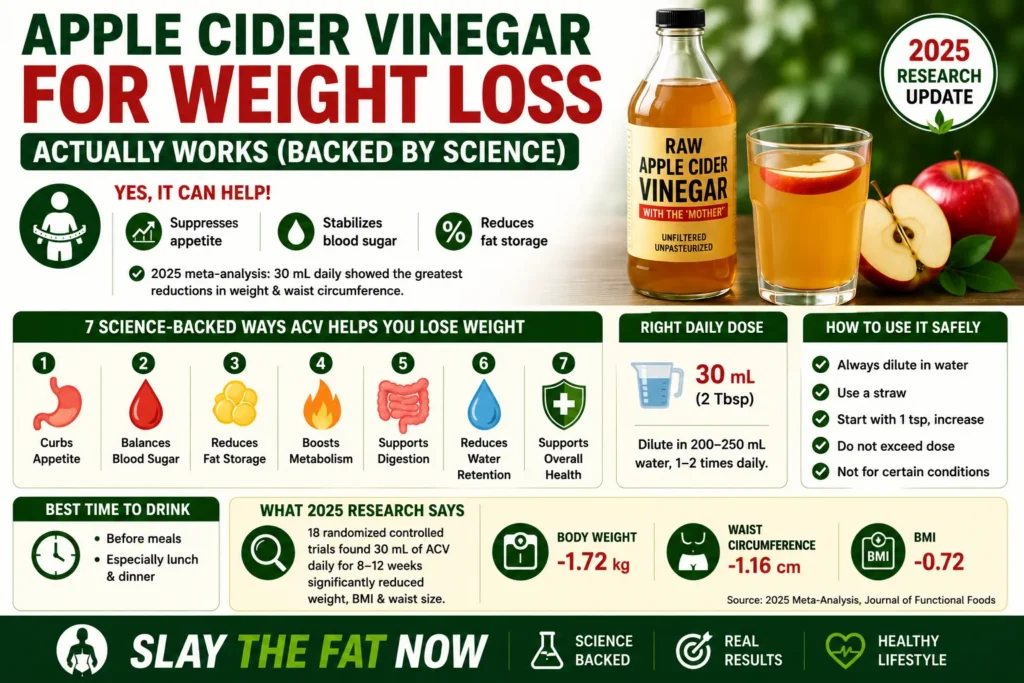
Yes, apple cider vinegar for weight loss can support your goals when used correctly. The acetic acid in ACV helps suppress appetite, stabilize blood sugar, and reduce fat storage. A 2025 meta-analysis found that 30 mL daily produced the most significant reductions in body weight and waist circumference. It works best as part of a consistent diet and exercise plan.
You’ve Been Drinking It Wrong (And It’s Not Working)
You bought the bottle with the “mother.” You mixed it with water every morning. You gagged through it for three weeks.
And then… nothing.
The scale didn’t budge. The bloating stuck around. You quietly put the bottle back under the sink and figured apple cider vinegar was just another wellness scam.
But here’s the thing you probably weren’t using it wrong because it doesn’t work. You were using it wrong because nobody told you how it actually works.
Apple cider vinegar is not a fat-melting miracle. It never was. But it IS a legitimate metabolic tool that, used at the right dose, at the right time, alongside the right habits, can meaningfully move the needle on your weight loss journey. Thousands of people in the U.S. are quietly using ACV as part of a smart system not as a magic bullet.
This article breaks down exactly what the science says, how to use apple cider vinegar for weight loss correctly, and what most people get completely wrong.
What Is Apple Cider Vinegar and Why Are People Obsessed With It?
Apple cider vinegar (ACV) is made by fermenting crushed apples. First, yeast converts the sugars to alcohol. Then bacteria convert that alcohol into acetic acid the main active compound responsible for most of ACV’s health benefits.
Raw, unfiltered ACV (the kind with the cloudy “mother” sediment at the bottom) also contains probiotics, enzymes, and trace minerals. It typically contains 4–6% acetic acid, which is the key to everything we’re about to discuss.
In this article, you’ll learn:
- The 7 science-backed mechanisms by which apple cider vinegar supports weight loss
- The optimal dose confirmed by a 2025 systematic review
- How to take it without destroying your teeth or gut lining
- The biggest myths and the real risks nobody warns you about
- A practical daily protocol you can start today
If you’ve been struggling with stubborn weight, slow metabolism, or constant food cravings, stick around. This might change how you approach your mornings.
Looking for a complete fat-loss system? Check out SlayTheFatNow’s proven weight loss strategies for a full roadmap, not just one ingredient.
7 Key Benefits of Apple Cider Vinegar for Weight Loss
1. Appetite Suppression That Actually Works
This is the big one. Acetic acid the primary compound in ACV directly influences your hunger hormones and keeps you feeling full longer.
When you drink ACV before a meal, it slows gastric emptying, meaning food stays in your stomach longer. Less hunger. Fewer calories eaten without even trying.
Research published in Nature Communications found that short-chain fatty acids like acetate (produced from acetic acid) have a direct role in central appetite regulation in the brain. This is not placebo. This is neuroscience.
2. Blood Sugar Stabilization
Blood sugar spikes are one of the most underrated causes of fat gain. When glucose shoots up after a carb-heavy meal, your body floods your bloodstream with insulin to manage it. Insulin’s job is to store that energy often as fat.
Acetic acid disrupts this cycle. It inhibits enzymes called disaccharidases that break down starches, which means your body absorbs carbohydrates more slowly. Less spike. Less insulin. Less fat storage.
A study published in Diabetes Care confirmed that consuming vinegar with a high-carb meal improved insulin sensitivity in subjects with insulin resistance or Type 2 diabetes. This matters hugely for anyone dealing with belly fat or metabolic issues.
3. Visceral Fat Reduction
Visceral fat the dangerous fat stored around your internal organs is the hardest kind to lose. It’s also the kind most linked to heart disease, diabetes, and metabolic syndrome.
Acetic acid may directly reduce visceral fat accumulation by activating specific genes involved in fat oxidation and inhibiting fat storage in the liver. Animal studies have consistently shown this mechanism, and emerging human research is beginning to support it.
4. Improved Insulin Sensitivity
For anyone who is overweight, pre-diabetic, or just struggling with stubborn fat that won’t move, insulin resistance is often the invisible wall. Acetic acid helps knock that wall down by improving how efficiently your cells use glucose, reducing the amount that gets converted to stored fat.
This is especially powerful combined with a lower-carb eating approach. See SlayTheFatNow’s low-carb meal plans to stack these benefits.
5. Enhanced Fat Burning Through AMPK Activation
AMPK (AMP-activated protein kinase) is sometimes called the body’s “master metabolic switch.” When it’s activated, your body shifts into fat-burning mode.
Acetic acid has been shown to activate AMPK in the liver, encouraging fat to be used as fuel rather than stored. Combined with regular movement, this can meaningfully accelerate fat loss over time.
6. Reduced Fat Storage via Enzyme Inhibition
Acetic acid doesn’t just burn existing fat it may also prevent new fat from being created. It inhibits specific enzymes responsible for converting excess carbohydrates and sugars into fatty acids. Less fat created means less fat to lose later.
7. Gut Health and Microbiome Support
Unfiltered ACV contains probiotics that support a healthy gut microbiome. Emerging research continues to connect gut health to metabolic rate, inflammation, and even how efficiently your body burns calories. A healthier gut = a more efficient fat-burning machine.
The Data: What Research Actually Says in 2025
Here’s where we need to be honest with you because this topic has had some messy science.
A widely cited 2024 clinical trial claiming dramatic weight loss results from ACV was retracted by the BMJ Group in September 2025 due to concerns about poor statistical analysis, implausible data, and inadequate method reporting. If you’ve seen that study shared on social media, know that its credibility has been officially withdrawn.
But that doesn’t mean ACV doesn’t work.
A separate, far more rigorous 2025 systematic review and meta-analysis published in Nutrients (MDPI) screened nearly 3,000 studies and analyzed 10 qualifying randomized controlled trials involving 861 adults. The findings:
- Daily ACV intake significantly reduced body weight and waist circumference
- The optimal effective dose identified was 30 mL per day
- Effects were most consistent in participants who were overweight or had Type 2 diabetes
- Interventions ranged from 4 to 12 weeks
The researchers themselves noted that some included studies had quality limitations, and results should be interpreted with appropriate caution. But even after sensitivity analyses excluding lower-quality trials, the positive effects held.
Bottom line: ACV is not magic. It’s not going to melt 30 pounds off your body by itself. But at 30 mL daily roughly 2 tablespoons it is a legitimate metabolic support tool with real, peer-reviewed evidence behind it.
A Real-Life Example: How Sarah Used ACV as Part of Her Routine
Sarah, a 38-year-old teacher from Ohio, had been trying to lose the same 20 pounds for two years. She’d tried counting calories, keto, and even a 30-day juice cleanse. The weight kept coming back.
A friend suggested she try adding ACV to her morning routine not as a cure, but as a support tool. She mixed 2 tablespoons of raw, unfiltered ACV with 8 oz of water and drank it 20 minutes before breakfast every day. She also started walking 30 minutes daily and reduced processed snacks.
Over 12 weeks, Sarah lost 11 pounds. Was it all the ACV? Definitely not. But she noticed two things immediately: her afternoon sugar cravings decreased significantly, and she naturally ate less at meals without feeling deprived. The ACV made the other habits easier to sustain.
That’s the real value of apple cider vinegar for weight loss not dramatic results in isolation, but meaningful support for the habits that create those results.
Expert Insight: What Actually Works (And What Doesn’t)
After years of watching people try and fail with ACV, a few patterns emerge clearly.
What works:
- Taking it before meals, not after. The blood sugar and appetite effects are pre-meal phenomena.
- Staying consistent for at least 8–12 weeks. Studies under 4 weeks show minimal effects.
- Using liquid ACV with the mother, not cheap gummies loaded with sugar.
- Pairing it with a real dietary change ACV amplifies good habits, it can’t replace them.
What doesn’t work:
- Taking one sip and expecting results in a week.
- Drinking it straight without diluting (this genuinely damages your esophagus and tooth enamel).
- Relying on ACV capsules that don’t contain standardized acetic acid concentrations.
- Using it as permission to eat more. It’s a support tool, not a metabolic blank check.
The people who see results from apple cider vinegar for weight loss are the ones who treat it like a supplement to a smart system not the system itself.
Reality Check: The Myths and the Risks You Need to Know
Myth #1: “ACV will detox your body.”
Your liver and kidneys detox your body. Vinegar does not. This claim has no scientific basis.
Myth #2: “More ACV = faster results.”
More is not better. Taking more than 30 mL per day increases the risk of tooth enamel erosion, esophageal irritation, low potassium, and digestive distress. Studies showing positive effects used 15–30 mL. Stay in that range.
Myth #3: “ACV fixes insulin resistance on its own.”
It can help but if you’re genuinely insulin resistant, you need dietary changes, exercise, and possibly medical support. ACV is an adjunct, not a treatment.
Real Risks:
- Tooth enamel erosion: Always dilute ACV in at least 8 oz of water and drink through a straw.
- Drug interactions: ACV can interact with diuretics, insulin, and digoxin. Check with your doctor if you’re on medications.
- Delayed gastric emptying (for diabetics): ACV slows digestion, which can complicate blood sugar management for people on insulin. Consult your physician.
- Esophageal damage: Drinking it undiluted or lying down after consumption can cause real tissue damage.
Respect these risks. They’re real.
How to Use Apple Cider Vinegar for Weight Loss: Step-by-Step Protocol
Here’s a practical daily protocol based on current evidence:
Step 1: Choose the right product Use raw, unfiltered ACV with the “mother” look for Bragg Organic or a comparable brand. Avoid flavored ACV drinks with added sugars.
Step 2: Start small Begin with 1 teaspoon (5 mL) diluted in 8 oz of water for the first week to assess tolerance. Work up to 1–2 tablespoons (15–30 mL) per day.
Step 3: Time it right Drink your ACV 15–20 minutes before your largest meal of the day. This is when appetite suppression and blood sugar benefits are most effective.
Step 4: Protect your teeth Always drink it diluted (never straight), use a straw, and rinse your mouth with plain water afterward. Do not brush your teeth for 30 minutes after consuming ACV.
Step 5: Be consistent Commit to at least 8 weeks. Results won’t come in a week. Set a reminder and make it part of your morning or pre-lunch routine.
Step 6: Stack it with real habits Combine ACV with reduced processed sugar intake, daily movement, and adequate protein. See SlayTheFatNow’s fat-loss starter guide for a complete framework.
What to avoid:
- Taking on an empty stomach if you have a sensitive gut
- Taking before bed (increases acid reflux risk)
- Mixing with baking soda (neutralizes the acetic acid entirely pointless)
- Using as a substitute for meals
ACV vs. Other Natural Weight Loss Supplements: How Does It Compare?
| Supplement | Mechanism | Evidence Level | Cost | Risks |
|---|---|---|---|---|
| Apple Cider Vinegar | Appetite, blood sugar, fat metabolism | Moderate (RCT meta-analysis) | Low ($8–$15/bottle) | Teeth, GI irritation |
| Green Tea Extract | Thermogenesis, EGCG oxidation | Strong | Low–Moderate | Liver risk at high doses |
| Berberine | Blood sugar, AMPK activation | Strong | Moderate | GI side effects |
| Glucomannan | Appetite (fiber expansion) | Moderate | Low | Choking risk if undiluted |
| CLA | Fat oxidation | Weak | Moderate | May increase inflammation |
Verdict: ACV sits in the middle of the pack moderate evidence, very low cost, manageable risks. It’s not the strongest supplement on this list, but it’s one of the most accessible and well-studied natural options. For many people, the blood sugar and appetite effects make it uniquely useful for daily consistency.
For a deeper dive into what works alongside ACV, check out SlayTheFatNow’s supplement comparison guide.
Tired of piecing together weight loss advice from a dozen different sources?
SlayTheFatNow brings together evidence-based strategies from nutrition science to supplement protocols in one place. If you’re serious about making this your last weight loss attempt, start there.
Frequently Asked Questions About Apple Cider Vinegar for Weight Loss
1. How much apple cider vinegar should I take daily for weight loss?
The most effective dose confirmed by a 2025 meta-analysis is 30 mL (2 tablespoons) per day, diluted in water. Start with 1 teaspoon and work up over 1–2 weeks.
2. When is the best time to take ACV for weight loss?
Take it 15–20 minutes before your largest meal. This maximizes appetite suppression and blood sugar stabilization.
3. How long does it take to see results from apple cider vinegar?
Most studies showing results used 8–12 week intervention periods. Don’t expect meaningful changes in under 4–6 weeks.
4. Can I drink apple cider vinegar every day?
Yes, daily use at 15–30 mL is safe for most healthy adults. Always dilute it and monitor for any digestive discomfort.
5. Does ACV work without diet changes?
Its effects are modest when used in isolation. ACV works best as a support tool alongside a calorie-aware, lower-sugar diet.
6. Can apple cider vinegar reduce belly fat specifically?
Research suggests acetic acid may specifically target visceral fat (the fat around internal organs). It’s not a spot-reduction tool, but it does appear to affect abdominal fat composition over time.
7. Is ACV better as liquid or gummies?
Liquid ACV with the “mother” is more reliable. Most gummies contain negligible acetic acid or add sugar that counteracts the benefits.
8. Can diabetics use ACV for weight loss?
ACV can improve insulin sensitivity, but diabetics on insulin or other medications should consult their doctor first, as ACV significantly affects blood sugar and can interact with medication.
9. Does ACV boost metabolism?
Indirectly, yes through AMPK activation and improved fat oxidation. But “boosting metabolism” in the dramatic sense is overstated. The effects are real but subtle.
10. What happens if I drink ACV straight (undiluted)?
Undiluted ACV can erode tooth enamel, burn the esophagus, and cause digestive distress. Always dilute in at least 6–8 oz of water.
11. Can I take ACV on an empty stomach?
Some people tolerate it fine; others experience nausea or heartburn. If you have a sensitive stomach, take it with a small amount of food.
12. Does apple cider vinegar interact with medications?
Yes. ACV can interact with diuretics, digoxin, and insulin. If you’re on any prescription medications, consult your doctor before starting a daily ACV routine.
13. What type of ACV should I buy?
Buy raw, organic, unfiltered apple cider vinegar with the “mother” the cloudy sediment indicates live cultures and enzymes. Bragg Organic is the most widely recommended brand in the U.S.
14. Will ACV help with cravings?
Yes this is one of its most consistently reported benefits. By stabilizing blood sugar, ACV reduces the spikes and crashes that trigger cravings for sugar and processed carbs.
15. Is the “mother” in ACV important?
Yes. The “mother” contains beneficial bacteria, enzymes, and proteins not found in filtered ACV. Choose unfiltered for the full benefit.
16. Can I add ACV to food instead of drinking it?
Absolutely. Using it as a salad dressing base or adding it to marinades is a great way to get acetic acid without drinking it. The benefits are the same.
17. Are there any people who should NOT use ACV?
People with gastroparesis, low potassium levels, active ulcers, or those on certain medications should avoid or limit ACV. Pregnant women should consult their OB before use.
The Bottom Line: Should You Try Apple Cider Vinegar for Weight Loss?
Here’s an honest answer: yes, if you use it correctly and with realistic expectations.
Apple cider vinegar for weight loss is one of the most accessible, affordable, and evidence-supported natural supplements available. A 2025 meta-analysis of 861 adults confirmed real reductions in body weight and waist circumference at 30 mL daily. The mechanisms appetite suppression, blood sugar control, AMPK activation, reduced fat storage are real and well-documented.
But ACV is not a shortcut. It’s a lever. Pull it alongside real food changes and consistent movement, and it amplifies your results. Use it in isolation while eating junk food and skipping exercise, and you’ll be disappointed.
The people who succeed with ACV don’t treat it like a magic potion. They treat it like a smart daily habit in a broader system that’s designed to win.
Ready to make it all work together?
ACV is one piece of the puzzle. If you want a complete, no-fluff system for losing fat and keeping it off one built on the same evidence-based thinking as this article visit SlayTheFatNow.
No gimmicks. No starvation diets. Just strategies that actually work.
Sources
- Castagna et al. (2025). Effect of Apple Cider Vinegar Intake on Body Composition in Humans with Type 2 Diabetes and/or Overweight: A Systematic Review and Meta-Analysis of Randomized Controlled Trials. Nutrients, 17(18), 3000. https://www.mdpi.com/2072-6643/17/18/3000
- Johnston, C.S. et al. Vinegar Improves Insulin Sensitivity to a High-Carbohydrate Meal in Subjects with Insulin Resistance or Type 2 Diabetes. Diabetes Care. https://diabetesjournals.org
- BMJ Group Retraction Notice (September 2025). https://bmjgroup.com/bmj-group-retracts-trial-on-apple-cider-vinegar-and-weight-loss/
- National Institutes of Health PubMed Database: https://pubmed.ncbi.nlm.nih.gov
