 Skip to content
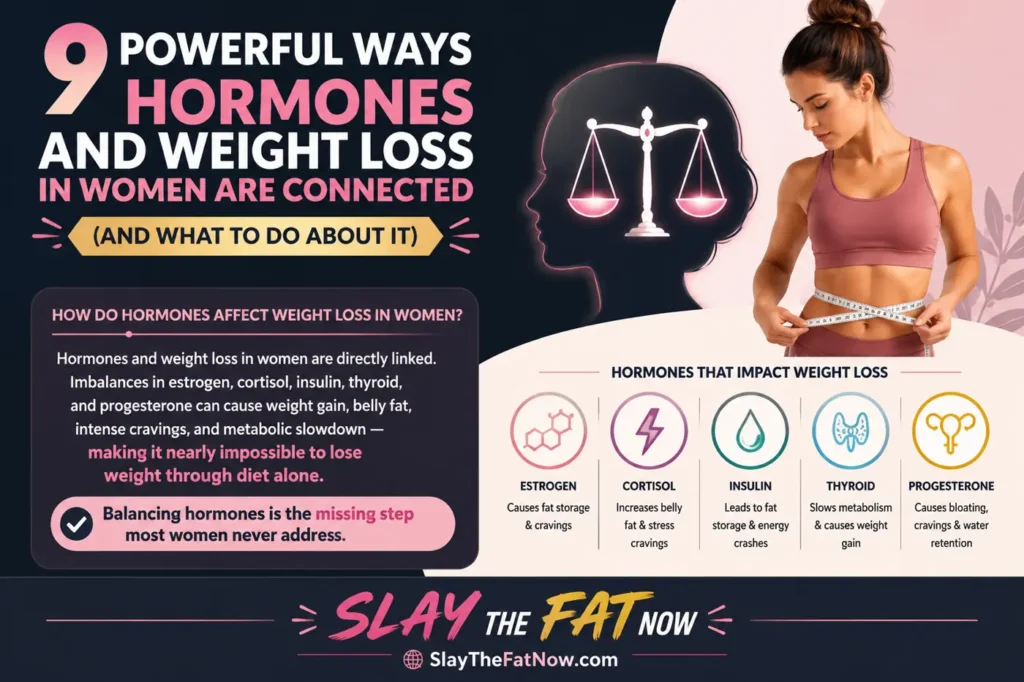
9 Powerful Ways Hormones and Weight Loss in Women Are Connected (And What to Do About It)
How do hormones affect weight loss in women?
Hormones and weight loss in women are directly linked. Imbalances in estrogen, cortisol, insulin, thyroid, and progesterone can cause weight gain, belly fat, intense cravings, and metabolic slowdown making it nearly impossible to lose weight through diet alone. Balancing hormones is the missing step most women never address.
You’re Not Lazy. Your Hormones Are Working Against You.
You’ve tried cutting calories. You’ve done the cardio. You’ve given up wine, bread, and your favorite foods and the scale barely moved.
Meanwhile, your coworker eats whatever she wants and stays lean. You gain three pounds just looking at a slice of pizza.
Here’s what nobody tells you: you might be doing everything right and still failing because your hormones are sabotaging every effort.
This is the story of millions of women in the U.S. Hormonal imbalance is not a side issue. It is the issue. And until you understand how hormones and weight loss in women interact, you’ll keep spinning your wheels on diets that were never designed for your biology.
What You’ll Learn in This Guide
This article covers everything you need to know about hormones and weight loss in women, including:
- Which hormones directly cause weight gain and belly fat
- How estrogen weight gain works and when it becomes a real problem
- Why cortisol belly fat is so resistant to diet and exercise
- The 9 most actionable steps to rebalance your hormones and finally lose fat
- What the research actually says (not what diet culture tells you)
If you’ve ever felt like your body is fighting you, this is why and here’s how to fight back.
Why Hormones and Weight Loss in Women Are Inseparable
Your Body Isn’t a Simple Math Equation
The old “calories in, calories out” advice ignores one enormous variable: your endocrine system. Hormones are chemical messengers that regulate almost every function in your body including how you store fat, where you store it, how hungry you feel, and how efficiently your metabolism runs.
For women especially, the hormonal landscape is complex. Estrogen, progesterone, cortisol, insulin, thyroid hormones, leptin, and ghrelin all interact with one another. When even one of these is out of balance, the ripple effects hit your waistline hard.
The key hormones that affect weight loss in women include:
- Estrogen — the primary female sex hormone; drives fat storage patterns
- Progesterone — balances estrogen; low levels cause water retention and bloating
- Cortisol — the stress hormone; excess causes stubborn belly fat
- Insulin — the blood sugar regulator; resistance leads to fat accumulation
- Thyroid hormones (T3/T4) — control metabolic rate; underactivity causes unexplained weight gain
- Leptin — the “I’m full” hormone; resistance causes constant hunger
- Ghrelin — the hunger hormone; poor sleep sends it through the roof
Understanding these hormones isn’t just academic. It’s the difference between a lifetime of failed diets and a body that actually changes.
Key Benefits of Addressing Hormonal Health for Weight Loss
1. You Start Losing Fat That Wouldn’t Budge Before
Hormonal imbalances particularly high cortisol and estrogen dominance directly cause fat to be stored in the belly, hips, and thighs. Correcting them unlocks fat loss in areas that were previously unresponsive to diet and exercise.
2. Your Cravings Decrease Dramatically
Insulin resistance and leptin resistance are the main drivers of uncontrollable cravings and binge eating. Balancing these hormones can reduce sugar cravings by up to 60–70% in some women, making healthy eating feel effortless rather than willpower-dependent.
3. Your Energy and Mood Stabilize
Hormonal imbalance doesn’t just affect your waistline. Low thyroid, high cortisol, and estrogen fluctuations all cause fatigue, brain fog, anxiety, and depression. Fixing hormones often fixes energy and mood simultaneously.
4. Your Metabolism Speeds Up
Muscle loss from chronically elevated cortisol, combined with hypothyroidism, can slow metabolism by 20–40%. Addressing root hormonal causes can reverse this without extreme dieting.
5. Weight Loss Becomes Sustainable
When you address the hormonal environment, fat loss becomes a natural byproduct of a healthier body not a punishing battle of willpower. Discover sustainable fat loss plans built for women at SlayTheFatNow.com.
The Data: What Research Says About Hormones and Weight
The science connecting hormones and weight loss in women is robust and growing:
- The NIH reports that approximately 20 million American women have a thyroid disorder and up to 60% don’t know it. Hypothyroidism is one of the leading undiagnosed causes of unexplained weight gain in women over 30.
- A study published in the Journal of Clinical Endocrinology & Metabolism found that women with elevated cortisol levels had significantly higher visceral (belly) fat accumulation, independent of total caloric intake.
- Research from Harvard Medical School shows that estrogen dominance excess estrogen relative to progesterone is associated with increased fat storage, particularly after age 35 when progesterone levels begin declining.
- The American Thyroid Association reports that women are 5–8 times more likely than men to develop thyroid disease, making it one of the most gender-specific hormonal disruptors of healthy metabolism.
- A 2022 meta-analysis in Frontiers in Endocrinology found that insulin resistance affects up to 50% of overweight women and is the single most powerful predictor of inability to lose weight through conventional dieting.
- According to the Endocrine Society, perimenopause and menopause cause a dramatic shift in estrogen that redistributes fat from the hips and thighs to the abdomen a region associated with higher cardiovascular and metabolic risk.
The data is undeniable: you cannot successfully address weight loss in women without addressing hormones.
Real Example: Why Nicole Couldn’t Lose a Pound Until She Did This
Nicole, a 42-year-old nurse from Texas, had been “eating clean” for two years. She ran four days a week. She tracked her calories religiously and stayed around 1,400 per day.
She hadn’t lost a single pound in 14 months.
When she finally got comprehensive hormone testing done, the picture was clear:
- Elevated cortisol (chronic work stress + under-eating)
- Low progesterone (perimenopause onset)
- Subclinical hypothyroidism
- Significant insulin resistance despite a relatively low-carb diet
Her doctor and nutritionist restructured her entire approach not around calories, but around hormone balance:
- She increased calories to 1,750/day with a focus on protein and healthy fats
- She replaced long cardio runs with strength training 3x/week
- She added magnesium, ashwagandha, and an evening wind-down routine to lower cortisol
- She timed carbohydrates strategically to improve insulin sensitivity
In 12 weeks, Nicole lost 14 pounds mostly belly fat. In 6 months, she’d lost 28 pounds and dropped two dress sizes. Her energy came back. Her anxiety nearly disappeared.
Nothing about her effort changed. Her strategy changed because she finally understood that hormones and weight loss in women are not separate conversations.
Expert Insight: Patterns That Show Up Over and Over
Working with women on fat loss, certain hormonal patterns repeat almost universally especially in women over 35.
The Cortisol Trap: Women who eat very little, do excessive cardio, and sleep poorly are running on chronically high cortisol. Their bodies interpret this as a threat so fat storage increases, particularly in the midsection, while muscle breaks down. Eating more, lifting weights, and resting more seems counterintuitive but it’s often what breaks the plateau.
Estrogen Dominance After 35: As progesterone drops (a natural part of aging), estrogen becomes the dominant hormone. This excess estrogen is stored in fat tissue and drives more fat storage creating a vicious cycle. Reducing alcohol, improving liver function (the liver processes estrogen), and eating cruciferous vegetables can help break this cycle.
The Low-Carb Thyroid Backfire: Long-term very low carb diets can reduce T3 (active thyroid hormone) production. Women who feel great on keto for 3–6 months and then stall or crash often have suppressed thyroid function. Cycling carbohydrates back in can restore thyroid output and restart fat loss.
Leptin Resistance from Chronic Dieting: Years of yo-yo dieting desensitize the leptin receptor. Your body is full of leptin (the satiety hormone) but can’t hear it so you feel constantly hungry no matter how much you eat. Learn how to reset your metabolism and leptin sensitivity at SlayTheFatNow.com.
Reality Check: Myths About Hormones and Weight That Are Holding You Back
Myth 1: “Hormonal weight gain is just an excuse”
This dismissive attitude is medically incorrect and harmful. Hormonal imbalances are measurable, diagnosable conditions with documented metabolic effects. Blaming willpower when the real cause is endocrine dysfunction is like blaming someone for limping when they have a broken leg.
Myth 2: “Only menopause causes hormonal weight gain in women”
Estrogen weight gain and cortisol belly fat can affect women in their 20s and 30s too. PCOS, thyroid disorders, adrenal fatigue, post-birth control syndrome, and chronic stress all disrupt hormones long before menopause arrives.
Myth 3: “You just need to eat less and exercise more”
In the presence of insulin resistance, high cortisol, or hypothyroidism, eating less and exercising more can actively worsen the hormonal environment lowering T3, raising cortisol further, and deepening leptin resistance. This advice is dangerously oversimplified for hormonally compromised women.
Myth 4: “Hormone testing is only for women with obvious symptoms”
Hormonal imbalances can be subtle. You don’t need dramatic night sweats or missed periods to have estrogen dominance or subclinical hypothyroidism. Unexplained weight gain, fatigue, hair thinning, and mood changes are all legitimate reasons to get tested.
Myth 5: “Supplements will fix your hormones”
Some supplements genuinely help support hormonal balance (magnesium, vitamin D, zinc, ashwagandha, inositol for PCOS). But they work best as support alongside lifestyle changes not as replacements for sleep, stress management, nutrition, and exercise.
9 Practical Steps to Balance Hormones and Accelerate Fat Loss
Step 1: Get Comprehensive Hormone Testing
Don’t guess. Ask your doctor for a full panel including: estradiol, progesterone, testosterone, TSH, free T3, free T4, fasting insulin, HbA1c, cortisol (AM), DHEA-S, and leptin. This baseline tells you exactly where to focus.
Step 2: Prioritize Protein at Every Meal
Protein stabilizes blood sugar, supports thyroid function, reduces ghrelin (hunger hormone), and is essential for muscle preservation. Aim for 30–40g of protein at each main meal. This single change improves insulin sensitivity significantly within weeks.
Step 3: Reduce Cortisol Belly Fat With Stress Management
Cortisol belly fat cannot be exercised away. It must be managed at the source. Daily stress reduction practices even 10 minutes of meditation, journaling, or slow breathing lower cortisol measurably. Sleep 7–9 hours. This is not optional.
Step 4: Lift Weights to Improve Insulin Sensitivity
Resistance training is the most powerful non-pharmaceutical tool for improving insulin sensitivity. Muscle tissue acts as a glucose sink pulling blood sugar out of the bloodstream during and after training. Three sessions per week of compound movements is enough to see meaningful changes in 4–6 weeks.
Step 5: Cut Alcohol to Reduce Estrogen Weight Gain
The liver is responsible for metabolizing and excreting excess estrogen. Alcohol impairs liver function, allowing estrogen to recirculate in the body. Even 2–3 drinks per week can meaningfully worsen estrogen dominance in women over 35.
Step 6: Eat Cruciferous Vegetables Daily
Broccoli, cauliflower, Brussels sprouts, cabbage, and kale contain DIM (diindolylmethane) a compound that helps the liver process and excrete excess estrogen. Aim for 1–2 cups daily for active estrogen support.
Step 7: Optimize Sleep for Leptin and Ghrelin Balance
One night of poor sleep increases ghrelin (hunger) by 24% and decreases leptin (fullness) by 18%, according to research from the University of Chicago. Consistently poor sleep makes every diet harder by chemically amplifying hunger and reducing satiety signals.
Step 8: Cycle Carbohydrates Strategically
If you’ve been low-carb for more than 3–4 months, consider a strategic carb refeed once or twice per week. This can restore thyroid T3 levels, reset leptin signaling, and prevent the hormonal adaptation that causes long-term plateaus. See our carb cycling guide for women at SlayTheFatNow.com.
Step 9: Consider Targeted Supplementation
The following supplements have strong evidence for hormonal support in women:
- Magnesium glycinate — reduces cortisol, improves insulin sensitivity, supports sleep
- Vitamin D3 + K2 — essential for thyroid, estrogen metabolism, and insulin function
- Inositol (myo + D-chiro) — highly effective for PCOS and insulin resistance
- Ashwagandha — adaptogen that lowers cortisol and supports thyroid function
- Zinc — supports thyroid hormone conversion (T4 to T3)
Always consult your healthcare provider before starting a new supplement protocol.
Comparing Hormonal Fat Loss Approaches for Women
Standard Diet Approach (Ignores Hormones)
- Extreme calorie restriction
- High cardio, low strength training
- No consideration of hormone timing or cycles
- One-size-fits-all macros
- Result: Initial loss followed by plateau, fatigue, and weight regain
Hormone-Aware Fat Loss Approach
- Moderate deficit timed around menstrual cycle phases
- Strength training prioritized; cardio used strategically
- Macros adjusted to support estrogen, insulin, and cortisol
- Supplements and lifestyle tools address root hormonal causes
- Result: Slower but consistent fat loss, better energy, sustainable long-term
The conclusion is clear: for lasting results, hormones and weight loss in women must be addressed together not as separate issues.
Frequently Asked Questions
What is the link between hormones and weight loss in women?
Hormones regulate fat storage, metabolism, hunger, and energy use. When key hormones like estrogen, cortisol, insulin, and thyroid are imbalanced, the body resists fat loss no matter how little you eat or how much you exercise.
What hormones cause weight gain in women?
The main hormones that cause weight gain in women are high estrogen (estrogen dominance), high cortisol, insulin resistance, low thyroid hormones (hypothyroidism), and leptin resistance. Each affects fat storage in different ways and different locations on the body.
What is estrogen weight gain and how does it happen?
Estrogen weight gain occurs when estrogen levels are disproportionately high relative to progesterone. This promotes fat storage, particularly in the hips, belly, and thighs. It commonly occurs during perimenopause, after stopping birth control, or from chronic liver stress.
What causes cortisol belly fat in women?
Cortisol belly fat is caused by chronically elevated cortisol the stress hormone. Cortisol promotes visceral fat storage around the midsection and causes muscle breakdown. It’s triggered by chronic psychological stress, poor sleep, over-exercising, and under-eating.
How do I know if my hormones are causing my weight gain?
Signs include unexplained weight gain despite eating well, fat concentrated in the belly, constant fatigue, intense sugar cravings, mood swings, poor sleep, hair thinning, and difficulty building muscle. Comprehensive hormone bloodwork can confirm which specific hormones are imbalanced.
Can balancing hormones help me lose weight without dieting?
Balancing hormones makes fat loss significantly easier and more natural, but it works best when paired with proper nutrition and exercise. Hormonal balance improves your body’s response to these efforts it’s not a replacement for them.
Does menopause always cause weight gain?
Not inevitably. Menopause shifts fat distribution (from hips to belly) and slows metabolism slightly, but with proper strength training, protein intake, and hormonal support, many women maintain or even improve their body composition through and after menopause.
How does the thyroid affect weight in women?
The thyroid regulates metabolic rate. Even subclinical hypothyroidism (TSH slightly elevated but within “normal” range) can slow metabolism enough to cause 10–20 lbs of weight gain over time and make fat loss extremely difficult.
Does birth control affect hormones and weight?
Yes. Hormonal birth control, particularly progestin-dominant pills, can increase water retention, suppress testosterone (affecting libido and muscle building), and in some women trigger estrogen dominance patterns or insulin resistance.
Can stress alone cause weight gain without overeating?
Yes. Chronic stress elevates cortisol, which directly promotes fat storage especially visceral belly fat even in a caloric deficit. Stress also disrupts sleep, increases ghrelin (hunger hormone), and promotes muscle breakdown.
What foods help balance hormones for weight loss in women?
Foods that support hormonal balance include cruciferous vegetables (for estrogen metabolism), fatty fish and flaxseed (omega-3s), eggs (for cholesterol-based hormone production), leafy greens (for magnesium), and fermented foods (for gut-hormone axis health).
Does PCOS make it impossible to lose weight?
No, but it makes it harder. PCOS involves insulin resistance and androgen excess, both of which promote fat storage. A low-glycemic, high-protein diet combined with resistance training and targeted supplements like inositol can produce meaningful fat loss in women with PCOS.
How long does it take to rebalance hormones for weight loss?
Initial improvements in insulin sensitivity can appear within 2–4 weeks with dietary and exercise changes. Cortisol reduction typically shows results in 4–8 weeks. Thyroid function changes can take 3–6 months. Full hormonal rebalancing is a process measured in months, not days.
Should I exercise differently depending on my menstrual cycle?
Yes. Research supports syncing training to your cycle. During the follicular phase (days 1–14), estrogen is rising and strength and performance are higher ideal for intense training. During the luteal phase (days 15–28), progesterone rises, core temperature increases, and recovery is slower better for moderate training and more rest.
When should a woman see a doctor about hormonal weight gain?
See a doctor if you’ve gained unexplained weight despite no changes in diet or activity, if you experience significant fatigue, hair loss, mood changes, or irregular periods alongside weight gain, or if you suspect thyroid disease, PCOS, or perimenopause. Request a full hormonal panel, not just a standard thyroid screen.
Stop Fighting Your Body Start Working With Your Hormones
You are not weak. You are not broken. You’re a woman with a complex, powerful hormonal system and that system has been trying to tell you something.
The connection between hormones and weight loss in women is real, it’s documented, and it’s the key to unlocking results that dieting alone never could. Once you understand estrogen weight gain, cortisol belly fat, insulin resistance, and thyroid function and take targeted steps to address them fat loss stops feeling like punishment and starts feeling like the natural result of a body that’s finally working with you.
Start your hormone-aware fat loss journey at SlayTheFatNow.com →
Your transformation isn’t waiting for more willpower. It’s waiting for the right strategy.
References:
