 Skip to content
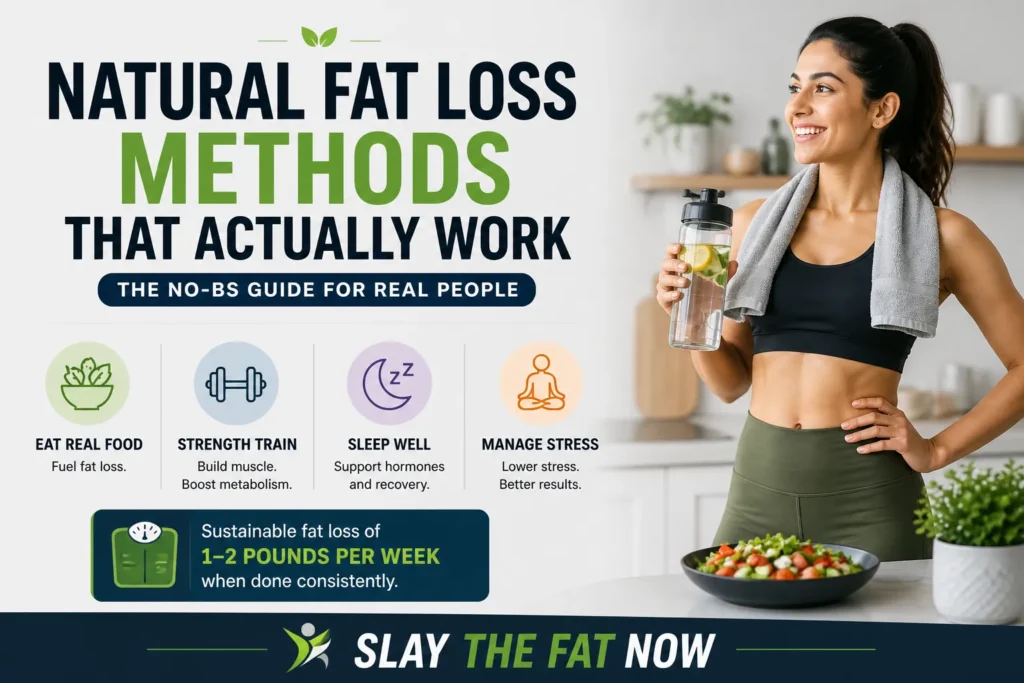
Natural Fat Loss Methods That Actually Work
The No-BS Guide for Real People
These natural weight loss methods focus on sustainable fat reduction through nutrition, movement, sleep, and stress management without relying on extreme dieting, natural weight loss pills, or expensive supplements.
Natural fat loss methods are science-backed lifestyle strategies including dietary changes, strength training, quality sleep, and stress management that help your body burn stored fat without relying on pills, injections, or extreme restriction. When done consistently, these methods produce sustainable weight loss of 1–2 pounds per week.
Natural Fat Loss Methods That Actually Work
Best Natural Weight Loss Foods That Support Fat Burning
Add 250–400 words here.
Include:
- eggs
- Greek yogurt
- berries
- oats
- leafy greens
- salmon
- potatoes
Naturally insert:
- natural weight loss foods
- foods for natural weight loss
- best foods for natural weight loss
Critical reason:
Right now your article is weak on food-related search intent.
Natural Weight Loss Drinks That Actually Help
Discuss:
- water
- black coffee
- green tea
- apple cider vinegar
- protein shakes
Include:
- natural weight loss drinks
- healthy morning drinks for weight loss
- weight loss morning drink
- what should I drink in the morning to lose weight
You already discuss liquid calories, but not strategically enough for search intent.
That’s a blind spot.
The Mistake 80% of Americans Make Before Breakfast
You’ve probably tried it. The 1,200-calorie crash diet. The detox tea. The ‘fat-burning’ supplement that turned your urine bright orange and did absolutely nothing else.
Here’s what nobody tells you: the weight loss industry in the United States generates over $70 billion a year and a huge chunk of that revenue comes from products that don’t work. They prey on desperation, promise fast results, and leave people feeling like failures when the scale doesn’t move.
You are not the failure. The approach was.
The truth is that natural fat loss methods real, unglamorous, sustainable ones have been staring us in the face for decades. They don’t come in a bottle. They don’t require a celebrity endorsement. And they don’t cost $89.99 a month.
This guide is going to show you exactly what those methods are, what the science says, and how to actually apply them to your life starting today.

What Are Natural Fat Loss Methods And Why Do They Work?
Natural fat loss methods refer to any approach that works with your body’s existing biology to create a caloric deficit, boost metabolism, reduce fat storage hormones, and improve body composition over time.
Unlike quick-fix diets, these methods target the root causes of fat gain: poor insulin sensitivity, sedentary behavior, chronic stress, disrupted sleep, and ultra-processed food consumption. When you fix those, the fat follows.
In this guide, you’ll learn:
- Why certain foods drive fat storage even at the same calorie count
- The most effective types of exercise for long-term fat loss
- How sleep and stress hormones are silently sabotaging your progress
- What the research actually says about metabolism and sustainable weight
- A practical step-by-step plan you can start this week

No fluff. No filler. Just what works.
Why Natural Fat Loss Methods Beat Every Shortcut
Before we get tactical, it’s worth understanding what you’re really getting when you commit to natural fat loss instead of chasing the next trend.
1. You Keep the Weight Off
Studies show that up to 80% of people who lose weight through extreme dieting regain it within 5 years. Natural methods especially those that include resistance training and whole-food nutrition show dramatically better long-term retention because they change your body composition, not just the number on the scale.
2. Your Health Improves Across the Board
Natural fat loss doesn’t just reduce your waist size. It lowers blood pressure, improves insulin sensitivity, reduces inflammation, boosts mood, and increases energy. You’re not just lighter you’re actually healthier.
3. No Dangerous Side Effects
Prescription weight-loss drugs can cause nausea, cardiovascular risk, and dependency. Stimulant-heavy supplements spike cortisol and heart rate. Natural methods have no such risks. The ‘side effects’ include better sleep, clearer skin, more energy, and improved mental health.
4. It’s Free (Or Close to It)
Walking costs nothing. Cooking whole foods at home is cheaper than fast food. Sleeping 8 hours doesn’t require a subscription. The most powerful fat loss tools in the world are largely free you just need to use them consistently.

Natural Weight Loss for Females: What Works Differently?
Include:
- hormonal fluctuations
- stress eating
- sleep
- protein needs
- resistance training myths
Naturally include:
- natural weight loss for females
- weight loss home remedies for females
- how can a girl lose weight in 2 weeks
Without this, you’re ignoring a massive search segment.
Why Am I Not Losing Weight Even With Diet and Exercise?
Discuss:
- hidden calories
- sleep deprivation
- inconsistent tracking
- weekend overeating
- liquid calories
- stress/cortisol
This aligns perfectly with your current tone.
What the Research Actually Says About Natural Fat Loss
Let’s ground this in real science, not Instagram wellness influencer claims.
Obesity rates in the U.S.: According to the CDC, over 42% of American adults are currently classified as obese up from 30.5% in 1999–2000. This is not a willpower crisis. It is a structural and environmental one.
Caloric deficit remains the core driver: A 2020 meta-analysis published in The BMJ confirmed that all effective weight loss interventions share one common feature a sustained caloric deficit. The method used to achieve it matters less than consistency.
Protein is the most powerful dietary lever: Research consistently shows that high-protein diets (1.6–2.2g per kg of bodyweight) increase satiety, preserve muscle mass during fat loss, and boost the thermic effect of food. This means your body burns more calories just digesting protein compared to carbs or fat.
Sleep deprivation drives fat gain: A landmark study from the University of Chicago found that sleeping just 5.5 hours instead of 8.5 hours caused subjects to lose 55% less fat despite eating the same amount and increased muscle loss by 60%. Sleep is not optional.
Strength training beats cardio for body composition: A 2022 study published in the British Journal of Sports Medicine found that resistance training produces superior body composition results compared to cardio alone even when total weight loss is similar.

External reference: CDC Adult Obesity Facts
Simple 7-Day Diet Plan for Weight Loss
Then say:
- breakfast template
- lunch template
- dinner template
- snacks
- hydration
Natural Weight Loss Supplements: What Actually Has Evidence?
Mention:
- caffeine
- whey protein
- fiber supplements
- green tea extract
Then explicitly say:
Most natural weight loss supplements produce small effects compared to sleep, protein intake, and caloric control.
Include:
- natural weight loss supplements
- best natural weight loss supplements
- all natural weight loss supplements
- natural weight loss herbs
- natural weight loss tea
This section is essential for topical authority.
A Real-Life Scenario: How Marcus Lost 38 Pounds in 6 Months
Marcus is a 41-year-old project manager from Ohio. Two years ago, he weighed 228 pounds. He’d tried keto, intermittent fasting, and three different fat burner supplements. Nothing stuck.
What finally worked? He stopped trying to do everything at once and focused on three things:
- He swapped his daily drive-through lunch for a meal-prepped high-protein bowl (chicken, rice, roasted vegetables). This alone cut roughly 600 calories per day.
- He started lifting weights three times per week 45 minutes per session. No cardio, no HIIT. Just compound lifts and progressive overload.
- He committed to being in bed by 10:30 p.m. instead of scrolling until 1 a.m.
By month 3, he’d lost 17 pounds. By month 6, he was at 190 pounds 38 pounds gone. He didn’t take any supplements. He didn’t buy any special foods. He didn’t spend a dollar on a gym program.

The variables that drove Marcus’s results were protein, resistance training, and sleep. These are the three pillars of natural fat loss that the science consistently backs.
What Actually Works: Expert Patterns From the Trenches
After studying fat loss for years and watching thousands of people cycle through the same mistakes, certain patterns become impossible to ignore.
The people who succeed long-term almost always share these traits:
- They focus on what to add, not what to restrict. More protein, more vegetables, more water before cutting anything.
- They don’t rely on motivation. They build systems: meal prep on Sundays, scheduled workouts, phone chargers outside the bedroom.
- They expect a plateau. Around weeks 6–10, most people plateau. Those who succeed adjust their approach (usually adding 10–15 minutes of walking) rather than abandoning it.
- They don’t weigh themselves every day. Weekly morning weigh-ins, after the bathroom and before eating, give a cleaner data picture without the emotional rollercoaster.
- They track something. Whether calories, protein grams, or steps the act of measurement creates accountability and surfaces blind spots.
One of the most counterintuitive insights: eating less is often NOT the most effective first move. For most Americans who are overeating ultra-processed foods, the first move is to improve food quality switching to whole foods, increasing protein, and reducing liquid calories (soda, alcohol, flavored coffee drinks). The calorie reduction happens naturally as a result.

Let’s Be Honest: Myths, Risks, and What Nobody Wants to Hear
Myth 1: You Can Spot-Reduce Fat
Doing 200 sit-ups a day will not burn your belly fat. Fat loss is systemic your body decides where to draw from based on genetics, hormones, and overall deficit. You can’t target specific areas. What you can do is reduce total body fat percentage and build underlying muscle that gives definition.
Myth 2: Eating Fat Makes You Fat
Dietary fat does not directly cause body fat. Excess calories do. Healthy fats from avocados, olive oil, and nuts are actually associated with better weight management because they increase satiety and support hormone health. Cutting fat while replacing it with refined carbs as many ‘low-fat’ products do often makes fat loss harder.
Myth 3: You Need to Work Out Every Day
Overtraining suppresses the immune system, spikes cortisol, and increases injury risk all of which stall fat loss. Three to four sessions of resistance training per week, combined with daily walking (7,000–10,000 steps), produces better results for most people than seven days of grueling workouts.
The Hard Truth About Timelines
Natural fat loss of 1–2 pounds per week is the sustainable, evidence-based target. At that rate, losing 30 pounds takes 4–6 months. If you need to lose 80 pounds, you’re looking at a year or more of consistent work. This isn’t discouraging it’s realistic. People who plan for realistic timelines succeed. People who expect 30 pounds in 30 days quit after 3 weeks.

Natural Fat Loss Methods: Your Step-by-Step Action Plan
Here is what to actually do, broken into four non-negotiable pillars:
Pillar 1: Nutrition
- Hit your protein target first. Aim for 0.7–1g of protein per pound of bodyweight daily. Prioritize eggs, chicken, Greek yogurt, cottage cheese, and lean beef.
- Eliminate liquid calories. Soda, juice, specialty coffee drinks, and alcohol are calorie-dense and hunger-neutral. Drink water, black coffee, or plain tea.
- Eat mostly whole foods. If it has more than 5 ingredients and you can’t pronounce half of them, limit it. Not eliminate limit.
- Don’t fear carbs. Fear refined carbs. White bread, white rice, and sugary cereal spike insulin and drive hunger. Oats, sweet potatoes, and fruit do not have the same effect.
Pillar 2: Training
- Lift weights 3–4x per week. Focus on compound movements: squats, deadlifts, bench press, rows, and overhead press. These burn the most calories and build the most muscle.
- Walk 7,000–10,000 steps daily. This is the most underrated fat-loss tool available. It burns calories, lowers cortisol, and is sustainable indefinitely.
- Add cardio strategically. 2–3 sessions of 20–30-minute moderate cardio can support fat loss but should be secondary to lifting and walking not the foundation.
Pillar 3: Sleep
- Target 7.5–9 hours per night. Non-negotiable. Poor sleep increases ghrelin (hunger hormone) decreases leptin (fullness hormone) and drives cortisol a perfect storm for fat gain.
- Create a consistent bedtime. Your body’s circadian rhythm regulates metabolism. Erratic sleep patterns disrupt it significantly.
- Eliminate screens 60 minutes before bed. Blue light suppresses melatonin. Use this hour for reading, stretching, or breathing exercises.
Pillar 4: Stress Management
- Chronic stress = elevated cortisol = increased abdominal fat storage. This is not metaphorical it’s endocrine biology.
- Daily practices that lower cortisol: 10 minutes of diaphragmatic breathing, 20-minute walks in nature, journaling, and reducing alcohol consumption (which spikes cortisol the following day).

For personalized support with your weight loss plan, visit SlayTheFatNow.com for tools, guides, and expert resources.
Natural Fat Loss vs. Other Approaches: An Honest Comparison
Natural Methods vs. Crash Dieting
Crash dieting (under 1,000 calories/day) does produce rapid initial weight loss but 60–70% of that loss is water and muscle, not fat. When you return to normal eating, you regain fat faster because your metabolism has adapted downward. Natural methods preserve muscle, keep metabolism intact, and produce slower but permanent results.
Natural Methods vs. Prescription GLP-1 Drugs (Ozempic, Wegovy)
GLP-1 agonists are legitimately effective at producing weight loss often 15–20% of body weight in clinical trials. However, they cost $1,000–$1,500/month without insurance, come with side effects (nausea, vomiting, pancreatitis risk), and most people regain weight when they stop. Natural methods cost nothing, have no side effects, and the results are permanent if the lifestyle is maintained.
Natural Methods vs. Fat-Burning Supplements
Most fat-burning supplements have little to no clinical evidence. The few that show any effect (caffeine, green tea extract) produce a negligible metabolic boost of 50–100 calories per day easily offset by a handful of chips. You’d be better off using that $60/month supplement budget on quality protein and fresh produce.
Bottom Line: Natural fat loss methods win on safety, sustainability, cost, and long-term body composition every time. The only thing they require is consistency.

Frequently Asked Questions (FAQs)
1. How long does natural fat loss take?
Expect 1–2 pounds of fat loss per week with a consistent approach. That’s 4–8 pounds per month. Significant transformation (20–30 pounds) typically takes 3–6 months of consistent effort.
2. Can I lose fat without going to the gym?
Yes. Walking, bodyweight training, and home resistance exercises can drive significant fat loss. A gym accelerates progress but is not mandatory. Nutrition will account for roughly 70–80% of your results regardless.
3. What is the fastest natural fat loss method?
A high-protein diet combined with a moderate caloric deficit, daily walking, and 3x per week weight training is the most evidence-backed approach for rapid natural fat loss. There are no shortcuts that beat this combination sustainably.
4. Do I need to count calories?
Not necessarily. For many people, eating high-protein, whole foods naturally reduces calorie intake to a deficit. However, if progress stalls, tracking calories for 2–4 weeks is one of the most effective diagnostic tools available.
5. What foods speed up fat loss naturally?
Protein-rich foods (eggs, chicken, Greek yogurt), high-fiber vegetables (broccoli, spinach, kale), foods with high water content, and whole grains that slow digestion all support fat loss. None of them are magical they work by improving satiety and reducing total calorie intake.
6. How much protein do I need to lose fat?
Most research supports 0.7–1g of protein per pound of bodyweight per day for fat loss while preserving muscle. For a 180-pound person, that’s 126–180g of protein daily.
7. Is intermittent fasting effective for natural fat loss?
Intermittent fasting works but not because of metabolic magic. It works by creating a calorie deficit and, for many people, simplifying eating decisions. If it helps you eat less without feeling miserable, use it. If it makes you binge at 6 p.m., skip it.
8. Does drinking water help burn fat?
Yes, indirectly. Staying well-hydrated (2–3 liters per day) reduces hunger, replaces caloric beverages, and supports optimal metabolic function. Some studies show a temporary metabolic boost from cold water consumption, though the effect is modest.
9. Can stress prevent fat loss?
Absolutely. Chronic stress elevates cortisol, which increases appetite, drives cravings for high-calorie foods, and promotes fat storage around the abdomen specifically. Stress management is not optional it’s a core pillar of fat loss.
10. What are the best exercises for natural fat loss?
Compound resistance training (squats, deadlifts, rows, presses) burns the most calories per session and builds muscle that increases resting metabolism. Combine with daily walking for optimal results. Cardio is supplemental, not foundational.
11. How does sleep affect fat loss?
Severely. Poor sleep disrupts ghrelin and leptin (hunger hormones), increases cortisol, impairs insulin sensitivity, and reduces motivation to exercise. Aim for 7.5–9 hours per night. It is not possible to out-train bad sleep.
12. Are cheat meals okay when trying to lose fat naturally?
A planned higher-calorie meal once a week is unlikely to derail progress and can actually help with adherence. The issue is when ‘cheat meals’ become ‘cheat weekends.’ One meal doesn’t matter. Patterns do.
13. Why am I not losing fat even with diet and exercise?
Common hidden reasons include: underestimating calories (most people underestimate by 30–40%), overestimating exercise calorie burn, poor sleep, high stress, not eating enough protein, or not giving the plan enough time. A consistent food log for 7–14 days usually reveals the answer.
14. Is it possible to lose fat and gain muscle at the same time?
Yes especially for beginners, those returning after a break, and people with higher body fat percentages. This is called ‘body recomposition.’ It requires adequate protein, resistance training, and a slight caloric deficit or maintenance calories.
15. What is the #1 mistake people make with natural fat loss?
Trying to do too much too fast. Overhauling diet, starting a 6-day gym routine, eliminating all sugar, cutting carbs all at once is a recipe for burnout within 3 weeks. Pick one or two changes, master them over 4–6 weeks, then add more. Slow, stacked progress always beats aggressive, unsustainable overhauls.
Your Next Step Starts Right Now
You now know more about natural fat loss than most people will ever learn from a doctor’s office pamphlet. The question is what you do with it.
Here’s what I’d recommend doing in the next 24 hours:
- Calculate your approximate protein target (0.8x your bodyweight in pounds = daily grams).
- Log everything you eat tomorrow not to judge, just to see. Most people are shocked by what they discover.
- Take a 20-minute walk. Today. Not when you’re ‘ready.’
- Set a consistent bedtime for this week and protect it.
That’s it. Four things. If you do those four things consistently for 30 days, you will see results not because of magic, but because the science is clear.
Ready to go deeper? Head over to SlayTheFatNow.com to access our full library of fat loss guides, meal plans, and training programs designed specifically for real people with real lives.
Explore our beginner fat loss workout plan no gym required.
External Resources:
Harvard T.H. Chan School of Public Health – Obesity Prevention
© 2025 SlayTheFatNow.com All Rights Reserved
