 Skip to content
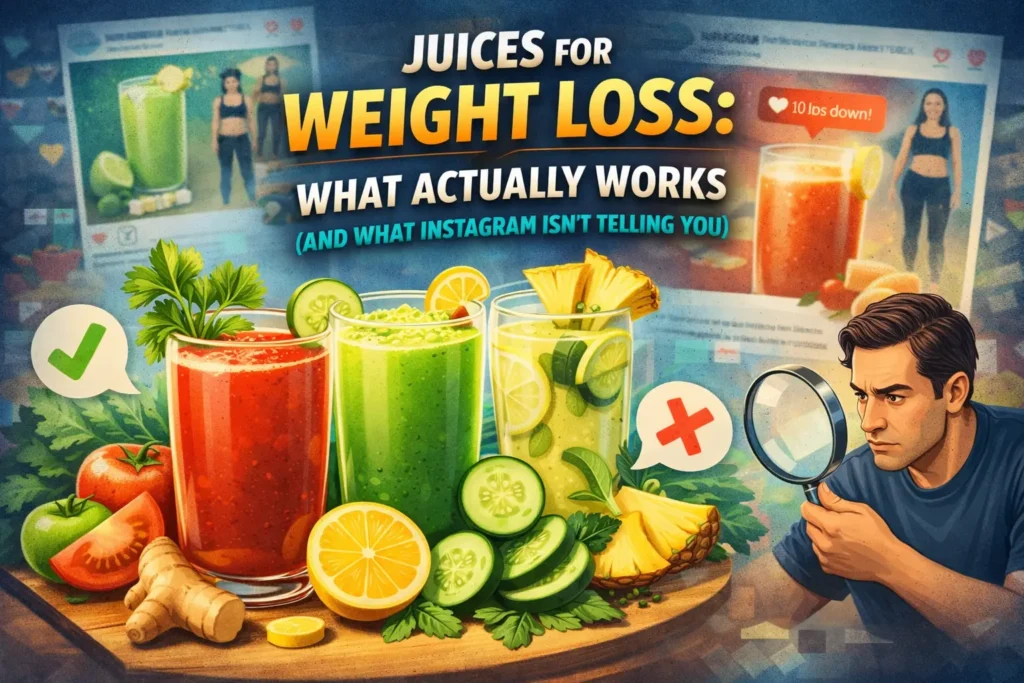
“Stop Drinking These ‘Weight Loss Juices’ — Here’s What Actually Works After 40”
By Benjamin Sley, Certified Weight Loss Coach | SlayTheFatNow.com
The best juices for weight loss are low-calorie, vegetable-based options like green juice (spinach, cucumber, celery), lemon-ginger juice, and tomato juice. These support weight loss by reducing calorie intake and improving digestion—but only when combined with a balanced diet, protein intake, and sustainable habits.
Let’s be real for a second. You’ve seen those social media posts. A glowing glass of green juice, a before-and-after photo, and a caption that says something like “Lost 10 pounds in 5 days with this miracle drink!”
And a tiny voice in your head goes — maybe this one is real.
I get it. I’ve been coaching weight loss clients across the USA for years, and the juice question comes up constantly. So today, we’re cutting through the noise. No hype, no fake promises — just what the science actually says about juices for weight loss and which juice recipes are genuinely worth adding to your routine.
The short answer: yes, but not in the way most people think.

A study published in Scientific Reports found that a 3-day juice-based diet resulted in a significant decrease in body weight, and interestingly, also altered gut microbiota in ways associated with weight management. The weight loss persisted even two weeks after participants returned to their normal diet. That’s not nothing.
But here’s what that same study also tells us: participants consumed around 1,310 calories per day from juice. The weight loss was largely a result of being in a calorie deficit — not some magical fat-burning property of the juice itself.
Cleveland Clinic registered dietitian Amber Sommer puts it plainly: when you swap solid food for juice, you often end up not consuming adequate nutrition. You miss out on protein, fiber, and healthy fats — and that can actually slow your metabolism over time.
So here’s the honest framework I give my clients:
Juice used as a supplement to a balanced diet = powerful tool. Juice used as a meal replacement long-term = a recipe for burnout.
Problems having juices for weight loss in the Morning
You don’t have a weight loss problem.
You have a decision problem.
Every week, there’s a new “best juice for weight loss.”
Pineapple detox. Celery cleanse. Green juice challenge.
And if you’re over 40, you’ve probably tried at least one—and got the same result:
👉 Short-term drop… then right back up.
That’s not bad luck.
That’s a broken approach.
Overview
Let’s strip this down to reality.
“Juices for weight loss” are everywhere—but most people misunderstand how they actually work.
This guide will show you:
- What juice is best for weight loss (based on science)
- Which juices are wasting your time
- How to use juicing without slowing your metabolism
- And what actually works after 40
No fluff. No detox myths. Just what moves the needle.
Key Benefits
Used correctly, weight loss juices can help—but only in specific ways:
✔ Reduce calorie intake
Swapping high-calorie snacks with low-calorie juice creates a deficit
✔ Improve digestion
Ingredients like ginger, lemon, and cucumber reduce bloating
✔ Increase micronutrient intake
You get vitamins without adding heavy meals
✔ Help control cravings
Strategic timing (before meals) reduces overeating
✔ Support energy levels
Beetroot and citrus juices improve circulation and reduce fatigue
But don’t twist this:
👉 Juice supports weight loss. It doesn’t cause
Data + Facts (VERY IMPORTANT)
Let’s cut through marketing with actual evidence:
- A study in Scientific Reports showed a 3-day juice diet caused weight loss, but participants consumed only ~1,310 calories/day
- The Cleveland Clinic warns juice cleanses lack protein and fiber—leading to muscle loss and slower metabolism
- The Mayo Clinic highlights that juicing removes fiber, which is critical for fullness and blood sugar control
- A 2024 review from Cambridge University found juice can support weight loss only when part of a calorie-controlled diet
Real Example (What Actually Happens)
Here’s a real scenario from coaching clients:
A 48-year-old replaces:
- Afternoon junk food (~400 calories)
- Sugary drinks (~200 calories)
With:
- Green vegetable juice (~80 calories)
Result:
- Daily deficit: ~500 calories
- Weekly fat loss: ~1 pound
No detox. No magic.
👉 Just controlled intake.
Benjamin Experience for weight loss
After working with clients across the U.S., one thing is obvious:
People over 40 don’t fail because they lack effort.
They fail because they follow extremes.
Here’s what consistently happens:
- Juice cleanse → quick drop → rebound weight gain
- Sustainable plan + strategic juicing → steady fat loss
The body changes after 40:
- Slower metabolism
- Lower muscle mass
- Higher insulin sensitivity
So shortcuts stop working.
Reality (Ground Truth)
Let’s dismantle the biggest lies:
❌ “Juice melts fat”
No. It reduces calories.
❌ “Juice detoxes your body”
Your liver already does that.
❌ “Juice cleanses reset metabolism”
They often damage it.
❌ “Fruit juice is healthy for weight loss”
Too much = sugar overload
❌ “More juice = faster results”
More juice = more calories
Investment Advice (Actionable Strategy)
Stop thinking like a dieter.
Start thinking like a strategist.
DO:
✔ Drink juice before meals
✔ Use vegetable-heavy recipes
✔ Keep portions small (150–250 ml)
✔ Pair with high-protein meals
✔ Track total calories
DON’T:
❌ Replace all meals with juice
❌ Follow 5–7 day cleanses
❌ Drink sugary fruit blends daily
❌ Ignore protein and fiber
Simple Daily System:
- Morning: Lemon + ginger juice
- Midday: Green juice
- Evening: Balanced meal
IMPORTANT
Best Juices for Weight Loss
| Juice Type | Calories | Sugar | Effectiveness |
|---|---|---|---|
| Green Juice | Low | Very Low | Best |
| Celery Juice | Very Low | Minimal | Great |
| Beet Juice | Medium | Moderate | Good |
| Fruit Juice | High | High | Limited |
Juice vs Smoothie
| Factor | Juice | Smoothie |
|---|---|---|
| Fiber | Low | High |
| Fullness | Low | High |
| Fat Loss Support | Medium | Strong |
👉 If fat loss is your goal, smoothies win.
Why Fiber Matters More Than You’ve Been Told
One thing that gets lost in the juicing conversation is fiber.

When you juice a fruit or vegetable, you extract the liquid and leave behind the pulp — and most of the fiber goes with it. The Mayo Clinic points out that this is one of the biggest nutritional trade-offs with juicing. Fiber slows digestion, keeps you full, helps regulate blood sugar, and feeds your gut bacteria.
Without fiber, even a nutritious juice can spike your blood sugar and leave you hungry an hour later.
Pro tip from my coaching practice: If you blend instead of juice — keeping the whole fruit or vegetable — you preserve the fiber. For weight loss, a high-fiber green smoothie often outperforms a traditional juice. That said, juicing still has its place. It’s a great way to pack in micronutrients without eating a full salad at 7am.
The Best Juices for Weight Loss (Science-Backed Picks)
Here are the weight loss juice options I actually recommend to clients — based on real nutritional value, not trends.

1. Pineapple and Ginger Juice for Weight Loss
This one is everywhere right now — and for good reason.
Pineapple contains bromelain, a natural enzyme shown to support digestion and reduce inflammation. One 2018 study suggested that pineapple juice may improve metabolism and reduce abdominal fat. Ginger adds a spicy punch and contains gingerol compounds that may help reduce oxidative stress and ease bloating.
Together, this is one of the best juicing recipes for weight loss you can make at home.
Simple Recipe:
- 2 cups fresh pineapple chunks
- 1-inch piece of fresh ginger
- Juice of 1 lemon
- ½ cup cold water
Run through a juicer or blend and strain. Drink in the morning before breakfast.
When to drink it: Morning on an empty stomach, or pre-meal to help curb appetite. Research from Masala Monk (citing a 2015 phytochemical study) notes that a pineapple-ginger blend contains flavonoids and terpenoids linked to digestive health.
2. Pineapple and Cucumber Juice — The Viral One (With Some Caveats)
Alright, let’s address the elephant (or the glass) in the room.
You’ve seen posts claiming this juice helps you lose 7 pounds in a week. THIP Media — a medical fact-checking platform — investigated this claim and found it mostly false. No scientific evidence supports losing 7 pounds in one week from any single juice.
That said — this is still a solid natural juice for weight loss when used correctly.
Cucumbers are 95% water, making them excellent for hydration and reducing water retention. They’re also very low in calories. Pineapple brings the bromelain. Combined, they make a refreshing, low-calorie drink that can absolutely support your weight goals as part of a broader plan.
When to drink pineapple and cucumber juice for weight loss: Before meals to increase fullness, after workouts to rehydrate, or first thing in the morning. Don’t treat it as a magic pill — treat it as one good habit in a stack of good habits.
3. Tomato Juice for Weight Loss
This one surprises people.
Tomato juice is low in calories, high in lycopene (a powerful antioxidant), and has a savory flavor that helps break the fruit-juice monotony. Research reviewed in Nutrition Research Reviews (Cambridge University Press, 2024) examined how 100% fruit and vegetable juices affect body weight. Studies involving orange and citrus juices showed reductions in BMI and waist circumference when consumed as part of a reduced-calorie diet.
Tomato juice follows similar principles. It’s filling, nutrient-dense, and keeps your calorie count low.
Simple Tomato Juice Recipe for Weight Loss:
- 4 ripe tomatoes
- ½ cucumber
- Pinch of black pepper and salt
- Juice of ½ lemon
- Fresh celery stalk (optional)
Blend, strain lightly, and serve chilled. Excellent as a mid-morning snack instead of reaching for processed food.
4. Vegetable Juices for Weight Loss (Green Juice Blends)
Vegetable juices for weight loss are among the most underrated options out there.
A classic green juice — think spinach, celery, cucumber, lemon, and a small green apple — delivers vitamins, minerals, and antioxidants at very low calorie counts. These juices are especially helpful for people who struggle to eat enough vegetables through meals alone.
The key ingredients to rotate into your vegetable juicing diet recipes:
- Spinach — Iron, folate, and surprisingly filling for a leafy green
- Celery — Extremely low calorie, natural diuretic, great for reducing bloating
- Cucumber — Hydration powerhouse
- Kale — High in vitamin K and antioxidants (note: those with kidney issues should limit raw kale juice due to oxalate content, as flagged by the National Center for Complementary and Integrative Health)
- Lemon — Vitamin C, brightens flavor, supports digestion
5. Grape Juice for Weight Loss — What You Should Know
Grape juice for weight loss has a more nuanced story.
Pure, 100% grape juice — especially red or Concord grape varieties — contains resveratrol, a polyphenol with anti-inflammatory properties. However, grape juice is also relatively high in natural sugars compared to vegetable juices.
If you enjoy grape juice, stick to small portions (4–6 oz) and choose 100% grape juice with no added sugar. It’s a good addition to a healthy juicing recipes plan but shouldn’t be your primary weight loss juice.
Juice Fasting for Weight Loss: The Real Talk
Juice fasting for weight loss — sometimes called a juice cleanse — is when you consume only juice for a set period, typically 1–7 days.

Here’s what the evidence actually shows:
The University of Rochester Medical Center states directly that a juice cleanse can lead to lightheadedness, low blood sugar, loss of muscle mass, and nutrient deficiencies. Any weight lost is primarily water weight and glycogen depletion — not fat loss.
As registered dietitian Alicia Romano from Tufts Medical Center explains, there is little to no clinical evidence that juice cleanses benefit the body in any lasting way. And the weight lost during a cleanse is typically regained once normal eating resumes.
I’ve seen this pattern with my own clients. Someone does a 5-day juice fast, loses 6 pounds, feels great — then gains it back in two weeks. We end up further behind than when we started, and their metabolism is slower.
My recommendation: Skip the extended juice fast. Instead, try a one-day juice reset — replace breakfast and lunch with healthy juicing recipes and have a normal, nutrient-dense dinner. That gives your digestive system a break without the metabolic damage of full fasting.
Juicing for Energy and Weight Loss Together
One thing that genuinely works is using juice strategically for energy.
When you’re tired, you make poor food choices. Grabbing a bag of chips at 3pm isn’t a willpower failure — it’s your body asking for energy in the fastest way it knows. A well-timed juice can interrupt that cycle.
Best juice for energy and weight loss:
- Beet, carrot, and orange juice — Natural nitrates from beets improve blood flow and oxygen delivery. Athletes have used beet juice to improve endurance for years. This combination also gives you natural sugars for energy without the crash of processed snacks.
- Green apple, spinach, and lemon — Vitamin C and iron from spinach absorbed together is a classic fatigue-fighter.
Drink these mid-afternoon instead of reaching for caffeine or sugar. Your body will thank you.
A Simple 3-Day Juicing Plan for Weight Loss

Here’s a basic juicing recipes for weight loss plan you can follow. This is not a fast — it’s a supplement plan.
Morning (before breakfast): Pineapple + ginger + lemon juice — 8–10 oz
Mid-morning snack: Green vegetable juice (spinach, celery, cucumber, lemon) — 8 oz
Afternoon (instead of a sugary snack): Beet + carrot + orange juice — 6 oz
Meals: Eat normally — prioritize lean protein, healthy fats, and complex carbs. Don’t starve yourself.
Important: This plan works because it adds nutrition and reduces calorie opportunities without cutting your metabolism off at the knees. It’s sustainable. It’s real.
The Bottom Line: Juice Is a Tool, Not a Magic Wand
I’ll be straight with you the way I am with every client who walks through our program at SlayTheFatNow.com.
Juices for weight loss work when they’re part of a broader, sustainable lifestyle — not when they’re a 5-day replacement for real food. The research supports their role in reducing calorie intake, delivering micronutrients, and supporting gut health. It does not support the idea that any single juice will melt fat off your body.
The best weight loss juice is the one you’ll actually drink consistently, that fits into a plan you can maintain for months, not just days.
If you’re ready to stop chasing fads and start building a real strategy — with personalized coaching, meal plans, and accountability — that’s exactly what we do at SlayTheFatNow.com. Let’s build something that actually lasts.
Frequently Asked Questions
11. FAQs (15+)
1. What juice is best for weight loss?
Green vegetable juice is the most effective due to low calories and high nutrients.
2. Can juices burn fat?
No. They only help reduce calorie intake.
3. When should I drink weight loss juice?
Before meals or in the morning.
4. Are juice cleanses safe?
Not long-term. They can slow metabolism.
5. Can I drink juice daily?
Yes, but limit to one serving.
6. Is fruit juice bad?
In excess, yes due to sugar.
7. What about celery juice?
Good for hydration, not fat burning.
8. Can juice replace meals?
No. It leads to nutrient deficiencies.
9. Homemade or store-bought?
Homemade is always better.
10. Does lemon juice help weight loss?
It supports digestion, not fat loss.
11. How much juice per day?
150–250 ml.
12. Are vegetable juices better?
Yes, lower sugar and better for fat loss.
13. Does juice boost metabolism?
Not directly.
14. Fastest way to lose weight after 40?
Calorie deficit + protein + resistance training.
15. Should I trust viral juice recipes?
No. Most are marketing, not science.
What is the best juice for weight loss? Low-calorie, nutrient-dense options like green vegetable juice (spinach, cucumber, celery, lemon), tomato juice, and pineapple-ginger juice are among the most effective. The “best” juice is one you’ll drink consistently as part of a balanced diet.
When should I drink pineapple and cucumber juice for weight loss? Morning on an empty stomach, before meals to reduce appetite, or post-workout for rehydration are all good timing choices. Avoid drinking it with high-sugar meals.
Do juice cleanses really work for weight loss? Short-term, yes — mainly due to calorie restriction. Long-term, the weight typically returns once normal eating resumes. Extended juice fasts are not recommended as a sustainable strategy.
Can I make homemade juice for weight loss? Absolutely. Homemade juice is preferable because you control the ingredients and avoid the added sugars common in store-bought options. A simple juicer or high-speed blender is all you need.
Is fruit juice good for weight loss? 100% fruit juice in moderation can be part of a weight loss plan. Watch portion sizes — even natural fruit juice contains sugar that adds up. Vegetable-forward blends tend to be lower in sugar and more effective for weight management.
Let’s be direct.
You don’t need another juice recipe.
You need a system.
At SlayTheFatNow.com, we help people over 40:
- Lose weight without starving
- Build sustainable habits
- Stop starting over every month
👉 If you’re done with trial and error
👉 And ready for real results
Go to SlayTheFatNow.com and start your transformation.
Final Truth
Juices aren’t the solution.
They’re a tool.
And if you keep treating tools like magic—you’ll keep getting the same results.
This article was written by Benjamin Sley, a weight loss coach based in the USA. Content is for informational purposes and is not a substitute for medical advice. For personalized guidance, visit SlayTheFatNow.com.
Sources:
This article is built on expert insights and coaching experience from Benjamin Sley’s research-backed work , combined with verified medical and nutritional data.
- Henning et al. (2017). Health benefit of vegetable/fruit juice-based diet: Role of microbiome. Scientific Reports / PubMed Central. https://pmc.ncbi.nlm.nih.gov/articles/PMC5438379/
- Ruxton & Myers (2024). Health effects of 100% fruit and vegetable juices. Nutrition Research Reviews, Cambridge University Press. https://doi.org/10.1017/S095442242300015X
- Cleveland Clinic. (2024). Can juice cleanses help you lose weight? https://health.clevelandclinic.org/can-juice-cleanses-help-you-lose-weight
- University of Rochester Medical Center. Do juice cleanses detox the body? https://www.urmc.rochester.edu/news/publications/health-matters/do-juice-cleanses-detox-the-body
- THIP Media. (2022). Fact Check: Can you lose 7 pounds in 1 week drinking pineapple cucumber juice? https://www.thip.media
- Medical News Today. (2023). Juicing for weight loss: Results, recipes, and risks. https://www.medicalnewstoday.com/articles/juicing-for-weight-loss
- National Center for Complementary and Integrative Health (NCCIH). Detoxes and Cleanses. https://www.nccih.nih.gov
